Author: Administration

  • Why Benahavís Is the Smartest Move for Expats in 2026

    Why Benahavís Is the Smartest Move for Expats in 2026

    Benahavís expats 2026 lifestyle and renovated homes

    Why Benahavís Is Becoming the Smartest Move for Expats in 2026: Lifestyle, Value and the Rise of Renovated Homes


    The Costa del Sol continues to attract international buyers in early 2026, with demand holding firm across Marbella, Estepona and Málaga — and increasingly, Benahavís. For many buyers researching Benahavís expats 2026 trends, the appeal now goes well beyond sunshine and second homes.

    What’s changing is who is buying and why. The market feels more international than ever, with growing interest from North America, Germany and Poland — all drawn by the region’s climate, accessibility and quality of life. Among the main hotspots, Benahavís is emerging as one of the most compelling choices for expats seeking privacy, nature, luxury and a genuine sense of community.

    Moreover, a growing number of buyers are choosing renovated homes in Benahavís over new builds, preferring mature surroundings, quicker move-in timelines and stronger day-to-day liveability.

    Benahavís village lifestyle for expats in 2026

    Benahavís Expats 2026: Market Stability, Demand and Lifestyle Appeal

    The Costa del Sol remains one of Spain’s most resilient real estate markets. In key areas such as Marbella, Estepona and Benahavís, demand continues to be supported by limited coastal land, modern infrastructure and year-round appeal.

    In many premium locations, average pricing now exceeds €4,000/m². As a guide, the Benahavís property market 2026 sits among the most sought-after in the region at around €5,200/m², depending on the specific neighbourhood, views, security and property condition.

    However, the biggest shift in 2026 isn’t just price — it’s mindset. Buyers are increasingly prioritising quality of life over short-term timing. Walkability, healthcare access, dining culture, climate resilience and wellness infrastructure are now central to decision-making. This change plays directly into Benahavís’ strengths.

    Why Expats Are Choosing Benahavís Over Other Costa del Sol Hotspots

    Benahavís has long been known for its natural beauty and exclusive residential communities. In 2026, it is also becoming a top choice for expats seeking a more balanced, liveable lifestyle — close to the action, yet comfortably removed from the busiest coastal strips.

    • Proximity without the chaos — minutes from Marbella and the coast, yet quieter, greener and more private.
    • High-quality living — from El Madroñal to La Quinta, the area offers some of the region’s most desirable gated communities and golf-side neighbourhoods.
    • A strong international community — expats from across Europe and North America are increasingly settling here for long-term living.
    • Gastronomy and culture — Benahavís village remains one of the Costa del Sol’s culinary capitals and a social hub all year.
    • Space and nature — larger plots, mountain views and direct access to hiking, golf and outdoor living.

    For many expats, Benahavís strikes the perfect balance: close enough to enjoy Marbella’s energy, yet far enough to enjoy true tranquillity at home.

    Living in Benahavís with mountain and golf views

    Why Renovated Homes in Benahavís Are Winning Over Expats

    One of the most interesting trends of 2026 is rising demand for renovated homes in established communities. New developments remain popular, of course, but more buyers are leaning towards refurbished properties for practical, lifestyle-driven reasons.

    • Move-in ready — no waiting for construction timelines, and fewer post-completion snagging surprises.
    • Modern upgrades with character — contemporary kitchens, bathrooms and layouts paired with mature gardens and established neighbourhoods.
    • Better value in prime locations — renovated homes can offer more privacy and usable space at comparable price points.
    • Larger plots — especially in areas where new land is scarce and replacement stock is limited.
    • Stronger long-term appeal — many buyers love the blend of charm and modern comfort for year-round living.

    This shift mirrors the broader trend: expats increasingly want homes designed for everyday life — not just occasional holidays.

    Renovated home in Benahavís for international buyers

    The Stories Behind the Move

    The expat community in Benahavís is diverse, but motivations often overlap. While each relocation story is different, common themes come up again and again:

    • Remote workers choosing peace, space and strong connectivity.
    • Families valuing safety, international schooling options and an outdoor lifestyle.
    • Retirees drawn to tranquillity, golf and the village atmosphere.
    • Investors seeking long-term value in a supply-constrained market with persistent demand.

    These experiences fuel lively discussions in expat communities — and they’re part of why Benahavís continues to gain momentum.

    Living in Benahavís: The Lifestyle That Keeps Expats Here

    Beyond property, Benahavís offers something harder to quantify: a lifestyle that feels both luxurious and grounded. Many expats highlight the microclimate, the food scene and the sense of community — alongside the ease of mixing nature with modern living.

    As lifestyle becomes the top driver of relocation decisions in 2026, Benahavís stands out as one of the few places that genuinely delivers on multiple fronts — year-round.

    Find Your Home in Benahavís

    If you’re considering living in Benahavís, you can explore homes on our website in the way that suits you best. Start by browsing properties by area, explore by property type or lifestyle collections, or use our full property search for a broader view across Benahavís and the surrounding Costa del Sol.

    Alternatively, if you’d prefer a more personal approach, contact us with your requirements and we’ll send a bespoke shortlist of properties that match your wishlist — including options tailored to your preferred neighbourhoods, views, security, amenities and budget.

    What’s Your Experience?

    Every expat has a story about why they chose the Costa del Sol — and why they stayed. If you’ve moved to Benahavís, or you’re considering it now, what tipped the balance for you?

    Your insights help others make informed decisions and keep the conversation going within our community.


    Looking for a home outside Benahavís?
    Holiday Homes Spain
    covers the whole Costa del Sol.
    [siteorigin_widget class=”WP_Widget_Custom_HTML”][/siteorigin_widget]
  • Sustainable Property Benahavís: Eco-Friendly Luxury Homes Guide

    Sustainable Property Benahavís: Eco-Friendly Luxury Homes Guide


    Sustainable luxury property in Benahavís

    How Sustainability Is Shaping Luxury Property in Benahavís

    <strong”>Sustainable property in Benahavís is no longer a niche consideration — and luxury on the Costa del Sol has evolved. Sea views and architecture still matter — but increasingly, buyers are asking a different question:

    How sustainable is this home, and how resilient will it be in ten or twenty years?

    In Benahavís, sustainability is no longer a niche consideration. It is influencing master planning, construction standards, energy performance, landscape protection and long-term property value. From infrastructure-certified developments to private eco-conscious villas, environmental strategy is becoming a structural part of the market.

    This is not about marketing language. It is about planning controls, energy regulation, land scarcity and buyer behaviour.

    Sustainable Property in Benahavís: What Actually Matters?

    In Spain, all properties are required to carry an Energy Performance Certificate (EPC). However, energy ratings alone tell only part of the story.

    True sustainability in residential development typically includes:

    • Passive solar orientation
    • Insulation and thermal envelope quality
    • Efficient glazing systems
    • Renewable energy integration
    • Water management systems
    • Landscape preservation
    • Infrastructure planning
    • Density control

    The difference between a home that simply has solar panels and a community that is sustainably master-planned is significant.

    BREEAM and Infrastructure Certification

    One of the most important sustainability benchmarks in Europe is BREEAM (Building Research Establishment Environmental Assessment Methodology).

    For buyers evaluating sustainable property in Benahavís, infrastructure certification provides a clearer long-term benchmark than isolated eco features.

    Unlike individual building ratings, BREEAM infrastructure certification evaluates:

    • Land use planning
    • Environmental impact
    • Water strategy
    • Transport access
    • Biodiversity protection
    • Long-term operational efficiency

    Developments such as Real de La Quinta in Benahavís have received BREEAM infrastructure certification, reflecting a broader planning framework rather than isolated eco-features.

    To learn more about the BREEAM framework, visit breeam.es.

    Contemporary eco-friendly architecture in Benahavís

    Contemporary design paired with energy-efficient specification.

    For buyers, this matters because infrastructure planning affects future density, view preservation, traffic flow, environmental protection and long-term desirability. Sustainability at this scale is about structural resilience, not cosmetic features.

    UNESCO Protection and Landscape Scarcity

    Benahavís borders the Sierra de las Nieves UNESCO Biosphere Reserve. This designation protects significant surrounding land from uncontrolled development.

    For property owners, this has two major implications: environmental preservation and structural scarcity. When neighbouring land cannot be densely built upon, view corridors and natural surroundings are less vulnerable to change. Over time, this tends to support long-term value retention.

    You can read about the biosphere reserve via UNESCO here: Sierra de las Nieves and its surroundings.

    Eco-Friendly Villas: What Buyers Are Now Prioritising

    At villa level, sustainability often shows up in practical ways: aerothermal systems, photovoltaic solar arrays, smart energy management, efficient underfloor heating, high-performance insulation, water-smart irrigation and native landscaping.

    However, the most future-proof homes combine design intelligence with environmental logic. Orientation remains one of the most important — and free — sustainability tools. A properly positioned home can reduce cooling loads in summer and heating needs in winter.

    Cost Considerations: Does Sustainability Increase Build Budgets?

    There is often a perception that eco-conscious building significantly increases costs. In reality, it depends on specification. Certain upgrades — such as enhanced insulation, glazing systems or renewable energy — may increase initial budgets modestly, while operational savings and resale desirability can offset this over time.

    If you’re planning a build, start here:  Cost to build a villa on the Costa del Sol.

    Sustainable villa features: solar, glazing, and landscape integration

    Efficient building envelopes and thoughtful landscaping can reduce running costs long-term.

    Long-Term Value and Regulatory Trends

    Across Europe, energy efficiency standards are tightening. Future resale markets are likely to place increasing emphasis on EPC ratings, energy consumption, sustainable materials and community planning standards.

    Properties built to higher environmental standards today may benefit from stronger demand and regulatory alignment in the future — particularly among international buyers who already track these metrics closely.

    As regulations evolve, sustainable property in Benahavís is likely to attract stronger demand from internationally mobile buyers who prioritise energy performance and environmental context.

    The Rise of Eco-Conscious Buyers in Benahavís

    International buyers — especially from Northern Europe — are often highly informed about sustainability standards. Many actively seek energy-efficient villas, low-density communities and protected natural surroundings.

    Explore our curated selection here: Eco-friendly homes in Benahavís.

    Where Sustainability Meets Lifestyle

    Sustainability in Benahavís does not mean compromise. Many environmentally considered properties are also architecturally striking, design-led and technologically advanced.

    Communities such as Real de La Quinta demonstrate how sustainability can sit alongside structured lifestyle amenities. Meanwhile, Monte Mayor reflects a different angle: low density, land scale and green-zone preservation.

    Conclusion: A Structural Shift, Not a Trend

    Sustainability in Benahavís is not a short-term marketing trend. It is a structural shift driven by planning regulation, environmental protection, international buyer expectations and long-term asset preservation.

    For buyers evaluating luxury property on the Costa del Sol, understanding how sustainability influences infrastructure, density and design is increasingly essential. The most resilient properties of the next decade will likely be those that balance architecture, landscape and environmental logic — not those that simply maximise build volume.

    Looking for eco-conscious homes in Benahavís?

    Browse our curated collection: Eco-friendly homes in Benahavís, or ask us to shortlist options based on your budget, location and sustainability priorities.

    [siteorigin_widget class=”WP_Widget_Custom_HTML”][/siteorigin_widget]
  • How Much Does It Cost to Build a Villa on the Costa del Sol?

    How Much Does It Cost to Build a Villa on the Costa del Sol?

    How Much Does It Cost to Build a Villa on the Costa del Sol?


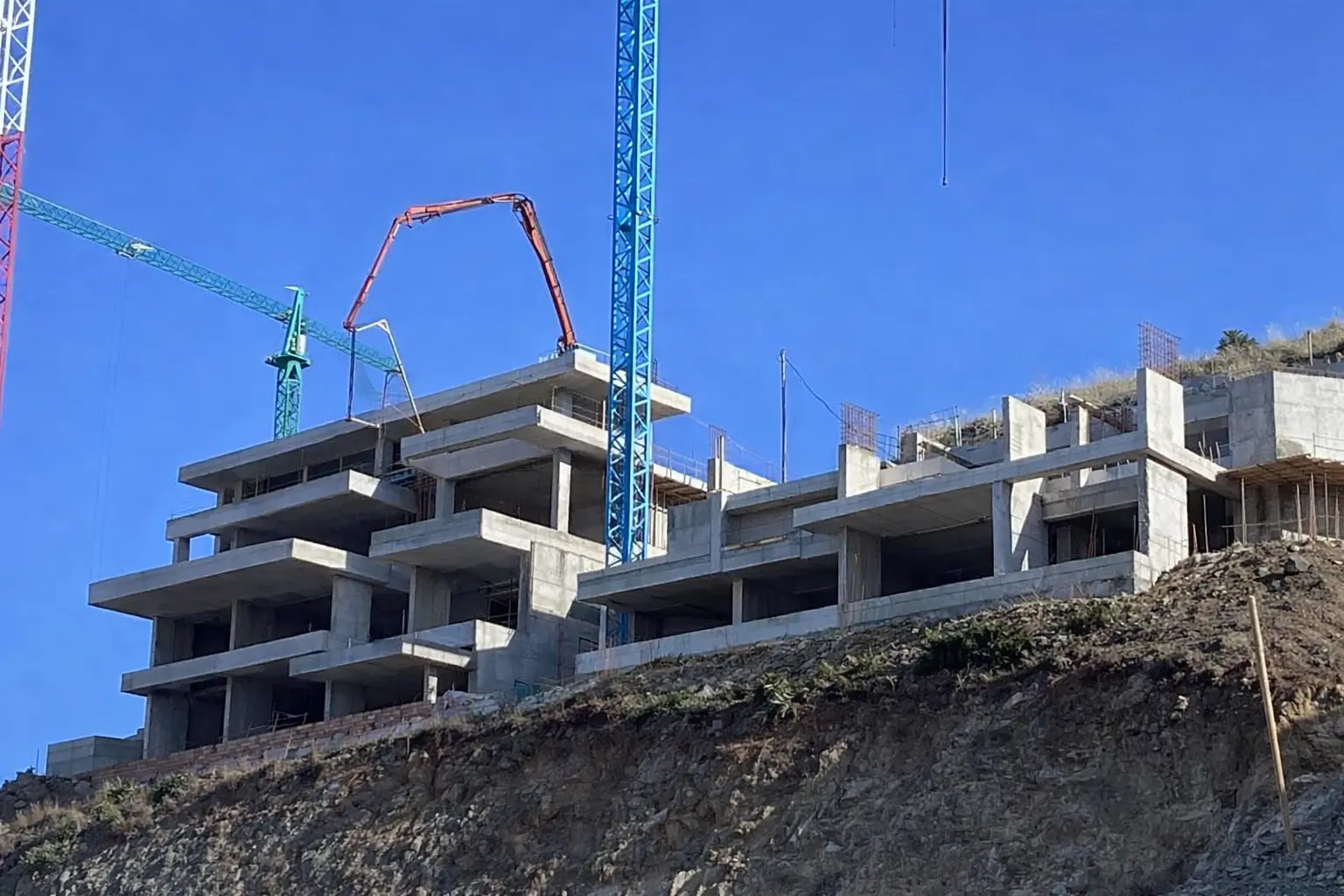
    Modern villa construction on the Costa del Sol in the Benahavís hills

    If you’re looking at building plots in areas like La Zagaleta, Marbella Club Golf Resort, Monte Mayor or Real de La Quinta, you’ll quickly discover a simple truth: the plot is only the starting point.

    The build cost itself can be surprisingly variable — not because builders are vague, but because “a villa” can mean anything from a straightforward Mediterranean home to a highly engineered, glass-heavy, basement-rich modern statement with lifts, wellness areas and complex retaining walls.

    This guide breaks down the real-world numbers buyers need: a realistic cost-per-m² range, the “hidden” soft costs (architects, licences, engineers), and a practical way to budget so you don’t get caught by unpleasant surprises mid-project.

    1) The headline number: build cost per m²

    As a broad benchmark for coastal Spain, reputable market commentary commonly places construction cost ranges around €1,500–€3,000 per m², depending on quality, location and complexity. That’s a useful starting point, but it’s only the start.

    On the Costa del Sol (and especially in the Benahavís/Marbella prime belt), many “dream villa” builds sit toward the upper end because of: hillside sites, sea-view orientation, large basements, high-spec glazing, bespoke stonework, smart-home systems, and landscaping that’s designed like a boutique hotel.

    Architectural studios focused on Marbella luxury often quote luxury builds in the €1,400–€2,500+/m² range depending on specification and complexity.

    A practical buyer-friendly way to think about it:

    • Good quality villa: often starts around €2,000/m²+ (and can rise quickly with specification).
    • Contemporary prime/luxury villa: commonly budgets at €2,500–€3,500/m²+
    • Architectural “statement” villa: €4,000/m²+ is not unusual once complexity and premium finishes stack up

    Important detail: people often quote cost per m² using “built area”, but your lifestyle features (pool, terraces, landscaping, retaining walls, access roads) can add very significant budget outside that simple number.

    2) The costs buyers forget: “soft costs” and professional fees

    In Spain, building a villa is a regulated process. You don’t just hire a contractor; you assemble a professional team and work through licensing. Your soft costs will vary, but it’s common for them to land in the 10–20%+ range of build cost depending on what’s included.

    Typical items include:

    • Architect (proyecto + design leadership)
    • Architect Técnico / Quantity Surveyor (dirección de ejecución) — a formal role in Spanish builds
    • Geotechnical study (critical on hillside plots)
    • Topographical survey (site boundaries, levels, access)
    • Structural engineer (often integrated via the architect)
    • Health & Safety coordination (required)
    • OCT / quality control + decennial insurance (typically required for certain builds/sales scenarios)

    You’ll also see administrative “visado” (professional validation/filing) costs via local professional colleges as part of the process.

    3) Licences, taxes and municipal charges

    Every municipality has its own process and fee structure, but in general you should expect a combination of: urban planning/works licence fees and the municipal construction tax called ICIO.

    For context, Marbella’s own information pages explain that urban licence fees and ICIO are handled through municipal tax management procedures (and you’ll receive a payment document as part of the process).

    As a rule of thumb, many buyers budget municipal costs as a percentage of the official construction budget (often referred to as PEM). A commonly cited example for Marbella is ICIO at 4% of PEM plus an additional urban services/processing fee that can be around the low single digits. (Always confirm with the relevant town hall for your plot.)

    If you’re building in Benahavís municipality, you’ll also follow the town hall’s “obra mayor” (major works) licence requirements and documentation process.

    4) VAT: don’t guess — it depends on the type of work

    VAT treatment trips people up. The Spanish Tax Agency explains that, as a general rule, works are taxed at the standard rate, with a reduced rate applying in specific scenarios — including certain construction/rehabilitation works on buildings intended mainly for housing.

    In practice, your VAT position depends on the structure of the project, who contracts whom, and the precise classification of the works. This is one of the areas where a good architect/gestor and an independent lawyer save real money, because “small misunderstandings” here become expensive.

    5) The real budget structure: a simple way to avoid surprises

    When buyers run into trouble, it’s often because they budget only the “build” and forget the rest. A more reliable framework is:

    • A) Construction (the building itself) — your €/m² number
    • B) Site & external works — excavation, retaining walls, access roads, drainage, gardens
    • C) Professional team — architect, técnico, surveys, studies
    • D) Licensing & municipal taxes — licence fees + ICIO
    • E) Fit-out & lifestyle extras — kitchens, wardrobes, lighting, home automation, spa/gym, cinema
    • F) Furniture & styling — optional, but common in this market
    • G) Contingency — the most underestimated line

    If you want one strong rule: keep a 10–15% contingency for a straightforward build and consider 15–20%+ for complex hillside or basement-heavy designs.

    On steep plots, the unknowns are usually ground conditions, retaining requirements and service routing — not the tiles.

    6) Timeline: how long does it actually take?

    Buyers often assume “one year.” In reality, many villa builds take longer because the timeline includes two phases: pre-construction (design + licensing) and construction (build + completion paperwork).

    A sensible expectation for a custom villa is often:

    • Design + permitting: several months (sometimes longer, depending on municipality and complexity)
    • Construction: commonly 12–18 months for a substantial villa; complex projects can extend beyond that

    The best way to protect timeline is to do the “boring” work early: full surveys, clear scope, realistic specification, and a contract structure that matches the build style (fixed price vs managed build).

    7) Buying a finished villa vs building: when does building make sense?

    Building makes the most sense when you care deeply about the end result — layout, orientation, privacy, sustainability, smart-home, wellness features — and you’re prepared to manage time and decision-making.

    Buying an existing villa often wins on speed and certainty. Building wins on personalisation — and sometimes on value, if you secure an exceptional plot and execute the project well.
    In prime areas where plots are scarce, a well-designed new build can stand out strongly in the resale market.

    8) A quick “starter budget” example

    Let’s keep this simple and realistic. Imagine a 400 m² contemporary villa (plus terraces/pool/landscaping) on a hillside plot:

    If construction is budgeted in a prime range (say €2,500–€3,500/m²), the building cost alone is roughly €1.0M–€1.4M before you add: external works, professional fees, municipal charges, interior fit-out upgrades, and contingency.

    That’s why two “similar size” villas can end up with very different total project budgets — the plot and the specification drive the outcome.

    9) Our practical advice (the short version)

    • Do a proper feasibility review before you fall in love with a plot.
    • Budget external works early — especially on hillside sites.
    • Get clarity on licensing steps with the correct municipality (Marbella vs Benahavís vs Estepona matters).
    • Don’t treat VAT and municipal charges as “minor lines”. Confirm them properly.
    • Protect yourself with scope clarity, staged payments, and a realistic contingency.

    If you’re considering a building plot in La Zagaleta, Marbella Club Golf Resort, Monte Mayor or Real de La Quinta, tell us what you want to build (style, size, features, timeline) and we’ll help you sanity-check the numbers and the feasibility before you commit.

    Alternatively, you can view some of the residential plots we currently have for sale here →

    [siteorigin_widget class=”WP_Widget_Custom_HTML”][/siteorigin_widget]
  • Marbella Club Golf Resort vs La Zagaleta

    Marbella Club Golf Resort vs La Zagaleta

    Marbella Club Golf Resort vs La Zagaleta


    Hero image comparing Marbella Club Golf Resort and La Zagaleta in Benahavís

    If you’re comparing Marbella Club Golf Resort and La Zagaleta, you’re already in the top tier of Benahavís.

    Both are gated, both deliver genuine privacy, and both attract international buyers who want a calm, secure base in the hills — without losing access to Marbella’s lifestyle.

    But they don’t feel the same. And the difference isn’t only plot size or price bracket. It’s about scale, club culture, facilities, and how day-to-day life flows once you’re inside.

    The big difference in one sentence

    La Zagaleta is a vast, self-contained private countryside estate where distance and discretion are part of the lifestyle.

    Marbella Club Golf Resort is a more contained, club-led golf estate with an easier “coast access” rhythm and a simpler day-to-day footprint.

    1) Estate scale and what “privacy” really means

    La Zagaleta’s privacy is created not just by gates and guards, but by sheer scale. Micro-location matters: elevation, orientation, which gate you use, and how deep you are inside the estate can meaningfully change your daily experience. Two homes can both be “La Zagaleta” and still live very differently.

    Marbella Club Golf Resort is also private and low-traffic, but it’s private in a more structured way. You get large plots and genuine separation, while the internal navigation feels more straightforward — which many buyers prefer if they want hillside calm without a “mega-estate” sense of distance.

    2) Clubhouses, restaurants and the social centre of gravity

    This is where the comparison becomes practical.

    La Zagaleta is designed to be lived “inside the gates.” Its clubhouses function as real social hubs — places residents dine, meet, host, and spend time without needing to head to the coast.
    If you like the idea of an on-estate ecosystem, it tends to feel naturally set up for that.

    Marbella Club Golf Resort has a different tone. The clubhouse experience is more understated: polished, quiet, and very much in line with the Marbella Club approach to service.
    It often feels like an elegant extension of home life after golf, rather than a full “destination” in its own right.

    If you want a strong, on-estate social infrastructure, La Zagaleta usually has the edge. If you want discreet club life without a big scene, Marbella Club Golf Resort often fits better.

    3) Golf experience: two-course variety vs one-course focus

    Both estates are golf-led — but in different ways.

    La Zagaleta is often viewed as a deeper private golf environment, with two courses forming part of the estate’s identity. It’s not just “golf nearby” — it’s golf as part of the community’s internal rhythm.

    Marbella Club Golf Resort revolves around one highly scenic 18-hole course. The experience is more “single-course, high-touch” — a purposeful, members-oriented atmosphere where service, spacing and views are part of the appeal.

    For many buyers, it’s exactly the right balance: a strong golf identity, without the complexity of a much larger estate.

    4) Equestrian: yes, both — but it may play a different role in your lifestyle

    It’s an important point: both communities support an equestrian lifestyle, and in Benahavís that’s a genuine differentiator.

    Equestrian facilities and riding lifestyle in the Benahavís hills

    Marbella Club Golf Resort’s equestrian facilities lean into a “country luxury” feel — stables and riding as a natural extension of the estate’s countryside character.
    In La Zagaleta, riding is typically viewed as part of a broader ultra-private estate ecosystem alongside golf and clubhouse life.

    The practical question is: will riding be an occasional lifestyle benefit, or a central part of your weekly routine? If it’s central, we’ll look closely at how each estate’s facilities and access align with your needs.

    5) The helipad question: what it signals

    La Zagaleta is also known for resident helipad access. For most buyers, it’s less about day-to-day use and more about what it represents: the estate is built for discretion, security and high-level infrastructure.
    It’s one of those details that reflects La Zagaleta’s “anything, quietly” positioning.

    Marbella Club Golf Resort doesn’t trade on that kind of ultra-infrastructure narrative. Its luxury signal is different: service quality, club atmosphere and a private golf-and-country lifestyle that still keeps you connected to the coast.

    6) Coast access and the remoteness threshold

    Both estates are inland — and both feel calmer than the coastal strip — but they sit differently on a buyer’s “remoteness comfort level.”

    Marbella Club Golf Resort tends to suit buyers who want the peace of the hills without feeling far away. La Zagaleta’s separation is part of the point: even when distances aren’t dramatic on paper, the estate’s scale and controlled access create a stronger sense of privacy and detachment.
    The benefit is extraordinary discretion. The trade-off is that spontaneity can require a bit more planning.

    7) Which should you choose?

    Choose La Zagaleta if you want maximum estate scale and discretion, a strong “inside the gates” club ecosystem (golf, clubhouse life, services), and a self-contained world where privacy is engineered through both security and distance.

    Choose Marbella Club Golf Resort if you want a private, low-density villa estate that feels simpler day-to-day, a golf-led lifestyle with Marbella Club service standards, and a countryside rhythm that stays naturally connected to Marbella, Puerto Banús and the beach.

    A final note on micro-location

    In both estates, buyers sometimes underestimate how much position within the gates changes daily life: elevation, orientation, privacy, road access and how quickly you reach the coast all shape whether a home feels effortless or slightly inconvenient.

    That’s why we’ll follow this article with a dedicated deep-dive on micro-location — and link it here once it’s live.

    If you’re weighing the difference, Darren & Angelina can talk you through the nuances and shortlist options that match your privacy level, lifestyle priorities and weekly routine.

    Related reading:


    [siteorigin_widget class=”WP_Widget_Custom_HTML”][/siteorigin_widget]
  • La Heredia vs Alborada – Which Benahavís Area Suits You?

    La Heredia vs Alborada – Which Benahavís Area Suits You?

    La Heredia vs Alborada: Two Very Different Hillside Lifestyles in Benahavís


    Hillside lifestyle in Benahavís near San Pedro de Alcántara

    Buyers exploring hillside property above San Pedro de Alcántara often find themselves comparing two neighbouring areas along the Ronda Road: La Heredia and Alborada. On a map, they sit minutes apart. In reality, they offer two distinctly different living experiences.

    If you’re deciding between traditional Andalusian charm and contemporary architectural minimalism, understanding the difference between La Heredia and Alborada is essential.

    Location: same corridor, different feel

    Both areas sit just above San Pedro de Alcántara, with quick access to Puerto Banús and Marbella via the A-397. Drive times are similar, and both benefit from the restaurants and everyday amenities of the Monte Halcones commercial centre — typically just a few minutes away.

    As a simple reference point, many residents work with:

    • San Pedro de Alcántara — approx. 7–10 minutes
    • Puerto Banús — approx. 12–15 minutes
    • Marbella centre — approx. 20–25 minutes
    • Málaga Airport — approx. 45–50 minutes

    From a pure accessibility perspective, there is little between them. The difference lies in design, atmosphere and architectural identity — and those intangibles tend to decide the purchase.

    Architecture: colour vs contemporary

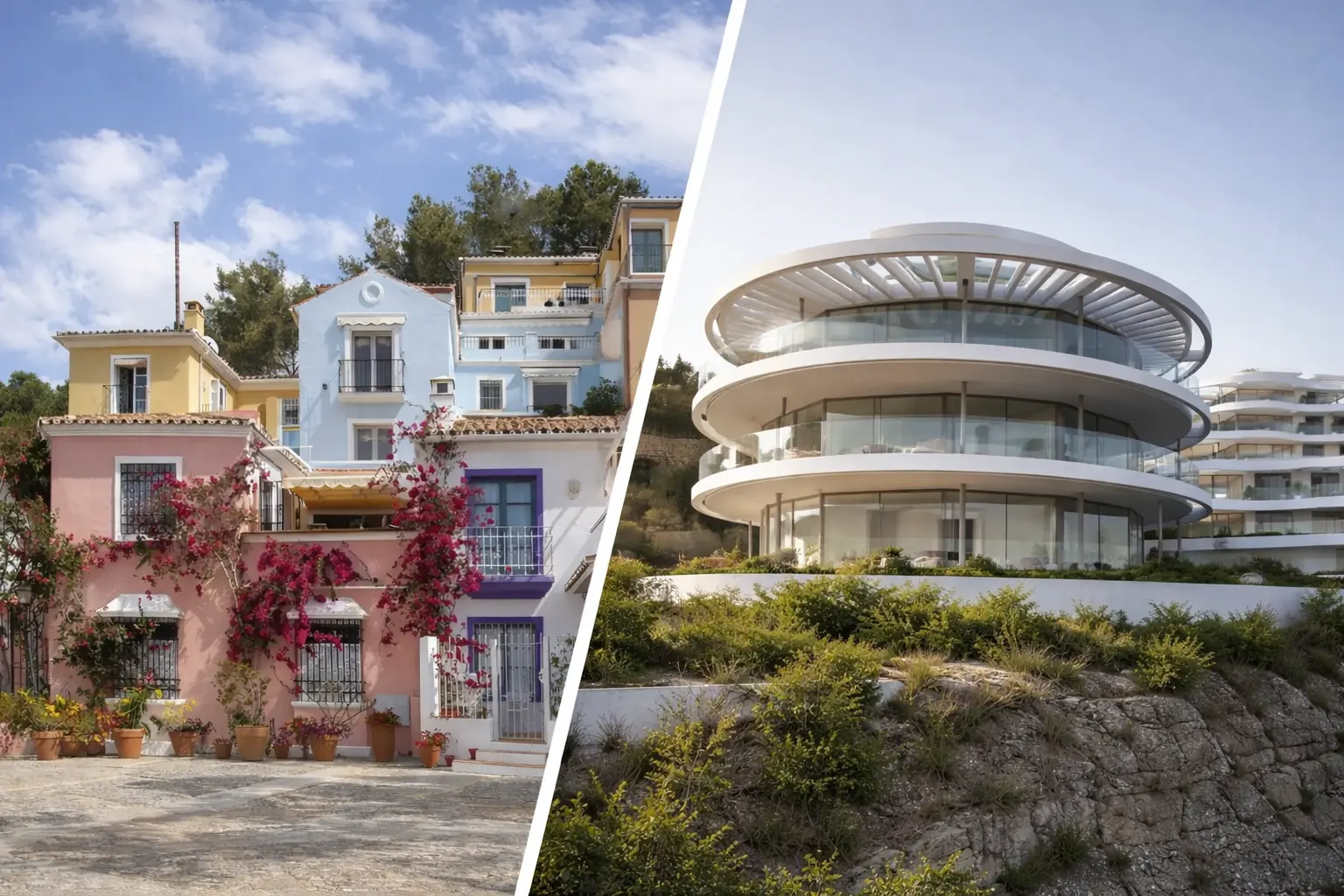
    La Heredia was conceived as a village-style community inspired by traditional Andalusian towns, with cobbled streets, textured façades and a colourful palette. It feels lived-in and characterful, with a clear “place” identity the moment you arrive.

    Colourful Andalusian-style homes in La Heredia, Benahavís

    Colourful townhouses in La Heredia, Benahavis

    Alborada, by contrast, focuses on contemporary low-rise living with cleaner lines and a more minimalist visual language. Many homes prioritise open-plan layouts, modern glazing and larger, more geometric terraces. If you’re drawn to newer construction standards and a modern aesthetic, Alborada can feel immediately intuitive.

    Living experience: village atmosphere vs modern calm

    La Heredia has a stronger “village” rhythm. The layout encourages walking and neighbourly familiarity, and the atmosphere is warm without being busy.

    Meanwhile, Alborada feels deliberately understated and residential — open, calm and practical, with day-to-day convenience handled nearby via Monte Halcones and San Pedro.

    In simple terms: La Heredia tends to attract buyers who want architectural character and a sense of place, while Alborada appeals to those who prefer modernity, clarity and low-maintenance design.

    Views, elevation and micro-position

    Both areas can offer sea and hillside views depending on orientation and exact position. In La Heredia, higher streets often enjoy broader panoramic outlooks, while lower sections can feel especially convenient for quick access toward Monte Halcones. In Alborada, many developments are designed around terrace living, with glass-fronted spaces that frame the outlook.

    Either way, micro-location matters — and it’s worth viewing more than one position within each area before deciding.

    The modern end of Alborada: The View Marbella

    If you want a clear reference for Alborada’s contemporary direction, design-led developments accessed via Alborada — such as The View Marbella — illustrate the appeal: modern architecture, strong amenities, and large terraces designed for indoor-outdoor living.

    The View Marbella contemporary development in Alborada, Benahavís

    Image placeholder: The View Marbella (new development)

    Price positioning

    Pricing will always depend on views, renovation level, terrace usability and overall specification. However, broad guidance helps set expectations:

    • La Heredia: townhouses from approx. €600,000; renovated sea-view homes typically €800,000–€1,500,000; larger villas from approx. €1,800,000+.
    • Alborada: modern apartments typically €450,000–€900,000; premium penthouses €900,000–€1,500,000+; design-led new developments can sit higher depending on product.

    In practice, La Heredia often offers more individuality and character at a given price point, while Alborada can command a premium for contemporary design, newer construction standards and terrace-led layouts.

    Schools and everyday practicality

    Both areas work well for families because school runs and daily services are straightforward compared with deeper countryside estates. International schools commonly used in this corridor include Atalaya International College, Laude San Pedro International College and Aloha College, with routes typically planned via San Pedro.

    Which area suits you?

    Choose La Heredia if you value architectural character, a village-style atmosphere and a more traditional Andalusian aesthetic.

    Choose Alborada if you prefer contemporary architecture, modern layouts and a clean-lined, minimalist style — with design-led developments nearby reinforcing that direction.

    Both benefit from Monte Halcones, San Pedro and coastal access. The decision is rarely about logistics; it’s about how you want your home to feel day to day.

    Final thought

    La Heredia and Alborada sit side-by-side geographically — but emotionally they appeal to very different buyers. If you’re unsure which direction feels right, view both in the same day. The contrast becomes clear immediately.

    Explore the area guides here: Property for sale in La Heredia and Property for sale in Alborada. If you’d like a curated shortlist across both areas, tell us what you’re looking for via the enquiry form.

    [siteorigin_widget class=”WP_Widget_Custom_HTML”][/siteorigin_widget]
  • Introducing Alborada

    Introducing Alborada

    Introducing Alborada

    The Benahavís hillside pocket you may not know — but the developments you’ll recognise instantly


    Alborada is one of those hillside pockets in Benahavís that many buyers drive past without realising it has a name — yet the moment you mention developments like The View Marbella, The Sky or Altura, people know exactly the stretch of road you mean. This article explains where Alborada sits, why its micro-location matters, and how its mix of established communities and high-end new builds has quietly reshaped the local market.

    → View property for sale in Alborada, Benahavís

    If you’ve been looking at property in Benahavís for any length of time, you’ve probably heard of The View Marbella, The Sky or Altura. However, you might not have heard the area name that ties much of this hillside pocket together: Alborada.

    Alborada isn’t a headline-grabbing estate in the way El Madroñal or La Zagaleta can be. Instead, it’s a practical, well-connected hillside enclave with a surprisingly broad range of homes — from everyday modern apartments to ultra-premium, design-led developments that now sit firmly in the multi-million price bracket.

    In other words, you may not have been searching for “Alborada” yet… but there’s a strong chance you’ve already been looking at its homes.

    Where Alborada is — and why buyers like its position

    Alborada sits along the Ronda Road (A-397) on the hillside above San Pedro de Alcántara, between La Quinta and La Heredia. The turn-off is in the corridor between the entrance to the Monte Halcones commercial centre and the entrance to La Heredia, which makes the area especially convenient for day-to-day life.

    This micro-location is the key to Alborada’s appeal. You get elevation, light and open outlooks, while still staying close to schools, golf and the coast. Meanwhile, you avoid the feeling of being “locked away” behind estate gates — which is exactly what some buyers want for a full-time base or a low-maintenance second home.

    Alborada also matters as an access route. Several high-profile developments on the lower hillside sit below El Madroñal and are reached via Alborada rather than through El Madroñal’s gates. That detail helps explain both the area’s visibility and its widening price spectrum.

    A guide to Alborada’s key developments

    Alborada is not a single “project.” Instead, it’s a hillside pocket made up of several distinct communities — each with its own style, price positioning and buyer profile. Below is a practical overview of the main developments commonly associated with Alborada and its immediate access corridor.

    Las Colinas de Marbella

    A well-established hillside community with a strong residential feel. Homes here tend to appeal to buyers who want elevation and a practical base close to Monte Halcones, the coast and main road connections.

    Tiara

    A premium apartment development that leans into refinement, clean architecture and elevated finishes. It typically attracts buyers who want something a step above the everyday market, while still keeping the location practical.

    The View Marbella

    Property for sale in Alborada Benahavís – The View Marbella panoramic hillside apartments
    The View Marbella — panoramic living on the Benahavís hillside.

    The View Marbella has become one of the most recognisable developments in this hillside pocket. As the name suggests, outlook and light are central to its appeal. Moreover, its mix of apartments and penthouses has helped shift perceptions of what “Alborada-adjacent” living can look like.

    BYU Hills

    A smaller, modern development that focuses on simplicity and comfort. It often suits buyers seeking contemporary living without needing the scale or formality of larger estates.

    Ocean 360

    A villa-style, semi-detached community that sits in the middle ground between apartment convenience and villa living. It’s particularly attractive to buyers who want more outdoor space and privacy while staying close to the coast and golf.

    The Sky Marbella

    Property for sale in Alborada Benahavís – The Sky Marbella penthouse apartment with private pool
    The Sky Marbella — a luxury penthouse with private pool, accessed via Alborada on the lower hillside.

    The Sky sits below El Madroñal, but it is outside the estate’s gates and is accessed via Alborada rather than through El Madroñal itself. Some agents describe it as “El Madroñal” for prestige. However, its real-world access route is firmly linked to Alborada. As a result, pricing in this pocket now extends well into the multi-millions.

    Valley Heights

    A compact residential enclave known for modern apartments and bright interiors. It’s often chosen by buyers who value a straightforward, low-maintenance base near San Pedro and the main amenities corridor.

    Aqualina

    Aqualina adds a more design-led feel to the area, with contemporary layouts and terraces that make the most of the hillside setting. It tends to appeal to buyers who want “newer-style” living with strong indoor-outdoor flow.

    Alborada Homes

    One of the developments most closely associated with the Alborada name, offering modern apartments and penthouses with lift access, underground parking and generous terraces. For many buyers, this is the “classic” Alborada product: clean, contemporary and easy to own.

    Altura

    Property for sale in Alborada Benahavís – Altura luxury townhouse interior with sea views
    Altura — boutique luxury townhouses in Alborada.

    Altura is a boutique collection of just five luxury townhouses located in Alborada, with pricing that reflects its exclusivity and design-led positioning. Developments of this scale are rare in Benahavís. Consequently, Altura underlines how Alborada has evolved from a low-maintenance hillside base into a micro-market that also attracts ultra-premium buyers.

    What this means if you’re considering buying in Alborada

    Alborada has quietly become one of the most interesting hillside pockets near Marbella because it offers breadth. You can find practical modern apartments, premium design-led new builds, and small-batch luxury projects — all within a location that stays genuinely convenient for daily life.

    If you’ve been seeing the same hillside developments repeatedly but haven’t quite been able to “place” the area, it’s worth remembering the name Alborada. It links a stretch of Benahavís that’s accessible, modern, and increasingly influential in the local market.

    To browse current availability, visit our area page for property for sale in Alborada, Benahavís.

    If you’d like a shortlist of homes that match your budget, view preferences and timeline, Darren & Angelina can share what’s currently available — including options that never reach the portals.

    [siteorigin_widget class=”WP_Widget_Custom_HTML”][/siteorigin_widget]
  • Spotlight on Los Arqueros Golf: Homes & Views | Benahavís

    Spotlight on Los Arqueros Golf: Homes & Views | Benahavís

    Spotlight on Los Arqueros Golf: homes & views


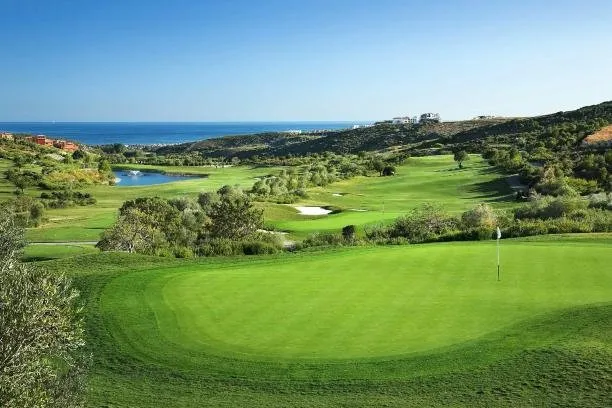
    Homes around Los Arqueros Golf appeal to buyers who want open views, green surroundings and a golf-led lifestyle — without feeling remote from Marbella, Puerto Banús or everyday services.


    ← Back to the Los Arqueros area guide

    Set in the foothills above San Pedro de Alcántara, Los Arqueros Golf & Country Club forms the heart of one of Benahavís’ most established residential communities. Designed by Seve Ballesteros, the course is known for its scenic layout, varied elevation and long open views across fairways and surrounding countryside.

    For buyers, the appeal extends beyond golf itself. Homes in and around Los Arqueros benefit from outlook, orientation and a sense of space that is increasingly difficult to find closer to the coast.

    The golf course & setting

    Los Arqueros is an 18-hole championship course that follows the natural contours of the hillside, creating elevation changes, wide fairways and long sightlines. The layout means that many homes enjoy views that extend well beyond the golf itself — often across rolling hills and, from higher positions, toward the Mediterranean.

    The clubhouse acts as a social focal point, with restaurant, bar, pro shop, gym, tennis and paddle facilities. Importantly, it retains a member-led, residential feel rather than operating as a high-traffic public resort.

    Types of homes around Los Arqueros Golf

    Property around the course includes a mix of apartments, townhouses and detached villas, spread across several residential pockets rather than a single gated estate. This creates variety — both in lifestyle and price point.

    • Frontline golf apartments — Positioned close to the fairways, prioritising green views, terraces and proximity to the clubhouse.
    • Elevated townhouses — Typically offering broader panoramas, balancing views, privacy and manageable upkeep.
    • Detached villas — Usually set on higher plots, where elevation enhances outlook and separation from neighbouring properties.

    Architectural styles range from traditional Andalusian designs to more contemporary homes, particularly where properties have been renovated or modernised.

    Views, elevation & orientation

    Views are one of the defining factors for buyers in Los Arqueros. Properties closer to the course often enjoy uninterrupted green outlooks, while elevated zones capture wider vistas across hills, valleys and, in some cases, the sea.

    Orientation also plays a role. South- and south-west-facing homes tend to maximise light and sunset views, while east-facing properties can appeal to buyers who prefer morning sun and cooler afternoons in summer.

    Lifestyle beyond the fairways

    While golf is central, daily life in Los Arqueros extends well beyond the course. Residents typically balance time at home with regular trips to San Pedro de Alcántara, Nueva Andalucía and Benahavís village for dining, shopping and services.

    The setting suits buyers who enjoy outdoor living, views and a quieter residential rhythm — while still being within 15–25 minutes of Marbella and Puerto Banús.

    Investment & resale considerations

    Homes around Los Arqueros Golf benefit from broad demand rather than niche appeal. Golf views, elevation and proximity to Marbella support steady resale liquidity, particularly for properties with open terraces and modern interiors.

    From an investment perspective, well-positioned homes — especially those with clear outlook and good orientation — tend to outperform more enclosed or shaded options over time.

    Who Los Arqueros Golf homes suit best

    Homes around Los Arqueros Golf suit buyers who value views, green surroundings and a strong sense of community — without the scale or price point of more exclusive hillside estates.

    They work particularly well for second-home owners, golfers, and full-time residents seeking a balanced lifestyle that combines tranquillity with practical access to the coast.

    [siteorigin_widget class=”WP_Widget_Custom_HTML”][/siteorigin_widget]
  • Things to Do With Kids in Benahavís

    Things to Do With Kids in Benahavís

    Things to Do With Kids In & Around Benahavís (By Age Group + Rainy-Day Ideas)

    Child having fun at a water park

    Benahavís is known for private estates and mountain views, but it’s also a surprisingly easy base for family life. In practice, the best days out usually fall into three categories: outdoor nature time in the hills, active sport-led plans on the coast, and “quick wins” when you only have a couple of hours.

    Below, we’ve broken down the most practical options by age group, plus a dedicated section for the few days when it rains.

    Quick pick: choose your age group

    Toddlers (0–3): low-effort, high-reward outings

    With toddlers, the best plan is usually “fresh air without logistics”. Benahavís makes that easy: gentle walks, short drives, and places where you can stop quickly if nap time suddenly becomes the priority.

    • Benahavís Village stroll + snack stop: keep it simple—wander, grab a treat, and let them reset outdoors.
    • Shaded nature time: short, flat-ish paths are ideal; aim for “30–45 minutes and done”.
    • Coast “sensory hour”: a quick beach visit (sand + sea + snack) often beats a long day out.

    If you’re splitting time between communities, a Benahavís base can look very different depending on where you live. Explore the nearby area guides for context: Benahavís ​ Village, La ​ Quinta, El ​ Madroñal.

    Canyoning in Benahavis -family fun

    Little kids (4–7): active mornings, easy afternoons

    At this age, you’ll get the best day by mixing movement with variety. A short “adventure” in the morning, then a calmer plan afterwards usually keeps everyone happy.

    • Nature walk with a “mission”: spotting birds, collecting leaves, photo scavenger hunt—simple structure keeps them engaged.
    • Pool time + mini outing: combine a swim with a short village stop rather than trying to force an all-day plan.
    • After-school and weekend activities: if you’re living here (even part-time), consistent clubs and lessons quickly become the backbone of family routine.

    For activity ideas that fit around school schedules, see: After-school activities in Benahavís and nearby.

    Kids (8–12): sports, “real adventures” and day trips

    This is the sweet spot for more adventurous plans. You can go further, stay out longer, and lean into experiences that feel like a proper holiday—even if you’re here year-round.

    • Hiking with viewpoints: aim for routes with a clear “payoff” (views, picnic spot) to keep motivation high.
    • Racket sports and golf culture: Benahavís is naturally sport-oriented—lessons and junior clubs are widely available across the area.
    • Wildlife-style day trip: animal parks and nature-focused experiences can be an easy “big day out” option.

    Example: Selwo Aventura (Estepona) runs educational camps and activity programmes for children (age ranges vary by programme).

    Teens (13+): independence, energy, and social plans

    Teens usually want one of two things: a genuinely physical plan (something that feels like it “counts”), or a social plan where they don’t feel stuck in “family mode”.

    • Fitness + sport: padel, tennis, gym sessions, and structured coaching suit this age well.
    • Outdoor challenges: longer hikes, more demanding routes, or adrenaline-style activities (depending on season and conditions).
    • Coast afternoons: beaches and beachside walks work well if you let them bring a friend or pair it with a meal out.

    For a more “connected” daily rhythm (often popular with families), compare the feel of nearby areas: La ​ Quinta and El ​ Madroñal can suit different lifestyles—especially when school runs and activities matter.

    Rainy-day ideas: what to do when the weather flips

    Rain is rare, but when it arrives, plans change fast—especially with kids. The trick is to aim for indoor options where you can stay flexible and leave easily if cabin fever hits.

    • Indoor play + lunch: a soft-play style morning paired with a casual meal is often the easiest win for younger kids.
    • Cinema + early dinner: ideal for ages 8+ and teens (and it doesn’t require perfect weather windows).
    • Museum-style half day: if rain is persistent, a cultural day trip can work surprisingly well for older kids.
    • “Home base” reset: especially in the hills (La Zagaleta / El Madroñal), it’s worth embracing a calmer day—games, movie, and a good meal.

    If you’re buying and thinking about all-weather family practicality (school commutes, activity access, day-to-day logistics), our buyer resources are here: Resources & Buyer Guides.

    If you’re considering finance options, see: Financing & mortgages in Spain.

    Want a shortlist of the most family-friendly areas based on your priorities (schools, commute, sports clubs, privacy level)?

    Start with the local area guides:
    La ​ Zagaleta |
    El ​ Madroñal |
    La ​ Quinta |
    Monte ​ Mayor |
    Marbella ​ Club ​ Golf ​ Resort

    [siteorigin_widget class=”WP_Widget_Custom_HTML”][/siteorigin_widget]
  • Who Is Responsible for Water Damage in Spanish Communities?

    Who Is Responsible for Water Damage in Spanish Communities?

    Who Is Responsible for Water Damage in Community Properties?


    Following the recent heavy rains across the Costa del Sol, many owners have reported leaks, damp patches, and water damage. This article explains — in plain English — who is responsible for repairs and insurance claims in community properties under Spanish Horizontal Property Law.

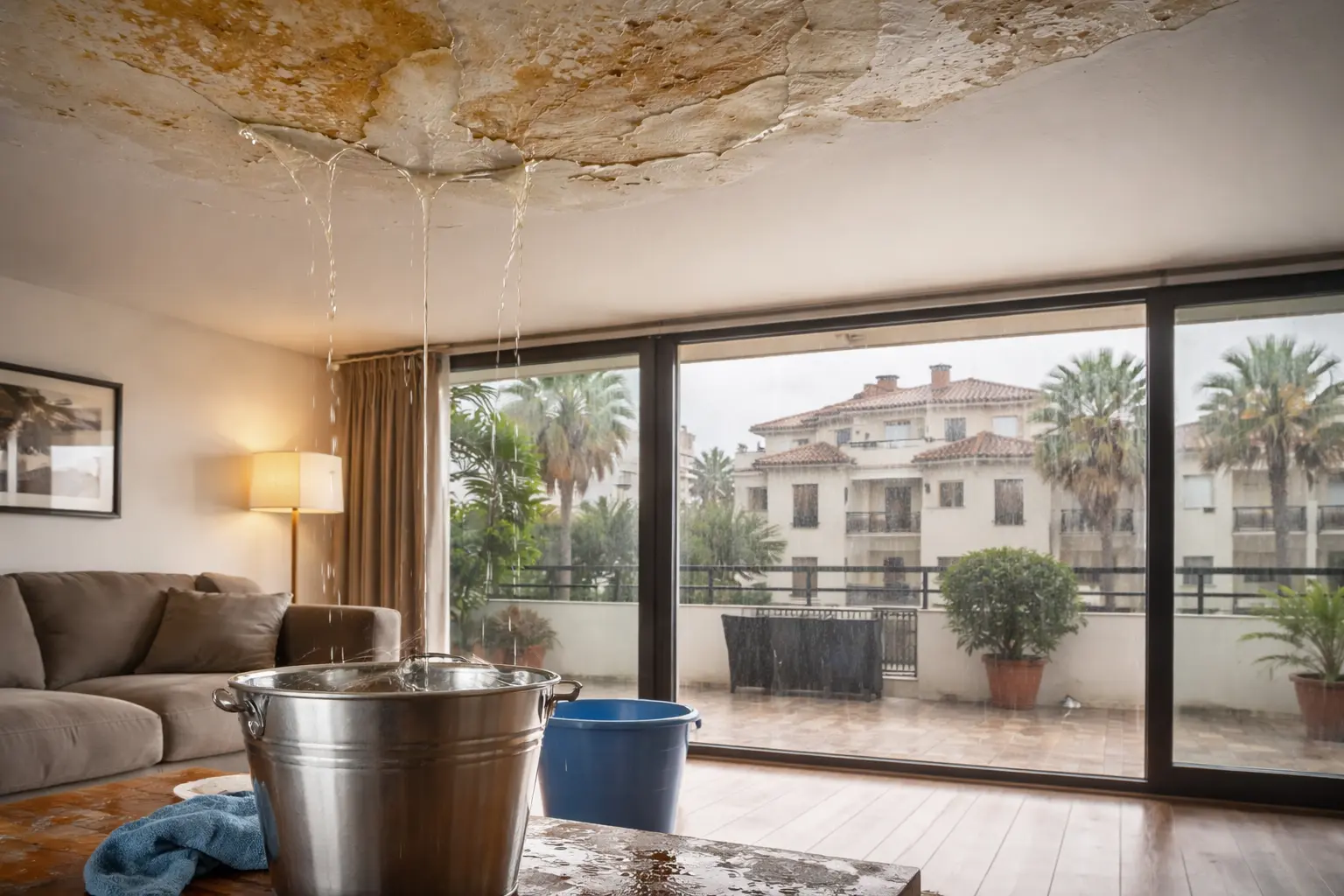
    Water damage in a Spanish apartment community after heavy rain

    Periods of intense rainfall often expose weaknesses in buildings, particularly in apartment communities. When water damage appears, it’s natural for owners to ask the same questions: Who is responsible? Which insurance applies? And what should I report?

    The answers depend on where the problem originates. Spanish Horizontal Property Law clearly distinguishes between common elements and private elements, and responsibility flows from that distinction.

    1. Damage Originating from Common Elements

    The following are generally considered common elements within a community:

    • Roofs and roof coverings
    • Façades
    • Structural elements (slabs, columns, load-bearing walls)
    • Main drainage stacks and general pipework
    • Terraces that form part of the building’s roof structure, even if for private use

    If the source of the water damage comes from a common element, the Community of Owners is responsible for repairing the cause.

    In these cases, the community insurance policy will normally cover the resulting damage inside the affected apartment, subject to the terms and limits of the policy.

    2. Damage Originating from Private Elements

    The following are generally considered private elements:

    • Bathrooms and kitchens
    • Internal water, drainage, and electrical installations
    • Pipes running exclusively within an apartment
    • Flooring, tiling, and interior finishes

    If water damage originates from a private element — for example, a leaking internal pipe or a bathroom issue — the responsibility lies with the owner of that apartment, even if the damage affects a neighbouring property.

    The same applies to terraces for private use. If a terrace has not been properly maintained and a leak occurs due to deteriorated seals, defective joints, or blocked drains, responsibility rests with the owner of that property.

    3. Notifying the Insurance Companies

    In all cases involving leaks or water damage, it is essential to:

    • Notify the private insurance of the affected apartment
    • Inform the Community Administration

    This allows the incident to be passed to the community insurer where appropriate. Both insurance companies will then assess the origin of the damage and determine responsibility.

    Only once the origin has been formally established can it be confirmed who must carry out the repairs and who must bear the costs.

    4. Damp Stains, Condensation, and Ventilation

    Owners are encouraged to report serious and clearly identifiable water leaks. In many cases, small damp marks or condensation do not result from structural leaks but from insufficient ventilation inside the property.

    Condensation-related issues are usually not covered by insurance policies and do not constitute an insured event.

    For this reason, it’s important to distinguish between genuine water ingress and minor humidity issues, and to report only significant leaks or damage that clearly point to a structural or plumbing problem.

    Why This Clarity Matters

    Understanding how responsibility is allocated helps avoid misunderstandings between owners, the community, and insurers — particularly after periods of exceptional weather.

    Clear communication and correct reporting ensure repairs are handled efficiently, insurance claims are processed correctly, and unnecessary disputes are avoided.

    Got Questions?

    We would be happy to answer these, or put you in contact with someone who can help if we cannot ourselves. You can drop us a message via the buttons on the right.


    [siteorigin_widget class=”WP_Widget_Custom_HTML”][/siteorigin_widget]
  • Málaga Province Wines: Great Local Bottles to Try

    Málaga Province Wines: Great Local Bottles to Try

    Málaga Province Wines: Local Bottles Worth Knowing (and Drinking)


    Part of the Benahavis lifestyle is a long lunch with a good bottle of wine… and you don’t have to pay a lot of money to get a good bottle of wine in Spain! Our local vineyards in Málaga province are proving that more and more each year. Here’s a practical, no-fuss guide to local reds and whites worth trying, plus dependable great-value bottles from elsewhere in Spain.

    Vineyards and wine culture in Málaga province, Spain

    One of the great pleasures of living in Spain is how easy it is to drink well without spending a fortune. It’s something I say often, and I genuinely believe it:

    You don’t have to pay a lot of money to get a good bottle of wine in Spain.

    We drink wine most days, and more often than not we’re opening bottles under €10. Finding inexpensive but genuinely good wines has been a personal mission since moving here. Every now and then we’ll plan a special dinner and choose something a little more expensive — but that’s very much the exception, not the rule.

    Málaga Province: A Wine Region Back on the Map

    Málaga has a long wine history, but for decades it wasn’t known for modern table wines. That’s changed — and quickly. Historically, the region was a major producer, particularly of sweet wines. However, the phylloxera blight in the late 1800s devastated vineyards, and large-scale production never really recovered.

    Today, areas such as Ronda and the Serranía de Ronda are producing confident, modern wines — particularly reds — that feel balanced, approachable, and very drinkable. They don’t try to imitate Rioja or Ribera del Duero. Instead, they offer something slightly fresher and more relaxed.

    Vineyards near Ronda in Málaga province

    A Modern Málaga Red That’s Easy to Love: El Lero

    If you want a good introduction to Málaga province reds, El Lero is a strong place to start. Usually priced around €11–12, it’s widely available in local wine shops, supermarkets, and El Corte Inglés.

    Unlike many traditional Spanish reds that lean heavily on Tempranillo, El Lero blends Tempranillo, Cabernet Sauvignon, and Syrah. The result is a wine that feels smoother and easier to drink, with less aggressive tannins.

    Fruity and well balanced, medium intensity, and fresh — it’s versatile enough for food, but also easy to enjoy on its own. Produced by Tres Generaciones near Ronda, it’s a great example of how Málaga wines are evolving.

    Red wine from Málaga province poured into a glass

    Something Special (Still Under €20): Cortijo Los Aguilares Reserva

    When you want a bottle that feels like a step up — without going overboard — Cortijo Los Aguilares Reserva is an excellent Málaga-province choice. Usually priced between €18–20, this is a wine for a planned meal rather than everyday drinking.

    It has structure, depth, and a sense of occasion: full-bodied but balanced, rich and concentrated without being heavy. It’s especially good with red meats or slow-cooked dishes — and it’s a clear sign of just how far Málaga province has come.

    Spanish red wine for a special dinner at home

    More Málaga Province Reds Worth Trying

    Descalzos Viejos DV+
    Produced near Ronda, this is a richer, more expressive red, often based on Syrah and Garnacha. It has depth and character while remaining smooth and approachable.

    Finca La Melonera Crianza
    A slightly more traditional style that combines Tempranillo with Mediterranean varieties. Well structured, food-friendly, and a good bridge between classic Spanish reds and Málaga’s modern style.

    Conrad (Bodegas Doña Felisa)
    One of the better-known Ronda wines. Bold but polished, with good intensity and a long finish — a strong choice if you like fuller reds.

    Encaste (Ronda)
    A modern, boutique-style Ronda red that’s typically fruit-forward and smooth, with a confident Mediterranean profile. A great one to try if you enjoy expressive reds that still feel balanced.

    Badman (Ronda)
    Another Ronda-area red worth seeking out — usually fuller in style, with good intensity and a satisfying finish. Ideal for grilled meats, slow-cooked dishes, or a “proper” weekend dinner.

    Winery and tasting room in Málaga province near Ronda

    Málaga Province Whites (Surprisingly Good)

    Doña Felisa Chardonnay
    Fresh, clean, and well balanced. A straightforward white that works well with fish, salads, or simply on its own.

    La Melonera Payoya Blanca
    Made from a revived local grape variety, this is a lighter, more characterful white with floral notes and freshness. A nice change from more commercial styles.

    Descalzos Viejos PX (Dry Style)
    Not the sweet Pedro Ximénez most people expect. This dry version is crisp, mineral, and very refreshing — excellent in summer.

    Chilled white wine in Spain on a sunny day

    Dependable Reds from Elsewhere in Spain (Always Good to Know)

    Some Málaga wines can be harder to find depending on where you live. These are reliable, widely available Spanish reds that consistently deliver good value.

    Marqués de Cáceres (Rioja)
    Usually around €7–9, easy to find, and consistently solid. A classic Rioja profile: ruby red, lightly spicy, with good body and complexity.

    El Coto (Rioja)
    Often available for around €6, even in Mercadona. Round, fruity, easy to drink, but with enough depth to feel like more than a basic table wine.

    Campo Viejo Reserva
    Widely available both in Spain and internationally. Approachable, balanced, and dependable — a safe choice when you don’t want to overthink it.

    Everyday Spanish red wines offering great value

    Great-Value Wines Under €5 (Spain at Its Best)

    This is where Spain really shines. Finding drinkable wine under €5 in many countries is a challenge. In Spain, it’s just… normal.

    Proximus (Ribera del Duero)
    Usually €4.50–5 and excellent for the price. Fruity, smooth, and with more body than you’d expect. Hard to beat at this level.

    Món Perdut (Empordà)
    Around €4, and something a bit different. A blend of Garnacha, Cabernet Sauvignon, and Merlot, with real character and depth for the price.

    Viña Albali Reserva
    Often under €4 and found almost everywhere. Solid, reliable, and perfect for everyday drinking — fruit-forward with subtle spice and vanilla notes.

    Sharing affordable Spanish wine at home with dinner

    Final Thoughts

    Málaga province is producing wines that are genuinely worth paying attention to — especially if you enjoy modern, balanced reds and the occasional surprising white. Combined with Spain’s wider reputation for value, it means you can drink well without turning wine into a luxury item.

    You don’t need to spend a lot. You don’t need expert knowledge. You just need to try a few bottles. And if you’ve discovered a Málaga wine you love, we are always open to recommendations. 🍷

    [siteorigin_widget class=”WP_Widget_Custom_HTML”][/siteorigin_widget]