Author: Administration

  • Global Property Marketing for Sellers | Benahavís

    Global Property Marketing for Sellers | Benahavís

    Expanded Global Exposure for Your Property


    We’re pleased to share a new collaboration with Properstar — significantly expanding our national and international reach to nearly 90 property portals worldwide.

    This is our approach to global property marketing for sellers on the Costa del Sol — combining international reach with carefully targeted local exposure.

    For sellers, this means broader visibility, stronger positioning and access to a much wider pool of qualified buyers. At The Benahavís Collection, that expanded reach sits alongside the curated, boutique approach that defines how we work. We do not believe in marketing for its own sake. Instead, we focus on presenting each home carefully, positioning it intelligently and ensuring it is seen by the right audience.
    International property marketing and global portal exposure for luxury homes on the Costa del Sol

    Global property marketing for sellers: a broader international audience

    Through Properstar, our listings are now showcased across a substantially broader global network. This gives our properties stronger visibility beyond the local market and helps us reach buyers searching internationally across multiple countries, languages and stages of the buying journey.

    Properstar alone brings considerable scale, with more than 4 million monthly visits and coverage across 35+ countries. However, global syndication is only one part of the picture.

    Within Spain, we ensure strong domestic visibility through leading portals such as Idealista and Yaencontre — where the majority of active local and national buyers begin their search.

    Internationally, our listings are also promoted across platforms including ThinkSpain, GlobalListings and A Place in the Sun, with selected properties featured on JamesEdition where appropriate. This layered approach ensures each home is presented across the most relevant channels for its price point, positioning and buyer profile.

    Properstar at a glance

    • 4M+ monthly visits

    • Coverage across 35+ countries

    Global reach, backed by local collaboration

    International visibility is only one part of a successful sales strategy. Equally important is local market presence. Alongside this wider portal exposure, we continue to coordinate with trusted collaborating agencies across the area, helping ensure that every property is also seen by a broader pool of qualified buyers already active on the Costa del Sol.

    This combined approach is one of our strengths. A property benefits when it is visible internationally, but it also benefits when it is shared professionally within the local market through established relationships. By bringing these two elements together, we create broader, more effective exposure without compromising on quality or discretion.

    Alongside portal distribution, we also position properties across our social media channels, ensuring consistent visibility, targeted reach and ongoing engagement with both local and international audiences.

    Luxury home marketing combining international syndication, social media exposure and local agency collaboration

    Enhanced marketing for prime properties

    For properties above €1,000,000, we also leverage ListGlobally, widely recognised as the world leader in international portal syndication. This adds another layer of elevated global marketing for homes that benefit most from international visibility and high-net-worth buyer reach.

    Through this network, qualifying listings can be presented to an audience of more than 150 million potential buyers worldwide, with exposure on major international platforms including Mansion Global, Wall Street Journal, Juwai and PrimeLocation.

    Why most properties don’t sell — and how we fix it

    In many cases, a property does not fail because of the home itself. It fails because the presentation is weak, the pricing strategy is unclear, or the exposure is too limited. Sometimes it reaches only one slice of the market. Sometimes it reaches the wrong audience altogether. And often, listings are simply uploaded and left to sit, without the level of positioning they need.

    We take a different approach. We look carefully at how a property should be presented, where it should be seen and who is most likely to respond to it. That means stronger photography, better placement, broader distribution, more intelligent platform selection and consistent visibility across both local and international channels.

    Just as importantly, we understand that different homes require different strategies. A family villa, a lock-up-and-leave apartment, a frontline golf residence and an ultra-prime estate should not all be marketed in the same way. By tailoring the exposure to the property itself, we create a more credible route to the right buyer.

    The result is not more noise for the sake of it. It is better positioning, stronger visibility and a sales strategy designed to give your property the attention it deserves from the outset.

    A quietly powerful advantage

    Effective property marketing is rarely about making the most noise. It is about placement, reach and credibility. Quietly and consistently, our aim is to position our clients’ homes where they need to be seen — on the right platforms, in front of the right buyers and with the right presentation.

    For sellers, that means a more considered approach from the outset. One that combines boutique representation, international reach, targeted platform selection, social media visibility and trusted local collaboration — all working together to support a stronger sale.

    Thinking of selling?

    If your property is on the market but not achieving the attention it deserves — or you’re planning a sale and want to maximise exposure from day one — we’d be delighted to help.

    Learn more about selling with The Benahavís Collection

    Is your property outside Benahavis?
    Our Holiday Homes Spain website covers the whole Costa del Sol

    [siteorigin_widget class=”WP_Widget_Custom_HTML”][/siteorigin_widget]
  • Creators International School Benahavís | Full Guide

    Creators International School Benahavís | Full Guide

    Creators International School Benahavís

    A New STEM-Focused School on the Costa del Sol


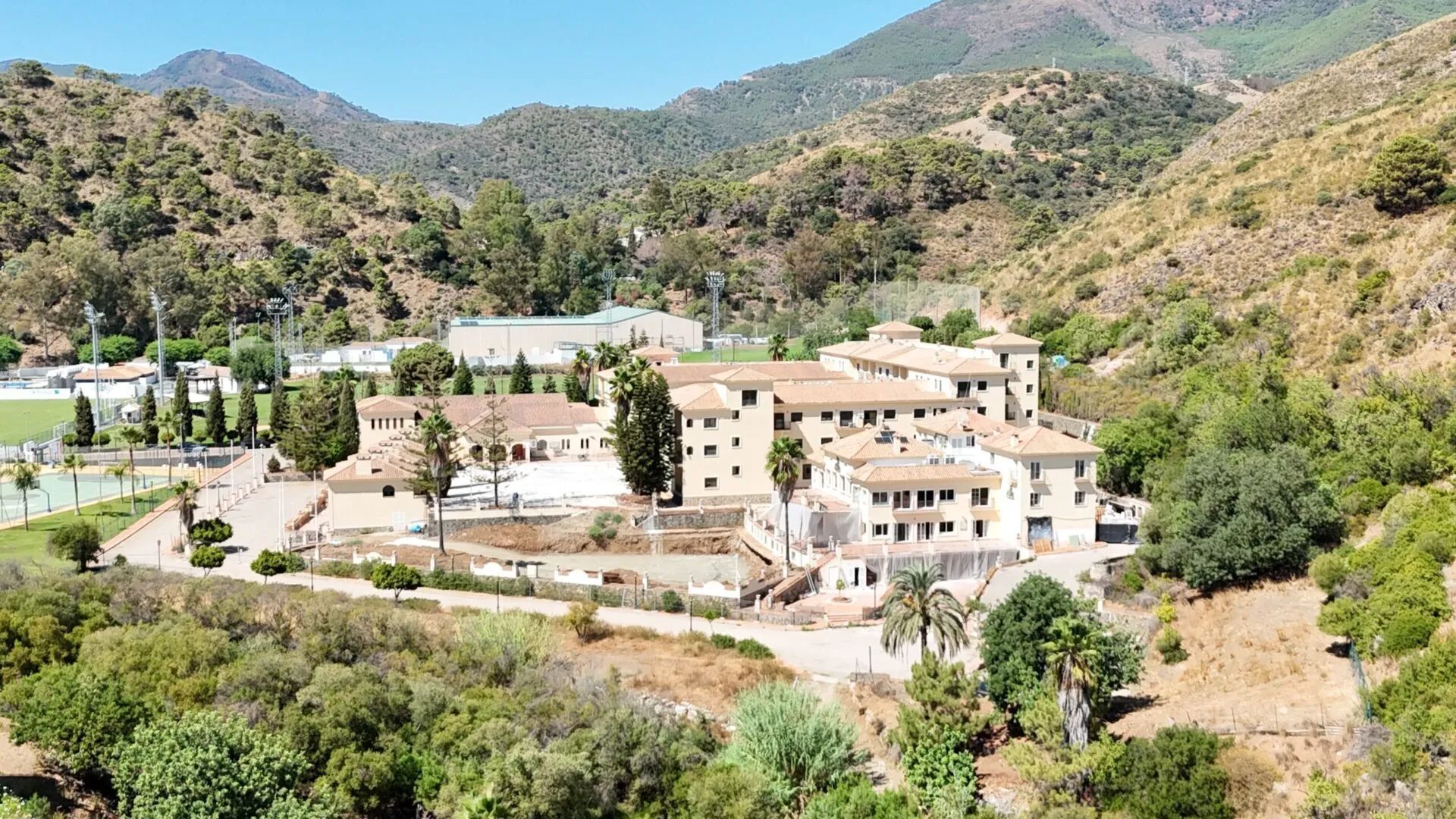
    Creators International School Benahavís future campus exteriorAt the time of writing, the former Gran Hotel Benahavís SPA is still undergoing renovation and transformation into the future home of Creators International School. The project is progressing, with the school expected to open for students in line with a forthcoming academic year — most likely targeting the start of the 2026/27 school year, subject to final approvals and completion timelines.

    As families continue to explore international schools in Benahavís and the surrounding areas, a new name is beginning to attract attention — Creators International School.

    Located in the Benahavís–Marbella corridor, this upcoming school is expected to bring a very different approach to education on the Costa del Sol. Rather than following the traditional broad international school model, Creators is designed around academic excellence in mathematics, science and technology, with a strong emphasis on small class sizes and highly focused learning.

    For the right student, it is likely to represent a compelling alternative to more established schools such as Atalaya International College or those covered in our full guide to schools in and around Benahavís.

    Overview of Creators International School

    Creators International School is expected to follow a British curriculum pathway, leading to IGCSEs and A-Levels. However, what sets it apart is not the curriculum itself, but the way it is planned to be delivered.

    Classes are expected to be intentionally small, teaching highly personalised, and students encouraged to develop deep analytical thinking rather than broad general coverage. The environment is designed for focus, discipline and intellectual curiosity.

    • British curriculum (IGCSE & A-Level pathway)
    • Strong focus on STEM subjects
    • Small class sizes (typically around 10–12 students expected)
    • Selective admissions process
    • Located within easy reach of Benahavís, Marbella and Estepona


    Planned learning environment at Creators International School Benahavís

    Fees at Creators International School

    Understanding Creators International School fees in Benahavís is an important part of choosing the right school. Based on currently available information, the school is expected to position itself in line with premium international schools on the Costa del Sol, with a clear and structured pricing model.

    Overall, this is likely to place Creators broadly in line with other premium international schools on the Costa del Sol, though its smaller class sizes and specialist academic focus may make it a more niche offering.

    • Years 3 to 6: expected to be around €15,000 per year
    • Years 7 to 10: expected to be around €18,000 per year
    • Boarding (Years 7–10): expected to range from approximately €44,000 to €50,500 per year

    In addition to tuition, there are expected to be a small number of one-off and administrative fees:

    • Admissions & evaluation fee: approximately €150
    • Enrolment fee: approximately €500 (deducted from first term)
    • Endowment fee: approximately €750 (one-time payment)

    Optional extras such as transport (from €1,200–€1,800 per year) and lunches (€1,500 per year) are also expected to apply for day students.

    For the 2025–26 academic year, the school has outlined a Founding Family offer, with reductions applied to the published figures.

    These figures are based on the school’s published fee schedule for the planned 2025–26 academic year and may be subject to change.

    As with all international schools in the area, fees are reviewed annually, and we recommend confirming the latest structure directly with the school.

    Who This School Is Best Suited For

    Creators International School is not expected to be a one-size-fits-all option. Instead, it is likely to suit students who are:

    • Academically driven and comfortable with a focused learning environment
    • Particularly strong in mathematics, science or technology
    • Looking for a more structured and disciplined academic setting
    • Comfortable with a selective admissions process

    For many families relocating to the Costa del Sol, more traditional international schools may still provide the most balanced experience. However, for the right profile of student, Creators could offer something genuinely different.

    Location and Accessibility

    The school will be located within easy reach of Benahavís, as well as key residential areas such as La Quinta, Los Arqueros and Atalaya.

    For families already considering these areas, the commute is expected to be comparable to other international schools in the region, and school transport options may develop as the school grows.

    How It Compares to Other Schools

    When comparing Creators International School to more established options, the key difference is expected to be specialisation versus breadth.

    Schools such as Aloha College, Swans or Laude San Pedro offer broader academic and extracurricular programmes, making them suitable for a wide range of students. Creators, by contrast, is expected to be more focused and selective.

    Rather than replacing these schools, it is likely to sit alongside them as a specialist alternative within the wider education landscape of Benahavís and Marbella.

    Related Education Guides

    Need Help Choosing the Right School?

    Choosing the right school is one of the most important decisions when relocating to Spain. Darren & Angelina — your Personal Property Concierge — regularly help families compare options, understand admissions and organise school visits.

    Get in touch to discuss your options →

    creators international school benahavís

    Discover Creators International School Benahavís. A new STEM-focused British school on the Costa del Sol. Who it suits and how it compares.

    [siteorigin_widget class=”WP_Widget_Custom_HTML”][/siteorigin_widget]
  • Costa del Sol Relocation Guide 2026 | Moving to Southern Spain

    Costa del Sol Relocation Guide 2026 | Moving to Southern Spain

    Costa del Sol Relocation Guide 2026

    A More Considered Way of Living in Southern Spain

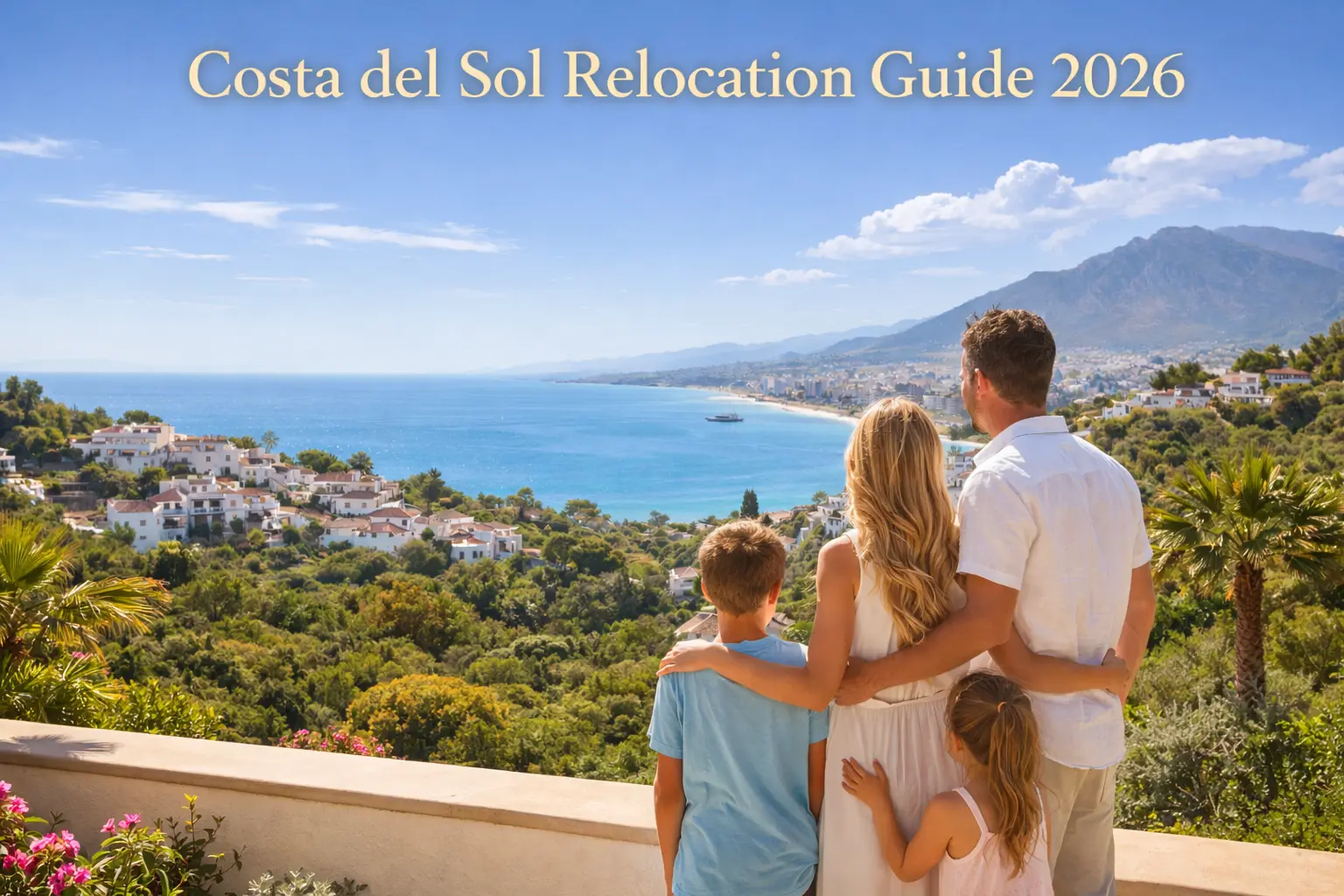
    Family enjoying the Costa del Sol lifestyle and sea views in southern Spain

    There comes a point, for many internationally mobile families, when the question quietly shifts.

    It is no longer simply about where you can live well — but where you can live well consistently. Where the pace feels sustainable. Where daily life is not just efficient, but enjoyable. Where the environment supports the way you want to raise a family, build a business, or spend your time.

    For a growing number of people, that answer is now pointing towards the Costa del Sol.

    Not as a holiday destination, but as a place to live properly.


    A Different Kind of Appeal

    The Costa del Sol has undergone a quiet transformation over the past decade. What was once seen primarily as a seasonal destination has matured into a fully functioning international base — one that combines infrastructure, lifestyle and long-term livability in a way that feels increasingly rare.

    The appeal is not built on a single factor. It is the combination that matters.

    There is the climate, of course — over 300 days of sunshine a year. But more importantly, there is a rhythm to life here that feels markedly different from larger global cities. Days unfold more naturally. Time outdoors becomes part of daily routine rather than an occasional luxury. The environment encourages balance rather than constant acceleration.

    And yet, it remains highly connected. Málaga Airport links seamlessly with the rest of Europe and beyond. International schools are well established. Healthcare is excellent. The infrastructure is already in place.

    It is this balance — between ease and sophistication — that defines the region.


    Finding Your Place on the Coast

    Relocating to the Costa del Sol is not about choosing a single destination. It is about understanding a landscape made up of distinct, carefully layered communities.

    Marbella offers energy and immediacy — beach clubs, restaurants, a social rhythm that feels vibrant and outward-facing. It appeals to those who enjoy being in the centre of things.

    Benahavís, just minutes inland, provides a different experience. Here, the focus shifts towards space, privacy and elevation — both literally and figuratively. Gated communities, golf courses and panoramic views create a more residential, more considered environment. For many families, this is where the balance feels right.

    Estepona continues to evolve quietly to the west, offering a softer, more understated lifestyle with increasing depth and appeal.

    Choosing between them is less about which is “best,” and more about which aligns with how you want to live on a daily basis.

    Benahavís area guide


    The Family Perspective

    For families, relocation decisions tend to crystallise around one central question: does the environment support the life we want to build?

    On the Costa del Sol, the answer is often yes — but for reasons that go beyond the obvious.

    International schools are well regarded and widely accessible, particularly in and around Marbella and Benahavís. But just as important is what exists outside the classroom. The ability for children to spend time outdoors year-round. The sense of safety. The opportunity for a more active, less pressured daily rhythm.

    It is a different kind of upbringing — one that feels both international and grounded.

    Schools in and around Benahavís


    Property, Patience and Perspective

    Property is often part of the relocation conversation, but it rarely needs to be the first decision.

    One of the advantages of moving to the Costa del Sol is the flexibility it offers. Many families choose to rent initially, allowing themselves time to understand the nuances of different areas — school runs, traffic patterns, orientation, community feel.

    Others arrive with a clearer sense of direction and move directly into ownership, particularly when they already know the region well.

    There is no universal approach. The key is not to rush.

    The market itself remains active, particularly in prime locations where demand from international buyers continues to underpin values. But the best outcomes tend to come from decisions made with clarity rather than urgency.

    Download our full buying property in Spain guide


    The Practical Layer

    Every relocation has a practical dimension — cost of living, healthcare, logistics, residency.

    What distinguishes the Costa del Sol is how seamlessly these elements integrate into daily life. Private healthcare is accessible and efficient. Dining, leisure and everyday expenses offer strong value relative to the quality provided. The overall cost structure, while not low in absolute terms, tends to feel proportionate to the lifestyle delivered.

    Residency, particularly for non-EU nationals, has also become more accessible through routes such as Spain’s Digital Nomad Visa — a structure that allows internationally mobile professionals to establish a base in Spain without fundamentally restructuring their income.

    Spain’s Digital Nomad Visa in 2026


    A Shift in Daily Life

    What becomes apparent, often quite quickly, is that the move is not just geographical.

    Daily life changes in more subtle ways.

    Mornings begin with light rather than traffic. Evenings extend naturally, often outdoors. Weekends are not something to escape into — they are simply a continuation of a lifestyle that already feels balanced.

    There is a sense, difficult to quantify but easy to recognise, that life has become less compressed.

    For many, that is the real reason the move works.


    Final Thought

    The Costa del Sol is not about reinvention. It is about refinement.

    It offers the opportunity to take what already works — career, family, mobility — and place it within an environment that supports it more naturally.

    For those considering a move, the question is rarely whether the region delivers. It is whether it aligns with the life you want to build next.

    And increasingly, the answer is yes.


    Related Reading


    Important Note

    This guide is for general information only and does not constitute legal, tax or financial advice. Relocation decisions should always be supported by professional advice tailored to your individual circumstances.

    [siteorigin_widget class=”WP_Widget_Custom_HTML”][/siteorigin_widget]
  • Tax Guide for Moving to Spain (Andalucía) | Benahavís Collection

    Tax Guide for Moving to Spain (Andalucía) | Benahavís Collection

    Tax Guide for Moving to Spain (Andalucía Edition)

    A Refined Look at Property and Personal Tax on the Costa del Sol

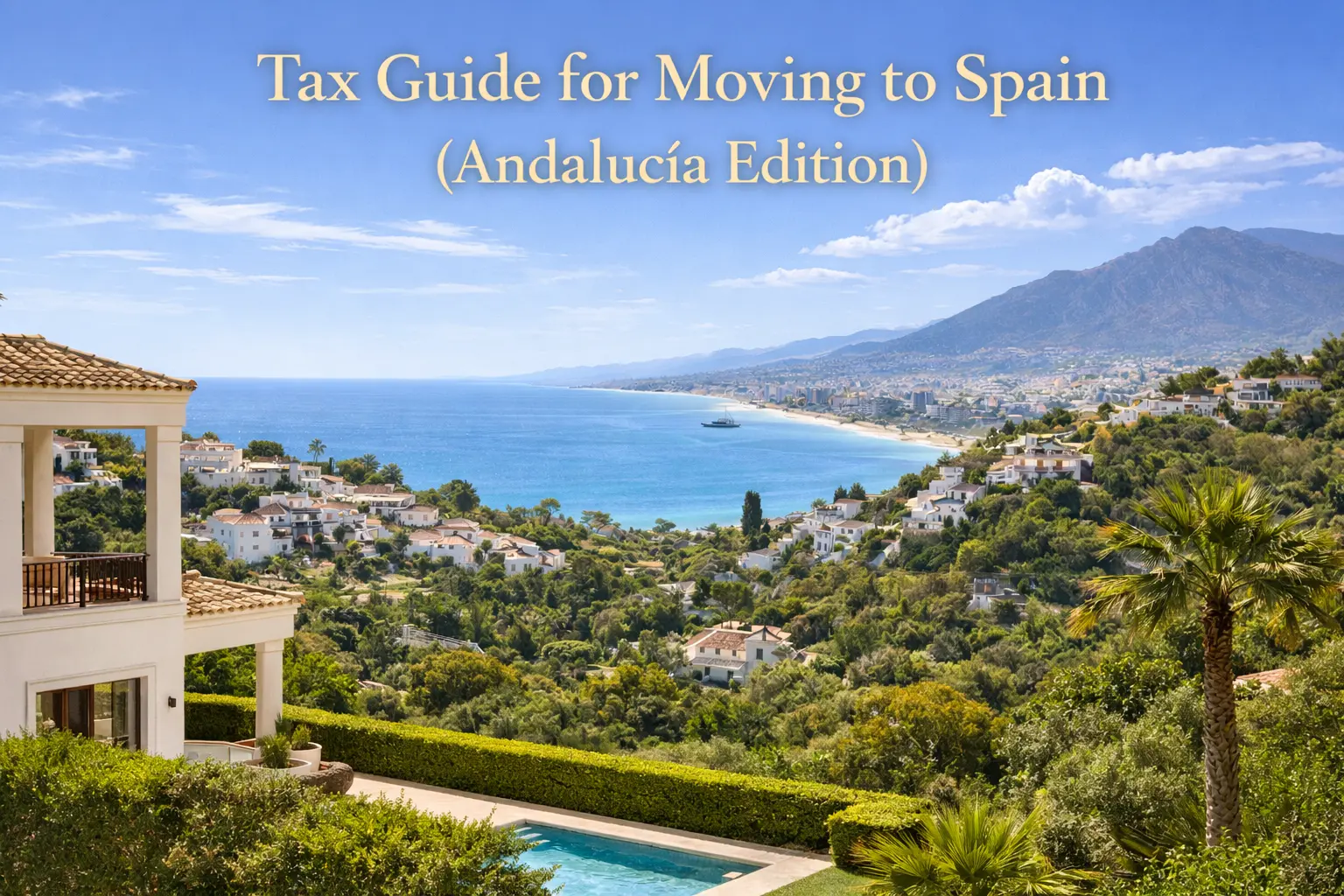
    Benahavís property lifestyle Costa del Sol tax guide Spain

    Tax is often the quiet factor behind a relocation decision.

    Not the headline reason — but the one that determines whether a move feels sustainable over time.

    For many internationally mobile families considering Spain, the assumption is simple: lifestyle improves, but taxes rise. The reality, particularly in Andalucía, is more nuanced — and, in some cases, more favourable than expected.

    This guide focuses specifically on the Costa del Sol, with particular reference to Benahavís, where local tax levels remain notably competitive within the region.

    Costa del Sol relocation guide 2026


    Understanding the Spanish Tax Landscape

    Spain operates a layered tax system. There is national taxation, regional variation, and then local municipal taxes — each influencing the overall picture.

    For new residents, the most important distinction is between standard Spanish tax residency and special regimes such as the Digital Nomad / impatriate framework. The latter can significantly alter how income is treated, particularly in the early years of residency.

    However, regardless of structure, property ownership introduces a set of local taxes that are often more predictable — and, importantly, vary depending on where you buy.


    Buying Property in Andalucía

    For resale properties in Andalucía, the primary acquisition tax is the Transfer Tax (ITP), which is currently set at 7%.

    To this, buyers should add legal fees, notary and registry costs, which typically bring total purchase costs to approximately 10% of the purchase price.

    For new-build properties, the structure changes slightly. Instead of ITP, buyers pay VAT (IVA) at 10%, plus stamp duty (AJD), which is generally around 1.2% in Andalucía, alongside legal costs.

    These figures are consistent across the region — but what happens after purchase is where location begins to matter more.

    Buying on the Costa del Sol in 2026 as a foreigner


    Annual Property Taxes in Benahavís

    One of the lesser-known advantages of Benahavís is its relatively low ongoing property taxation compared to neighbouring municipalities.

    The annual council tax (IBI) is typically lower than in Marbella, despite many properties sharing similar values and positioning. This is due to historically lower cadastral values and municipal rates.

    Additionally, the local rubbish collection tax (basura) in Benahavís is notably modest — often in the region of approximately €18 per year for residential properties.

    While these figures may seem minor in isolation, over time they contribute to a noticeably lower cost of ownership, particularly for higher-value homes.

    This is an important distinction: two properties with similar purchase prices on the Costa del Sol can have meaningfully different annual holding costs depending on the municipality.
    In areas such as Marbella, for example, both IBI and local charges are generally higher.


    Income Tax: What Changes When You Move

    For those becoming tax resident in Spain, income tax is typically the most significant consideration.

    Spain applies a progressive income tax system, with combined state and regional rates that can exceed 45% at higher income levels. This is often the figure that creates hesitation among those relocating from low-tax jurisdictions.

    However, this does not always reflect the full picture.

    Under Spain’s special impatriate regime — commonly referred to as the Beckham regime — qualifying individuals may be taxed at a flat rate of 24% on employment income up to €600,000 for a fixed period.

    This framework can significantly alter the effective tax position during the initial years of residency, particularly for internationally mobile professionals and executives.

    It is not automatic, and it must be structured correctly, but it is one of the key reasons Spain has become increasingly attractive for relocation.

    Spain’s Digital Nomad Visa in 2026

    Spain Digital Nomad Visa requirements


    Wealth, Assets and Long-Term Planning

    Spain also applies a wealth tax framework, although Andalucía has effectively neutralised this through a 100% regional relief in most cases.

    In practical terms, this means that for many residents in Andalucía, wealth tax does not currently result in an additional payment — a notable advantage compared to other Spanish regions.

    However, tax planning remains essential. Structures, residency status and asset location all influence the final position.

    Inheritance tax is another area where Andalucía has introduced favourable reductions, particularly for close family members, making intergenerational planning more efficient than in the past.


    A Subtle but Important Advantage

    What becomes clear when looking at the Costa del Sol in detail is that not all locations are equal from a tax perspective.

    Benahavís stands out not because it is radically different — but because it is quietly more efficient.

    Lower municipal taxes, combined with the broader Andalucía framework, create a structure where ongoing ownership costs remain controlled, even for high-value properties.

    This is rarely the headline reason people choose where to live. But over time, it becomes one of the reasons they stay.


    Final Thought

    Relocating to Spain is often viewed through the lens of lifestyle — climate, scenery, pace of life. And rightly so.

    But the financial structure behind that lifestyle matters just as much.

    In Andalucía, and particularly in Benahavís, the balance between lifestyle and taxation is more favourable than many expect. It allows for a way of living that feels elevated, without unnecessary financial friction.

    And for those planning carefully, it creates a foundation that is not only enjoyable — but sustainable.


    Related Reading


    Important Note

    This article is provided for general information only and does not constitute tax or legal advice. Tax treatment depends on individual circumstances, residency status and structuring. Professional advice should always be sought before making decisions.

    [siteorigin_widget class=”WP_Widget_Custom_HTML”][/siteorigin_widget]
  • Family Guide to Moving to the Costa del Sol

    Family Guide to Moving to the Costa del Sol
    What Family Life Really Looks Like on the Costa del Sol

    Why More International Families Are Choosing Southern Spain in 2026


    Family lifestyle Costa del Sol Marbella Benahavís relocation

    For many families, moving to Spain is not simply about sunshine or scenery. It is about changing how daily life feels — the rhythm of the school run, the time spent outdoors, the sense of space, safety and balance that becomes part of everyday living.

    And increasingly, for internationally mobile families, the Costa del Sol is emerging not as an alternative — but as a clear upgrade. A place where lifestyle is not something you plan around, but something that happens naturally.

    Costa del Sol relocation guide 2026


    A Different Kind of Upbringing

    What defines family life on the Costa del Sol is not one single factor, but a noticeable shift in pace. Children spend more time outdoors, afternoons extend into evenings, and weekends become a continuation of a lifestyle already centred around space, light and accessibility.

    The climate plays its role, of course, but more important is the way it shapes behaviour. Beach days in winter. After-school sports outdoors year-round. A sense that life is not confined to interiors.

    It is a quieter, more balanced rhythm — one that many families realise they were missing.


    Education Without Compromise

    For most families, education is the defining factor in any relocation decision.

    What has changed in recent years is the strength of the offering. The Costa del Sol now provides a well-established network of international schools, with British, international and bilingual curricula available across Marbella, Benahavís and Estepona.

    Class sizes tend to be smaller, facilities are modern, and importantly, the environment is international — something many relocating families value immediately. For children, this often translates into a smoother transition, both academically and socially.

    Schools in and around Benahavís

    School bus transport in Benahavís

    After-school activities in Benahavís


    Choosing the Right Area

    Where you choose to live will shape your experience more than anything else.

    Marbella offers proximity and energy — close to schools, beaches and social life. Benahavís, just minutes away, offers something different: more space, more privacy and a slightly slower pace. Communities feel more residential, often gated, with views that extend towards the sea and mountains.

    For many families, this balance — close enough, but not within the intensity — is where the decision settles. Estepona continues to emerge as a quieter alternative, with a more understated character and growing appeal for long-term living.

    Benahavís area guide


    Safety, Space and Everyday Ease

    One of the most noticeable changes for families is how straightforward daily life becomes. Gated communities, low-density planning and strong local infrastructure create an environment where families feel comfortable quickly.

    Children gain independence earlier, movement between home, school and activities feels simpler, and the day flows more naturally. It is not something that appears in statistics — but it is often what families value most once they arrive.


    Homes Designed for Family Living

    Property on the Costa del Sol naturally supports family life.

    Villas offer space, privacy and outdoor living — pools, gardens and terraces that become part of everyday routine. Apartments within well-managed communities provide security, shared facilities and ease of maintenance.

    The key is not simply size, but how the space is lived in — open layouts, indoor-outdoor flow and an orientation towards light.

    Family homes near schools


    Healthcare and Practical Considerations

    Healthcare is often a quiet concern before a move — and a quiet reassurance afterwards. The Costa del Sol offers a strong mix of public and private healthcare, with private providers in particular delivering a level of service aligned with international expectations.

    English-speaking professionals are widely available, access is generally straightforward, and combined with transport, amenities and services, the practical side of relocation tends to settle quickly.

    Healthcare in Spain for expats


    A Lifestyle That Works Long-Term

    What often surprises families is not the initial experience, but how sustainable it feels over time. Children adapt quickly, routines establish naturally, and the environment supports the lifestyle rather than competing with it.

    For many, it becomes less about having moved — and more about having found a place that fits.


    Final Thought

    Relocating as a family is rarely a purely logical decision. It sits somewhere between instinct and planning — between what looks right on paper and what feels right in practice.

    The Costa del Sol offers both.

    And for those considering the move, the question is no longer whether it works — but whether it reflects the life you want your family to grow into.


    Related Reading


    Important Note

    This guide is provided for general information only and does not constitute legal, educational or relocation advice. Decisions should be supported by professional guidance tailored to your circumstances.

    Find Your Home in Benahavis

    [siteorigin_widget class=”WP_Widget_Custom_HTML”][/siteorigin_widget]
    [siteorigin_widget class=”WP_Widget_Custom_HTML”][/siteorigin_widget]
  • Can Owners Request a New Vote on Short-Term Rentals in Andalusia?

    Can Owners Request a New Vote on Short-Term Rentals in Andalusia?

    Can Owners Request a New Vote on Short-Term Rentals in Andalusia?

    Understanding Your Rights After a Community “No”


    In places such as Benahavís, the debate over short-term rentals rarely feels abstract. It sits at the point where lifestyle, investment, privacy and community harmony all meet. Since the latest legal changes took effect, many owners have been asking a more precise question: if a community has already voted against tourist rentals, can that issue be brought back for another vote?

    The answer is yes, but the route matters. Spanish horizontal property law does not treat one unsuccessful vote as the end of the story. A community can revisit the issue at a later meeting. However, the way that reconsideration reaches the agenda, and the way any new decision is approved, must follow the proper legal process.

    The starting point: an owner can ask for the issue to return to the agenda

    Under the Ley de Propiedad Horizontal, any owner may ask for a matter of community interest to be studied and voted on by the owners’ meeting. That request should be made in writing, clearly identifying the issue to be discussed, and it should be sent to the president. The law states that the president will include it on the agenda of the next meeting.

    That distinction matters. An owner is not simply reopening the issue informally in conversation or WhatsApp chat. The correct route is a written agenda request. In practical terms, that means the owner should frame the point carefully, make the wording clear, and submit it before notice of the next annual meeting is circulated.

    A new vote is possible, but an extraordinary meeting is different

    Where some owners get caught out is in assuming that the right to request a topic is the same as the right to force an immediate extraordinary meeting. It is not. If the aim is to wait for the next AGM, the legal position is comparatively straightforward: submit the written request in time and ask for the matter to be placed on the agenda.

    If the aim is to accelerate the issue and bring it forward sooner, the threshold is higher. An extraordinary meeting may be called by the president, but it may also be requested by at least one quarter of the owners, or by owners representing at least 25% of the participation quotas. In other words, one owner alone may be able to place the issue before the next ordinary meeting, but usually cannot compel an immediate extraordinary meeting without broader support.

    A previous “no” does not permanently close the door

    A prior refusal does not create a permanent legal lock. Communities are allowed to reconsider issues when circumstances change, when a proposal is better structured, or when owners wish to revisit the implications of an earlier decision. In a place like Benahavís, that is particularly relevant because opinion often shifts once owners move from a vague debate about “holiday lets” to a more detailed discussion about management standards, insurance, quiet-hours, guest controls and community safeguards.

    That is why the quality of the second proposal often matters more than the fact that there was a first refusal. A poorly explained request may attract instinctive opposition. A measured proposal, by contrast, can reframe the question away from disruption and toward governance, control and enforceable standards.

    Why the 2025 reform changed the conversation

    The national reform that entered into force on 3 April 2025 altered the landscape in a meaningful way. For owners who want to start tourist-rental activity after that date, prior express community approval is now central. The relevant community decision sits within the 3/5 majority framework applied to approvals, restrictions, conditions and prohibitions for that activity.

    That makes the community vote much more significant than it once was. In many cases, the question is no longer simply whether the community objects in principle. It is whether the owner can obtain the express approval now required for a new tourist-rental use. At the same time, owners who were already lawfully exercising that activity before the reform came into force may fall within a different transitional position, which is why timing and documentation are now so important.

    Andalusia adds another layer, not a substitute

    Andalusia’s own regulatory framework also tightened recently, and that has added to the confusion. In practice, however, the regional regime does not replace community approval issues. It sits alongside them. A property may still need to satisfy the Andalusian tourist-rental rules, local planning constraints and building-specific community rules at the same time. In short, owners should avoid treating the regional registration process as though it overrides what the community can decide under horizontal property law.

    For Benahavís owners, that is where a more strategic approach becomes important. The legal mechanics matter, but so does presentation. Communities are far more likely to engage seriously with a proposal that feels neighbour-conscious, professionally managed and limited by clear conditions.

    How to ask for a fresh vote intelligently

    The most effective requests are usually the calmest ones. Rather than simply asking the community to reverse itself, it is often better to invite reconsideration of the issue in light of a responsible operating framework. That can include professional management, emergency contact details, insurance, noise-control rules, guest registration procedures, occupancy limits and clear consequences for breaches.

    That approach does two things at once. First, it makes the agenda request feel constructive rather than confrontational. Second, it gives undecided owners something practical to assess. In communities where the first vote was driven by uncertainty, that can make a material difference.

    The practical conclusion

    Yes, an owner can request that short-term rentals be put back before the community for a new vote. The law gives owners a route to ask for that issue to be included on the agenda of the next meeting. What an owner cannot usually do alone is force an immediate extraordinary meeting without the support required by law.

    That means the real opportunity lies in timing, wording and preparation. In today’s legal climate, especially in Andalusia, communities are no longer just debating principle. They are deciding how much control they want, what standards they expect, and whether a carefully regulated model is preferable to a blanket refusal. For owners who still want the issue reconsidered, the most persuasive move is rarely a louder argument. It is a better one.

    Download the supporting documents

    If you are preparing to raise the issue in your own community, you can make the process feel more professional from the outset. We recommend sending a formal written request, attaching a neighbour-conscious proposal, and circulating a measured briefing to other owners before the meeting.

    We have created draft documents which you can use in your community:

    If you would like editable word versions of these documents, please feel free to ask.

    If you are looking to sell your property in benahavis, we have marketing strategies for both properties with and without rental licences, highlighting the benefits of both. We would love to discuss marketing your home.

    Related Reading

    This article is provided for general information only and does not constitute legal advice. Community statutes, prior resolutions, registry position, municipal rules and the exact timing of any tourism registration can all affect the outcome in a specific case.

    Looking for a home outside Benahavís?
    Holiday Homes Spain
    covers the whole Costa del Sol.

    [siteorigin_widget class=”WP_Widget_Custom_HTML”][/siteorigin_widget]
  • 10 Reasons to Choose Benahavís | Luxury Living Guide

    10 Reasons to Choose Benahavís | Luxury Living Guide

    10 Reasons to Choose Benahavís

    Why So Many Buyers Choose Benahavís for a Home or Holiday Home


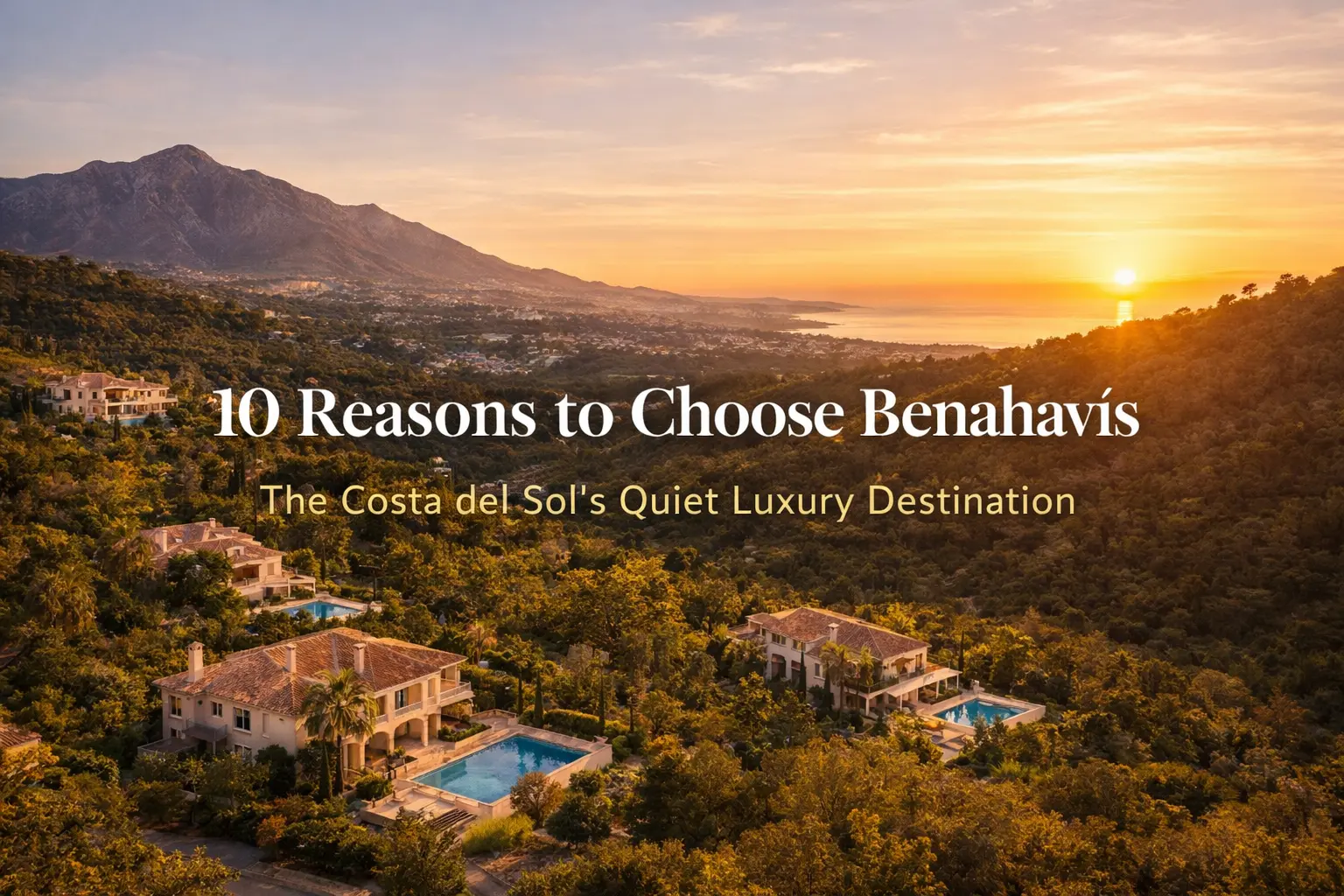
    Luxury view across Benahavís with mountains, greenery and Mediterranean light

    Some destinations impress at first glance. Others reveal their appeal slowly, through the rhythm of daily life. Benahavís belongs firmly to the second category. Quietly refined, beautifully positioned and consistently sought after, it has become one of the Costa del Sol’s most desirable places to own a primary residence, a second home or a holiday retreat.

    Set just inland from Marbella and Puerto Banús, Benahavís offers a rare combination of privacy, scenery, quality of life and convenience. It is close to the coast, yet feels protected from its pressure. It is exclusive, yet remains grounded in nature. And while it is known for luxury property, golf and fine dining, its real appeal lies in something broader: the ease and elegance of living well.

    From low-density surroundings and panoramic views to international schools, strong connectivity, lower local taxes and a wide choice of homes, this is a destination that makes sense both emotionally and practically. Here are 10 reasons to choose Benahavís — and why so many people decide to stay.

    1. Space, Nature and a Sense of Calm

    One of the most distinctive qualities of Benahavís is its feeling of openness. The municipality covers a large protected area of hills, valleys and river corridors, with planning that has historically favoured low-density development and generous plot sizes. The result is immediate: more breathing room, more privacy and more visual space.

    Views often stretch across golf fairways, mountains, woodland and, in many locations, all the way to the Mediterranean. Even in established residential communities, the atmosphere feels noticeably calmer than in denser coastal areas.

    Nature is not an occasional luxury here. It is part of everyday life — from sunset terraces and pine-covered hills to riverside walks and the changing colours of the landscape throughout the year.

    Panoramic mountain and countryside views in Benahavís

    2. Close to Marbella and Puerto Banús, Without the Noise

    Location is one of Benahavís’ greatest strengths. While the municipality feels private and tucked away, it sits within easy reach of Marbella, Puerto Banús, San Pedro Alcántara and Estepona. This means residents can enjoy beaches, shopping, marinas, restaurants and nightlife within a short drive, then return to a home environment that feels more peaceful and residential.

    That balance is increasingly rare on the Costa del Sol. Benahavís allows you to stay connected to everything that matters without being immersed in the bustle of busier resort zones.

    For many buyers, this is not simply convenient — it is essential. Coastal access remains fast and practical, yet the everyday experience of coming home feels entirely different.

    3. A Lifestyle That Works Beautifully Day to Day

    Benahavís is not just attractive in brochure terms. It functions exceptionally well in real life. Supermarkets, healthcare, banks, gyms, golf clubs and professional services are all within easy reach, while the village itself offers character, charm and an enduring social atmosphere.

    This is a place where daily routines feel elevated rather than interrupted. Morning exercise, coffee on a terrace, school runs, golf, long lunches and evening dining all fit naturally into the week. Life tends to feel active, outdoors-oriented and relaxed at the same time.

    That is precisely why Benahavís appeals not only to holiday-home buyers, but also to full-time residents who want a setting that feels luxurious without becoming impractical.

    4. Golf Is Woven Into the Landscape

    Benahavís is one of the Costa del Sol’s standout golf settings, home to or surrounded by some of the region’s most respected courses, including La Quinta, Los Arqueros, El Higueral and Villa Padierna. For golfers, that means outstanding access. For homeowners, it also means something else: beautifully maintained surroundings and permanently green, open views.

    Golf communities here are not purely about sport. They shape the visual identity of the area, preserve space between developments and contribute to the sense of refinement that defines much of the municipality.

    Whether you play regularly or simply appreciate the environment that golf creates, it is a meaningful part of what makes Benahavís so appealing.

    5. Benahavís Has a Dining Reputation of Its Own

    For many years, Benahavís village has been known as the dining room of the Costa del Sol. Its restaurant scene is one of the municipality’s signature attractions, with a strong concentration of traditional Andalusian cooking, Mediterranean flavours and increasingly refined modern dining.

    There is a warmth to dining here that feels authentic rather than overly curated. Terraces stay lively, service feels personal and meals tend to unfold slowly. It is one of the rare places where the atmosphere is as memorable as the menu.

    For owners, this culinary identity adds another layer to daily life and strengthens Benahavís’ appeal as both a permanent base and a holiday destination.

    Restaurant terrace in Benahavís village during the evening

    6. International Schools Are Within Easy Reach

    Families are drawn to Benahavís for many of the same reasons as second-home owners — space, privacy, safety and quality of life — but access to education is a particularly important advantage. International schools in nearby Atalaya, San Pedro and Marbella make daily school runs realistic from many parts of the municipality.

    That includes British, bilingual and international options, which allows families to combine an international education with a home setting that feels greener, calmer and more residential than many coastal alternatives.

    For parents, the attraction is obvious. For children, the benefit is just as strong: a lifestyle with room to grow, time outdoors and a setting that feels stable and secure.

    7. Lower Local Taxes Add to the Appeal

    Not every advantage is visible at first glance. One of Benahavís’ quieter strengths is its reputation for lower local taxes and comparatively manageable running costs, particularly when measured against some neighbouring municipalities.

    For owners, lower IBI and modest annual basura charges can make a noticeable difference over time. While tax should never be the sole reason to choose a location, it certainly becomes an important factor once ownership begins.

    In Benahavís, these practical benefits sit comfortably alongside the lifestyle advantages, giving buyers both emotional appeal and everyday value.

    Luxury hillside home in Benahavís with scenic views and privacy

    8. Property Choice Is Broad and Sophisticated

    Benahavís appeals to a wide variety of buyers because the property offer is unusually broad. The market includes golf apartments, elegant townhouses, family villas, designer homes and ultra-private estates, all within the same municipality.

    This diversity is one of the area’s great strengths. It gives buyers flexibility, supports long-term demand and ensures Benahavís does not depend on one narrow segment of the market. Whether the goal is a lock-up-and-leave holiday property, a spacious family residence or a landmark home with exceptional privacy, there is genuine choice here.

    That breadth also helps explain why Benahavís remains so resilient and relevant to different buyer profiles year after year.

    9. Limited Supply Helps Support Long-Term Value

    Benahavís has largely avoided the overdevelopment that has affected some more densely built parts of the Costa del Sol. Protected land, planning control and enduring demand have helped create a market defined more by scarcity than by excess.

    For buyers, this matters. It means the qualities they are buying into — views, space, privacy and natural surroundings — are not easily reproduced elsewhere. Limited supply and a strong lifestyle proposition have historically supported value and made the municipality feel more resilient over time.

    That does not simply make Benahavís attractive. It makes it reassuring.

    Wide sea and mountain views from a Benahavís property

    10. It Offers a Rare Version of Costa del Sol Luxury

    Ultimately, the strongest reason to choose Benahavís is also the hardest to quantify. It is not just about homes, golf, restaurants or schools, although all of those matter. It is about the overall feeling of the place.

    Benahavís offers a more understated, more spacious and more natural version of luxury — one built on privacy, views, calm and everyday livability rather than noise or display. For many buyers, that distinction is exactly what makes it so compelling.

    It is a location that works for holidays, yet feels substantial enough for permanent living. It is scenic without being isolated, exclusive without being inaccessible, and elegant without losing its authenticity.

    The Essence of Benahavís

    Space and nature. Fast connectivity. Golf and dining. International schools. Lower taxes. Long-term value. A broad choice of homes.

    Together, these qualities explain why Benahavís continues to attract families, second-home owners and long-term buyers looking for something more enduring than a typical coastal address.

    For those seeking a home or holiday home on the Costa del Sol, Benahavís remains one of the most persuasive choices of all — not because it tries too hard, but because it gets the balance so beautifully right.

    Related Reading

    Explore more insights into life in Benahavís — from property trends and buyer profiles to lifestyle, history and the areas that define this unique part of the Costa del Sol.

    New Developments in Benahavís (2026)

    A curated overview of the latest off-plan villas and projects shaping the future of the area.


    Benahavís Urbanisations Guide

    Understand the key residential areas, from La Quinta to La Zagaleta and beyond.


    Retiring in Benahavís (2026 Guide)

    Why more international buyers are choosing Benahavís for long-term living and retirement.


    Why Tech Leaders Are Choosing La Zagaleta

    A closer look at ultra-prime demand and the global buyers shaping the market.


    Benahavís International Buyers (2026)

    Who is buying in Benahavís today and what they are looking for.


    Renovated Homes & Expats in Benahavís

    How lifestyle-led buyers are transforming traditional homes into modern spaces.


    The History & Character of Benahavís

    Discover the origins, culture and identity that define the municipality today.


    Sunset over Benahavís showing peaceful luxury living on the Costa del Sol

    Looking for a home outside Benahavís?
    Holiday Homes Spain
    covers the whole Costa del Sol.

    [siteorigin_widget class=”WP_Widget_Custom_HTML”][/siteorigin_widget]
  • Easter Recipes in Andalucía | Semana Santa Food Guide

    Easter Recipes in Andalucía | Semana Santa Food Guide

    Easter Flavours of Andalucía: A Refined Guide to Semana Santa Cuisine


    “Easter recipes in Andalucía capture the spirit of Semana Santa through a rich mix of tradition, seasonality and regional flavour, from honeyed sweets to deeply comforting savoury classics.”

    Semana Santa in southern Spain is not only a visual spectacle of candlelit processions, historic streets and spring gatherings — it is also a deeply culinary season. Across Andalucía, Easter tables reflect both restraint and celebration: dishes shaped by tradition, faith, family and the arrival of a new season.

    Some recipes are humble and savoury, rooted in Lenten customs. Others are sweet, fragrant and unmistakably festive. Together, they form part of the rhythm of Holy Week in southern Spain. For anyone discovering the Costa del Sol lifestyle, these dishes offer another window into what makes this region so memorable.

    Below, we’ve selected six of the most popular Easter recipes in Andalucía — with a balanced mix of sweet and savoury favourites — and a quick summary of each at the top so readers can jump straight to the ingredients and method.

    Traditional Easter dishes in Andalucía served on a spring table

    Six Popular Easter Dishes in Andalucía

    1. Torrijas

    Perhaps the most iconic Easter sweet in Spain, torrijas are often compared to French toast, but the result is richer, softer and more aromatic. Bread is soaked, gently fried, and finished with cinnamon, sugar or honey.

    Jump to ingredients & recipe ↓

    2. Potaje de Vigilia

    A classic Holy Week stew made with chickpeas, spinach and cod, Potaje de Vigilia is one of Spain’s most enduring Easter dishes. It is hearty, traditional and ideal for cooler spring evenings.

    Jump to ingredients & recipe ↓

    3. Pestiños

    Especially associated with Andalucía, pestiños are delicate pastries scented with sesame and citrus, fried in olive oil and glazed with honey or sugar. They are festive, elegant and unmistakably southern.

    Jump to ingredients & recipe ↓

    4. Bacalao al Pil-Pil

    Salt cod is central to many Easter menus in Spain, and Bacalao al Pil-Pil is one of the most refined ways to serve it. Olive oil, garlic and the natural gelatin of the fish create a silky, luxurious sauce.

    Jump to ingredients & recipe ↓

    5. Sopa de Ajo

    Rustic, warming and full of character, sopa de ajo turns a few humble ingredients into a deeply satisfying dish. Garlic, paprika, bread and egg come together in a recipe that feels both simple and timeless.

    Jump to ingredients & recipe ↓

    6. Mona de Pascua

    Though more closely associated with eastern Spain, Mona de Pascua is widely recognised and enjoyed at Easter. It brings a celebratory finish to the table, often decorated with chocolate eggs and bright seasonal detail.

    Jump to ingredients & recipe ↓

    Why Easter Food Matters in Andalucía

    Semana Santa cuisine is about more than flavour. It reflects a seasonal shift in Andalucía: village life becomes more social, families gather, church bells and marching bands fill the streets, and recipes tied to memory return to the kitchen.

    For readers exploring life on the Costa del Sol, this culinary tradition sits naturally alongside the wider Easter atmosphere across Benahavís, Marbella and Málaga. You can explore more about the season in our guide to Easter on the Costa del Sol in 2026, our What’s On in Benahavís pages, and our broader guide to living in Benahavís.

    We would recommend trying one of the municipalities wonderful restaurants, you can find some our favourites here->

    Ingredients & Recipes

    Torrijas

    Torrijas are one of the great Easter classics of Spain. In Andalucía, they are often served with honey, which gives them a warmer, more local character than versions dusted only with sugar.

    Ingredients

    • 1 loaf of stale bread, cut into thick slices
    • 500ml whole milk
    • 2 eggs
    • 1 cinnamon stick
    • Strip of lemon peel
    • Olive oil, for frying
    • Honey or sugar, to finish
    • Ground cinnamon

    Method

    1. Warm the milk gently with the cinnamon stick and lemon peel, then leave it to infuse.
    2. Dip the bread slices in the milk until softened but not falling apart.
    3. Coat each slice in beaten egg.
    4. Fry in olive oil until golden on both sides.
    5. Drain and finish with honey, or sprinkle with sugar and cinnamon.

    Back to top ↑

    Potaje de Vigilia

    This traditional vigil stew is one of the most important savoury dishes of Holy Week. Chickpeas, spinach and cod create a dish that is nourishing, deeply rooted in custom and still widely enjoyed today.

    Ingredients

    • 400g chickpeas, soaked overnight
    • 250g desalted cod
    • 250g spinach
    • 1 onion, finely chopped
    • 3 cloves garlic
    • 1 teaspoon sweet paprika
    • Olive oil
    • Salt and pepper
    • 2 hard-boiled eggs, optional for serving

    Method

    1. Cook the chickpeas until tender.
    2. In a separate pan, sauté the onion and garlic in olive oil.
    3. Add paprika, then stir in the cod and spinach.
    4. Combine with the chickpeas and simmer gently until the flavours meld.
    5. Serve warm, optionally topped with chopped boiled egg.

    Back to top ↑

    Pestiños

    Pestiños are among Andalucía’s best-known festive pastries. Their honeyed finish and subtle sesame note make them feel both rustic and refined, especially when served with coffee after lunch.

    Ingredients

    • 300g plain flour
    • 100ml olive oil
    • 100ml white wine
    • 1 tablespoon sesame seeds
    • 1 teaspoon aniseed, optional
    • Zest of 1 orange
    • Honey or sugar, for coating
    • Olive oil, for frying

    Method

    1. Warm the olive oil with sesame, orange zest and aniseed, then cool slightly.
    2. Mix with the flour and wine to form a smooth dough.
    3. Roll out and cut into small pieces, folding the corners inward.
    4. Fry until lightly golden and crisp.
    5. Dip in warm honey or coat with sugar before serving.

    Back to top ↑

    Bacalao al Pil-Pil

    Although the dish originated in the north, bacalao is central to Easter eating across Spain, and this version has become a favourite well beyond its birthplace. It is elegant enough for a more refined Easter lunch.

    Ingredients

    • 4 pieces desalted cod
    • 200ml olive oil
    • 4 cloves garlic, sliced
    • 1 small dried chilli

    Method

    1. Warm the olive oil and gently cook the garlic and chilli until fragrant, then remove them.
    2. Add the cod skin-side down and cook slowly.
    3. Remove the fish and allow the cooking juices to combine with the oil.
    4. Swirl or stir gently to emulsify the sauce until glossy and silky.
    5. Return the cod to the pan and serve with the garlic and chilli.

    Back to top ↑

    Sopa de Ajo

    Sopa de ajo is one of those dishes that proves how rewarding simple Spanish cooking can be. It is particularly welcome during Easter evenings when spring temperatures drop after sunset.

    Ingredients

    • 6 cloves garlic, sliced
    • 150g stale bread, torn or sliced
    • 1 teaspoon sweet paprika
    • 1 litre stock
    • 2 eggs
    • Olive oil
    • Salt and pepper

    Method

    1. Sauté the garlic gently in olive oil until fragrant but not browned.
    2. Add the bread and paprika, stirring quickly.
    3. Pour in the stock and simmer for 10 to 15 minutes.
    4. Crack in the eggs and poach gently in the soup.
    5. Serve immediately with extra olive oil if desired.

    Back to top ↑

    Mona de Pascua

    Mona de Pascua brings a lighter, more celebratory mood to the Easter table. It is ideal here as a contrast to the more traditional Andalusian sweets and helps round out the selection with something festive and visual.

    Ingredients

    • 300g plain flour
    • 100g sugar
    • 3 eggs
    • 100g butter
    • 1 sachet baking powder
    • Zest of 1 lemon
    • Chocolate eggs or seasonal decorations

    Method

    1. Beat the eggs and sugar until light.
    2. Add melted butter, lemon zest, flour and baking powder.
    3. Pour into a prepared cake tin and bake until golden.
    4. Cool fully, then decorate with chocolate eggs or Easter details.

    Back to top ↑

    A Seasonal Taste of Southern Spain

    What makes Easter food in Andalucía so memorable is the contrast it offers. There is simplicity, restraint and tradition on one side; celebration, texture and sweetness on the other. Together, these dishes reflect the character of the region itself — warm, elegant, social and deeply tied to place.

    For anyone spending Holy Week on the Costa del Sol, understanding these recipes adds another layer to the experience. They are not only recipes to make at home, but part of the wider culture that shapes life across Benahavís, Marbella and Málaga each spring. Our Easter guide, local lifestyle pages and events coverage offer a natural next step if you’d like to explore the season more fully.

    FAQs

    • Which Easter dish is most popular in Andalucía?
      Torrijas are arguably the most recognisable Easter sweet in Andalucía, while Potaje de Vigilia is one of the most traditional savoury dishes served during Holy Week.
    • Are all Easter recipes in Spain sweet?
      No. Although sweets are a major part of Semana Santa, savoury dishes such as cod stews, garlic soup and chickpea-based recipes are equally important.
    • Why is cod so common during Easter in Spain?
      Cod became closely associated with Lent and Holy Week because it offered a practical preserved fish option during periods when meat was traditionally avoided.
    • Can these dishes be found in restaurants on the Costa del Sol?
      Yes. During Easter, many restaurants and bakeries across Benahavís, Marbella and Málaga serve seasonal dishes such as torrijas, pestiños and cod-based specials.
    • Is this article relevant for visitors as well as residents?
      Absolutely. These recipes help visitors understand the culture behind Semana Santa, while also giving residents and homeowners a practical way to bring the season into their own kitchen.

    More Semana Santa treats can be found here->

    Six Popular Easter Recipes in Andalucía


    [siteorigin_widget class=”WP_Widget_Custom_HTML”][/siteorigin_widget]
  • Beckham Law News 2026: Why Americans Are Moving to Spain

    Beckham Law News 2026: Why Americans Are Moving to Spain

    Why Americans Are Choosing Spain in 2026 — And the Real Story Behind the Beckham Law


    Beckham Law News in 2026 is shaping how Americans approach moving to Spain, blending tax strategy with lifestyle decisions

    Spain has always held a certain allure — climate, culture, and a lifestyle that feels both elevated and grounded. But in 2026, something more strategic is driving relocation decisions among high-net-worth Americans.

    It’s not just about where to live.

    It’s about how to live — and how to structure that life intelligently.

    At the centre of that shift is one of Spain’s most talked-about incentives: the Beckham Law.

    Luxury lifestyle in Marbella and Benahavís for Americans relocating to Spain in 2026

    A Growing American Presence in Spain

    The numbers tell a clear story.

    According to Spain’s National Statistics Institute, the number of US citizens living in Spain has risen sharply in recent years. That growth has helped turn Spain from a lifestyle aspiration into a serious relocation destination for internationally mobile professionals, entrepreneurs, investors, and families.

    However, the raw data only explains part of the trend.

    Behind it sits a more nuanced shift in priorities: stability, safety, quality of life, European mobility, and increasingly, tax efficiency as part of a broader relocation strategy.

    For many buyers and movers, Spain — and particularly areas such as Marbella and Benahavís — offers a rare combination of sophistication, lifestyle value, and long-term positioning.

    The Beckham Law — Still One of Europe’s Most Attractive Regimes

    Originally introduced in 2004 and popularised by David Beckham during his move to Real Madrid, the Beckham Law remains one of Spain’s most widely discussed fiscal incentives for new residents.

    In simple terms, the regime can allow qualifying individuals to pay a flat rate of tax on Spanish employment income rather than entering Spain’s normal progressive resident tax scale. For internationally mobile professionals, that can create a material difference in early-year planning.

    For many high earners, the appeal is obvious. Spain offers lifestyle, connectivity, and prestige, while the tax regime can offer a more efficient starting point than standard residency rules.

    Remote executive working from a luxury villa in Spain under the Beckham Law

    2026 Reality: It’s No Longer Just About Tax

    While the Beckham Law remains a powerful draw, it is no longer the only reason Americans are looking seriously at Spain.

    In practice, the tax regime now sits within a wider equation that includes remote work flexibility, a lower cost base than many major US cities, access to international education, private healthcare, security, and a more balanced pace of life.

    In other words, the Beckham Law is often the enabler, not the decision-maker.

    The actual move is usually driven by something deeper: a desire to live better, with greater freedom, in a place that still feels globally connected.

    Beckham Law News

    Beckham Law News has become one of the most closely watched parts of Spain’s relocation landscape in 2026.

    On one side, Spanish tax advisers and law firms have reported a notable increase in enquiries from American nationals, particularly among remote executives, entrepreneurs, investors, and internationally minded families. On the other, the regime has attracted intense headlines, criticism, and legal commentary that have made some potential movers pause.

    What matters is separating noise from substance.

    Despite negative press in some international publications, the underlying demand story remains strong. Interest has not disappeared. If anything, it has become more serious, more informed, and more professionally advised.

    The real shift in Beckham Law News is not that the regime is disappearing. It is that applicants now need to approach it with greater precision.

    Why the Headlines Have Turned Sharper

    Part of the recent controversy has come from criticism aimed at the way the regime is administered and interpreted in complex international cases. Some advisers have gone so far as to describe the system in highly negative terms, while Spain’s tax authorities have rejected those accusations forcefully.

    For high-net-worth Americans, the bigger point is this: complexity does not necessarily mean danger, but it does mean the structure must be handled properly.

    US trusts, retirement products, and legacy planning arrangements do not always sit neatly inside the Spanish tax framework. A structure that works well in the United States may need careful review before a move to Spain.

    That is where many of the so-called “grey areas” arise — not from the existence of the Beckham Law itself, but from the interaction between different legal and tax systems.

    Private tax planning meeting in Spain discussing Beckham Law news in 2026

    What Has Actually Changed?

    The most important development is not a dramatic rewrite of the regime, but a rise in scrutiny and sophistication.

    Applicants, particularly from the United States, are increasingly asking more detailed questions about qualification, tax exposure, remote work structures, shareholdings, retirement products, investment income, and wealth planning. Advisers, in turn, are having to work more carefully across jurisdictions.

    That is the real 2026 story.

    The Beckham Law still attracts international talent. It still offers meaningful advantages in the right circumstances. But it now sits inside a more mature, better understood, and more thoroughly reviewed relocation process.

    The Startups Law, Remote Work, and the New Buyer Profile

    Another reason the regime remains so relevant is its connection to Spain’s broader effort to attract international talent. Reforms linked to the Startups Law helped modernise Spain’s appeal to founders, remote workers, and globally mobile professionals.

    That has widened the conversation considerably. Today, Americans looking at Spain are not only retirees or second-home buyers. They are active earners, business builders, operators, creatives, and executives who want to remain internationally engaged while shifting their base to somewhere more liveable.

    However, one detail remains essential: qualification rules are specific. The Beckham Law is not a blanket solution for everyone moving to Spain, and structure matters enormously. That is especially true for digital nomads, entrepreneurs, and anyone balancing US obligations with European residency.

    Why Marbella and Benahavís Sit at the Heart of the Trend

    For Americans making a serious move, geography matters as much as tax.

    That is why the Marbella–Benahavís corridor continues to feature so prominently in high-value relocation conversations. It offers privacy, security, exceptional homes, international schools, golf, wellness, dining, and fast access to Málaga Airport. Just as importantly, it offers a setting that feels both discreet and world-class.

    In Benahavís, the appeal is especially clear. Buyers can access hillside villas, gated communities, sea-view apartments, and refined residential enclaves that feel separate from the noise, yet remain close to everything that matters.

    For many relocating Americans, property here is not simply a lifestyle purchase. It is part of a wider life design decision.

    Luxury property in Benahavís for Americans relocating to Spain

    The Reality Behind the Regime

    The Beckham Law is neither a shortcut nor a trap.

    It is a structured regime with clear potential benefits and equally clear requirements. For those who qualify and who prepare correctly, it can create meaningful tax efficiency during the early years of Spanish residence. For those who arrive with unsuitable structures or incomplete advice, the process can become far more complicated than expected.

    That is why the best outcomes tend to come not from reacting quickly, but from planning thoroughly.

    A More Strategic Type of Buyer

    There is a noticeable shift in the kind of buyer and mover arriving in Benahavís today.

    They are not simply chasing sunshine. They are thinking about residency, family lifestyle, school options, time, health, mobility, tax exposure, and the long-term quality of their day-to-day lives.

    They tend to be globally aware, financially sophisticated, and highly selective. They are not making emotional decisions in isolation. They are building an ecosystem around the move.

    In that context, the Beckham Law matters — but only as one part of a much larger picture.

    Final Thought: Why the Interest Keeps Rising

    Despite the tension in the headlines, the direction of travel remains remarkably clear. More Americans are considering Spain. More are exploring what the Beckham Law could mean for them. And more are looking beyond the obvious coastal clichés toward places that offer privacy, elegance, and real long-term value.

    That is why Benahavís, Marbella, and the wider Costa del Sol continue to stand out.

    For the right buyer, Spain offers something increasingly rare: a life that feels richer, calmer, and more intentional — without stepping away from opportunity.

    And in 2026, that combination has become one of the most compelling luxury relocation stories in Europe.

    FAQs: Beckham Law Spain 2026

    • What is the Beckham Law in Spain?
      A special tax regime allowing qualifying foreign residents to pay a flat tax rate on Spanish income instead of progressive worldwide taxation.
    • Is the Beckham Law still available in 2026?
      Yes, and demand is increasing, particularly among US nationals relocating to Spain for lifestyle and tax planning reasons.
    • Do digital nomads qualify for the Beckham Law?
      Some do, but eligibility depends on employment structure. Self-employed individuals often need alternative tax planning strategies.
    • Why are Americans moving to Marbella and Benahavís?
      These areas combine privacy, luxury real estate, international schools, and strong connectivity, making them ideal for high-net-worth relocation.
    • Is the Beckham Law risky?
      Not when structured correctly. However, US tax structures require careful alignment with Spanish regulations.

    Related Articles and Resources

     David Beckham Law News

    Looking for a home outside Benahavís?
    Holiday Homes Spain
    covers the whole Costa del Sol.

    [siteorigin_widget class=”WP_Widget_Custom_HTML”][/siteorigin_widget]
  • Easter on the Costa del Sol 2026: Benahavís, Marbella & Málaga

    Easter on the Costa del Sol 2026: Benahavís, Marbella & Málaga

    Easter Costa del Sol 2026Easter Costa del Sol 2026 is one of the most atmospheric moments to experience southern Spain.

    Easter on the Costa del Sol in 2026: A Refined Guide to Semana Santa in Benahavís, Marbella & Málaga


    Semana Santa is one of the most atmospheric moments of the year to experience southern Spain. Across Benahavís, Marbella and Málaga, Easter brings candlelit processions, floral tronos, black mantillas, live marching bands and a distinctly Andalusian sense of occasion. For buyers, residents and returning visitors alike, it is also one of the most revealing times to understand the rhythm of life on the Costa del Sol: refined, social, rooted in tradition and exceptionally well connected.

    In 2026, Holy Week runs from Sunday 29 March to Sunday 5 April, with Thursday 2 April and Friday 3 April public holidays in Andalucía. From the grandeur of Málaga’s processions to the elegance of Marbella’s old town and the quieter village charm of Benahavís, Easter offers a vivid portrait of the region at its most atmospheric.

    Children enjoying an Easter egg hunt in Benahavís park during spring

    Why Easter matters on the Costa del Sol

    Easter in Spain is not simply a holiday period. In Andalucía, it is one of the year’s defining cultural moments: part religious observance, part civic ritual, part seasonal gathering. Streets fill, terraces come alive, families travel, and historic centres take on an entirely different tempo.

    For anyone considering property in Benahavís or the wider Costa del Sol, this week reveals more than a calendar event. It shows how the region lives. You see the contrast between coast and hills, tradition and contemporary luxury, privacy and social energy. It is one of the best times to understand why so many international buyers feel an immediate emotional connection to this part of southern Spain.

    What Semana Santa means in Spain

    Semana Santa, or Holy Week, is the most important period in the Spanish religious calendar. Throughout the week, brotherhoods known as cofradías organise processions through towns and cities, carrying elaborate floats called pasos or, in Málaga, the famously monumental tronos. These display sacred sculptures of Christ and the Virgin Mary, often accompanied by candles, flowers and live bands.

    The visual language is unmistakable. Nazarenos walk in robes and pointed hoods known as capirotes. Women may wear black lace mantillas. Drums, brass bands and the occasional spontaneous saeta from a balcony create an atmosphere that is solemn, theatrical and deeply moving all at once.

    For visitors new to Spain, the key to understanding Semana Santa is this: it is not observed in the same way everywhere. In Andalucía, and especially in Málaga and Seville, it is larger, richer in spectacle and more socially visible than in many other parts of the country.

    Nazarenos, candles and Easter processional details during Semana Santa in Andalucía

    Málaga: the grandest nearby experience from Benahavís

    For homeowners and visitors based in Benahavís, Málaga is the obvious centrepiece of Easter week. The city’s Semana Santa is among the most famous in Spain and is defined by scale, spectacle and emotional intensity. Here, the processional floats are not modest. They are huge, flower-laden tronos carried by teams of bearers through the historic centre, often under candlelight and watched by dense crowds deep into the evening.

    Málaga feels celebratory as much as devotional. That is part of its appeal. The city blends reverence with drama, and tradition with a real cosmopolitan energy. If you want to experience Holy Week in full — with major routes, acclaimed brotherhoods and the sense that the entire city is involved — Málaga is the destination to prioritise.

    From Benahavís, it is an easy cultural day trip or evening excursion. That combination is one of the luxuries of being based here: you can dip into the atmosphere of a major city celebration, then return to the privacy, greenery and calmer rhythm of the hills.

    • Best for: scale, ceremony, iconic processions and atmosphere
    • Why it stands out: Málaga’s tronos are among the most dramatic in Spain
    • From Benahavís: practical for a day trip or evening visit if planned ahead

    Marbella: a more intimate Easter atmosphere

    Marbella offers a smaller-scale but highly appealing contrast. Processions pass through the old town, Marbella centre and San Pedro de Alcántara, where the setting is less monumental than Málaga but often more personal. Narrow streets, white façades and traditional squares create a beautifully intimate backdrop for evening processions.

    For many second-home owners, this is the most enjoyable balance. You still experience the pageantry of Semana Santa, but in surroundings that feel easier, more walkable and more naturally tied into lunch, dinner or an elegant evening out. It works particularly well for families or visitors who want atmosphere without the sheer density of Málaga’s crowds.

    Marbella’s Easter week also fits seamlessly into the broader Costa del Sol lifestyle. Beach walks, terrace lunches and old-town evenings can all sit comfortably within the same day.

    Semana Santa procession moving through Marbella old town during Easter week

    Benahavís at Easter

    Benahavís does not compete with Málaga on scale, nor does it need to. Its appeal at Easter lies in atmosphere, setting and quality of life. The village and surrounding municipality feel especially inviting at this time of year. Spring light sharpens the mountain views, terraces fill earlier in the day, and the balance between quiet residential living and easy access to larger cultural events becomes particularly clear.

    This is one of the reasons Benahavís works so well for lifestyle-led buyers. Easter shows the municipality at its most useful and most attractive: close to Marbella, close to Málaga, close to beaches and golf, yet still capable of feeling tucked away and private when you want it to.

    It is also a wonderful time to enjoy one of the area’s defining strengths: food. Benahavís has long been associated with dining and social lunches, and Easter week naturally lends itself to long afternoons, family gatherings and meals that stretch comfortably into the evening.

    What to eat during Easter in Andalucía

    Semana Santa is also one of the best times to experience seasonal Spanish sweets and festive food traditions. Along the Costa del Sol and across Andalucía, Easter menus often feature:

    • Torrijas — bread soaked, enriched and served with sugar, cinnamon or honey
    • Pestiños — fried pastries, often flavoured with sesame or anise and glazed with honey
    • Seafood and bacalao dishes — traditional in many Holy Week menus
    • Long family lunches — still central to the social rhythm of the week

    For anyone based in Benahavís, this is the ideal moment to combine the cultural side of Easter with the gastronomic one. A day of processions in Marbella or Málaga followed by dinner back in Benahavís is one of the most appealing Easter rhythms on the coast. We have collated some of the regions favourite recipes here->

    Useful related reading:

    Semana Santa Easter feat under the sun

    Why Benahavís is a strong base for Easter

    For a luxury buyer or second-home owner, the ideal Easter base is not always the city centre. Benahavís offers something more nuanced: access without immersion. You are near enough to reach Málaga’s major processions, close enough to enjoy Marbella’s old-town atmosphere, and still able to return to a more private setting at the end of the day.

    That combination is especially attractive in spring. Golf courses are green, temperatures are generally comfortable, and the municipality’s lower-density setting feels calm even when the coast is busier. Easter, perhaps more than any other spring week, illustrates the practical advantage of Benahavís as a year-round residential base on the Costa del Sol.

    If you are still comparing areas, these guides may help:

    Practical planning tips for Easter 2026

    • Expect busier roads and parking pressure: especially on the coast and around Málaga’s historic centre during key procession times.
    • Book restaurants ahead: Easter week is a strong dining period across Benahavís, Marbella and Málaga.
    • Dress for spring evenings: days can feel warm in the sun, but evenings in the hills and old towns may be cooler.
    • Use official city and brotherhood resources: procession routes and timings can matter if you are planning a specific evening out. Our guide to the local processions is in our What’s On Guide. More details can be found here:- BenahavisMarbella, Estepona, Malaga
    • Keep flexibility in your schedule: Semana Santa is beautiful partly because it is lived, not staged. Allow time to wander, pause and stay late where the atmosphere feels right.

    FAQs

    • When is Easter in Spain in 2026?
      Easter week in Spain runs from Sunday 29 March to Sunday 5 April 2026. In Andalucía, Thursday 2 April and Friday 3 April are public holidays.
    • Is Málaga worth visiting during Semana Santa?
      Yes. Málaga offers one of Spain’s most famous Holy Week celebrations, known for its vast tronos, dramatic evening routes and city-wide atmosphere.
    • Is Marbella quieter than Málaga at Easter?
      Generally yes. Marbella’s processions feel more intimate and are often easier to combine with lunch, dinner or an old-town stroll.
    • Why stay in Benahavís during Easter?
      Benahavís gives you access to Málaga, Marbella and the coast while still offering privacy, greenery, excellent restaurants and a calmer residential setting.
    • What food should I try during Semana Santa?
      Torrijas and pestiños are classic Easter treats in Andalucía, while seafood and bacalao dishes are also common during Holy Week.

    Looking for a home in Benahavís?
    The Benahavís Collection
    curates homes across the municipality and the wider Costa del Sol.

    [siteorigin_widget class=”WP_Widget_Custom_HTML”][/siteorigin_widget]