Category: Moving to Spain

  • La Heredia vs Alborada – Which Benahavís Area Suits You?

    La Heredia vs Alborada – Which Benahavís Area Suits You?

    La Heredia vs Alborada: Two Very Different Hillside Lifestyles in Benahavís

    Hillside lifestyle in Benahavís near San Pedro de Alcántara

    Buyers exploring hillside property above San Pedro de Alcántara often find themselves comparing two neighbouring areas along the Ronda Road: La Heredia and Alborada. On a map, they sit minutes apart. In reality, they offer two distinctly different living experiences.

    If you’re deciding between traditional Andalusian charm and contemporary architectural minimalism, understanding the difference between La Heredia and Alborada is essential.

    Location: same corridor, different feel

    Both areas sit just above San Pedro de Alcántara, with quick access to Puerto Banús and Marbella via the A-397. Drive times are similar, and both benefit from the restaurants and everyday amenities of the Monte Halcones commercial centre — typically just a few minutes away.

    As a simple reference point, many residents work with:

    • San Pedro de Alcántara — approx. 7–10 minutes
    • Puerto Banús — approx. 12–15 minutes
    • Marbella centre — approx. 20–25 minutes
    • Málaga Airport — approx. 45–50 minutes

    From a pure accessibility perspective, there is little between them. The difference lies in design, atmosphere and architectural identity — and those intangibles tend to decide the purchase.

    Architecture: colour vs contemporary

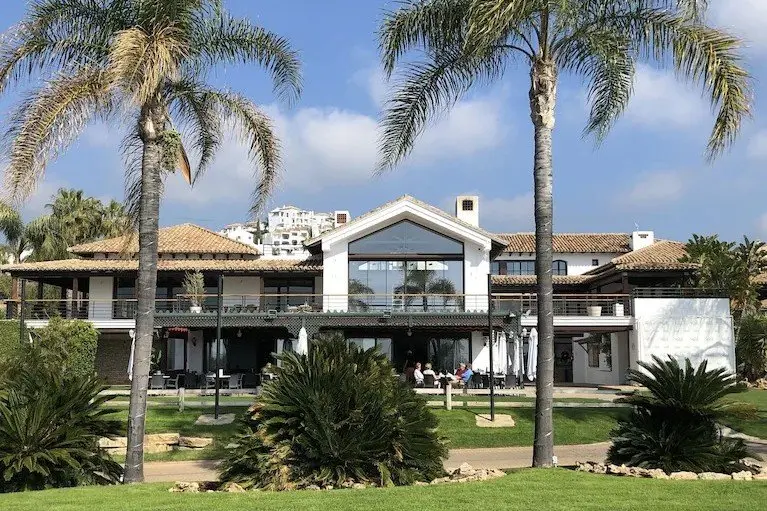
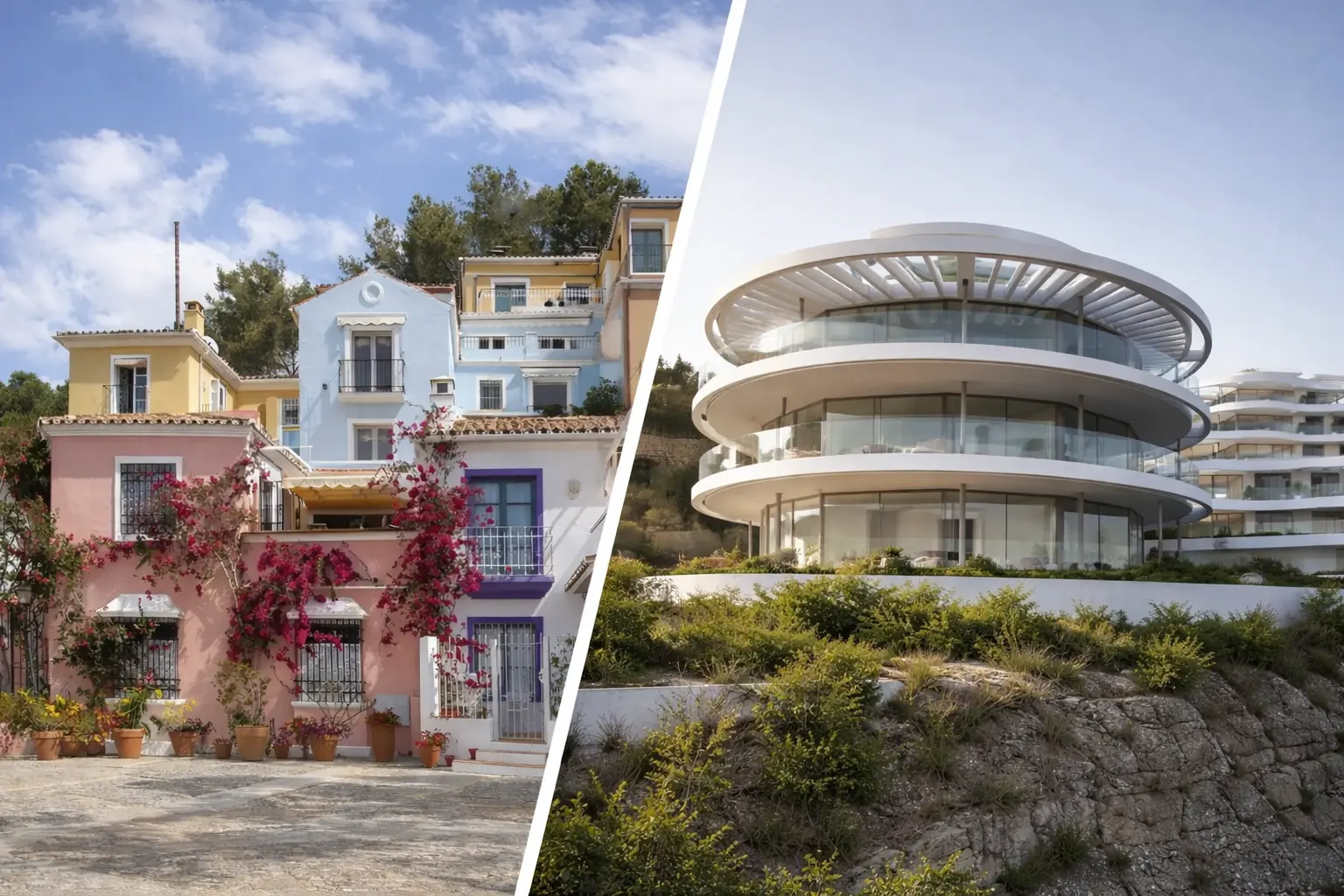
    La Heredia was conceived as a village-style community inspired by traditional Andalusian towns, with cobbled streets, textured façades and a colourful palette. It feels lived-in and characterful, with a clear “place” identity the moment you arrive.

    Colourful Andalusian-style homes in La Heredia, Benahavís

    Colourful townhouses in La Heredia, Benahavis

    Alborada, by contrast, focuses on contemporary low-rise living with cleaner lines and a more minimalist visual language. Many homes prioritise open-plan layouts, modern glazing and larger, more geometric terraces. If you’re drawn to newer construction standards and a modern aesthetic, Alborada can feel immediately intuitive.

    Living experience: village atmosphere vs modern calm

    La Heredia has a stronger “village” rhythm. The layout encourages walking and neighbourly familiarity, and the atmosphere is warm without being busy.

    Meanwhile, Alborada feels deliberately understated and residential — open, calm and practical, with day-to-day convenience handled nearby via Monte Halcones and San Pedro.

    In simple terms: La Heredia tends to attract buyers who want architectural character and a sense of place, while Alborada appeals to those who prefer modernity, clarity and low-maintenance design.

    Views, elevation and micro-position

    Both areas can offer sea and hillside views depending on orientation and exact position. In La Heredia, higher streets often enjoy broader panoramic outlooks, while lower sections can feel especially convenient for quick access toward Monte Halcones. In Alborada, many developments are designed around terrace living, with glass-fronted spaces that frame the outlook.

    Either way, micro-location matters — and it’s worth viewing more than one position within each area before deciding.

    The modern end of Alborada: The View Marbella

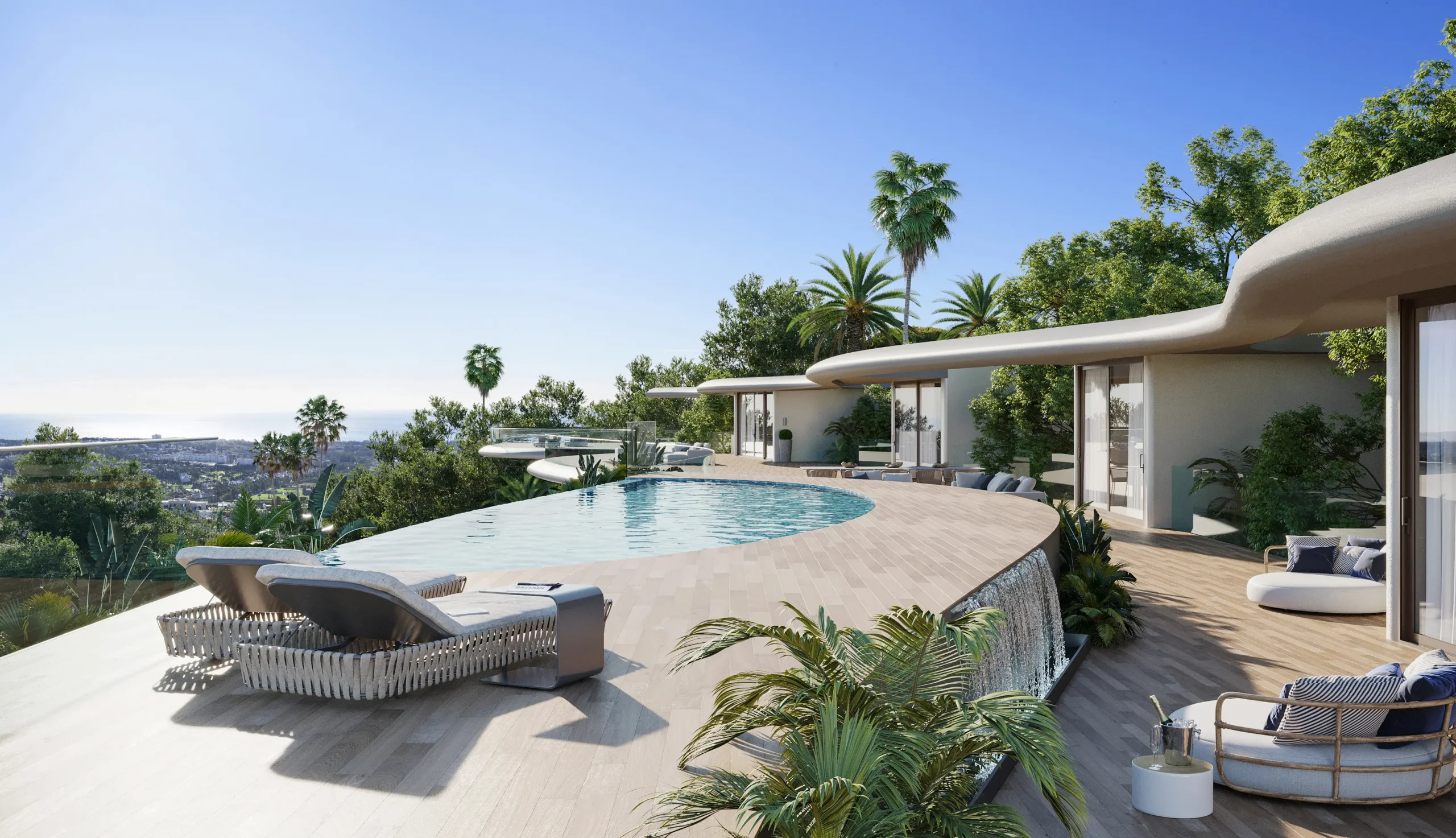
    If you want a clear reference for Alborada’s contemporary direction, design-led developments accessed via Alborada — such as The View Marbella — illustrate the appeal: modern architecture, strong amenities, and large terraces designed for indoor-outdoor living.

    The View Marbella contemporary development in Alborada, Benahavís

    Image placeholder: The View Marbella (new development)

    Price positioning

    Pricing will always depend on views, renovation level, terrace usability and overall specification. However, broad guidance helps set expectations:

    • La Heredia: townhouses from approx. €600,000; renovated sea-view homes typically €800,000–€1,500,000; larger villas from approx. €1,800,000+.
    • Alborada: modern apartments typically €450,000–€900,000; premium penthouses €900,000–€1,500,000+; design-led new developments can sit higher depending on product.

    In practice, La Heredia often offers more individuality and character at a given price point, while Alborada can command a premium for contemporary design, newer construction standards and terrace-led layouts.

    Schools and everyday practicality

    Both areas work well for families because school runs and daily services are straightforward compared with deeper countryside estates. International schools commonly used in this corridor include Atalaya International College, Laude San Pedro International College and Aloha College, with routes typically planned via San Pedro.

    Which area suits you?

    Choose La Heredia if you value architectural character, a village-style atmosphere and a more traditional Andalusian aesthetic.

    Choose Alborada if you prefer contemporary architecture, modern layouts and a clean-lined, minimalist style — with design-led developments nearby reinforcing that direction.

    Both benefit from Monte Halcones, San Pedro and coastal access. The decision is rarely about logistics; it’s about how you want your home to feel day to day.

    Final thought

    La Heredia and Alborada sit side-by-side geographically — but emotionally they appeal to very different buyers. If you’re unsure which direction feels right, view both in the same day. The contrast becomes clear immediately.

    Explore the area guides here: Property for sale in La Heredia and Property for sale in Alborada. If you’d like a curated shortlist across both areas, tell us what you’re looking for via the enquiry form.
    [siteorigin_widget class=”WP_Widget_Custom_HTML”][/siteorigin_widget]
  • Introducing Alborada

    Introducing Alborada

    Introducing Alborada

    The Benahavís hillside pocket you may not know — but the developments you’ll recognise instantly


    Alborada is one of those hillside pockets in Benahavís that many buyers drive past without realising it has a name — yet the moment you mention developments like The View Marbella, The Sky or Altura, people know exactly the stretch of road you mean. This article explains where Alborada sits, why its micro-location matters, and how its mix of established communities and high-end new builds has quietly reshaped the local market.

    → View property for sale in Alborada, Benahavís

    If you’ve been looking at property in Benahavís for any length of time, you’ve probably heard of The View Marbella, The Sky or Altura. However, you might not have heard the area name that ties much of this hillside pocket together: Alborada.

    Alborada isn’t a headline-grabbing estate in the way El Madroñal or La Zagaleta can be. Instead, it’s a practical, well-connected hillside enclave with a surprisingly broad range of homes — from everyday modern apartments to ultra-premium, design-led developments that now sit firmly in the multi-million price bracket.

    In other words, you may not have been searching for “Alborada” yet… but there’s a strong chance you’ve already been looking at its homes.

    Where Alborada is — and why buyers like its position

    Alborada sits along the Ronda Road (A-397) on the hillside above San Pedro de Alcántara, between La Quinta and La Heredia. The turn-off is in the corridor between the entrance to the Monte Halcones commercial centre and the entrance to La Heredia, which makes the area especially convenient for day-to-day life.

    This micro-location is the key to Alborada’s appeal. You get elevation, light and open outlooks, while still staying close to schools, golf and the coast. Meanwhile, you avoid the feeling of being “locked away” behind estate gates — which is exactly what some buyers want for a full-time base or a low-maintenance second home.

    Alborada also matters as an access route. Several high-profile developments on the lower hillside sit below El Madroñal and are reached via Alborada rather than through El Madroñal’s gates. That detail helps explain both the area’s visibility and its widening price spectrum.

    A guide to Alborada’s key developments

    Alborada is not a single “project.” Instead, it’s a hillside pocket made up of several distinct communities — each with its own style, price positioning and buyer profile. Below is a practical overview of the main developments commonly associated with Alborada and its immediate access corridor.

    Las Colinas de Marbella

    A well-established hillside community with a strong residential feel. Homes here tend to appeal to buyers who want elevation and a practical base close to Monte Halcones, the coast and main road connections.

    Tiara

    A premium apartment development that leans into refinement, clean architecture and elevated finishes. It typically attracts buyers who want something a step above the everyday market, while still keeping the location practical.

    The View Marbella

    Property for sale in Alborada Benahavís – The View Marbella panoramic hillside apartments
    The View Marbella — panoramic living on the Benahavís hillside.

    The View Marbella has become one of the most recognisable developments in this hillside pocket. As the name suggests, outlook and light are central to its appeal. Moreover, its mix of apartments and penthouses has helped shift perceptions of what “Alborada-adjacent” living can look like.

    BYU Hills

    A smaller, modern development that focuses on simplicity and comfort. It often suits buyers seeking contemporary living without needing the scale or formality of larger estates.

    Ocean 360

    A villa-style, semi-detached community that sits in the middle ground between apartment convenience and villa living. It’s particularly attractive to buyers who want more outdoor space and privacy while staying close to the coast and golf.

    The Sky Marbella

    Property for sale in Alborada Benahavís – The Sky Marbella penthouse apartment with private pool
    The Sky Marbella — a luxury penthouse with private pool, accessed via Alborada on the lower hillside.

    The Sky sits below El Madroñal, but it is outside the estate’s gates and is accessed via Alborada rather than through El Madroñal itself. Some agents describe it as “El Madroñal” for prestige. However, its real-world access route is firmly linked to Alborada. As a result, pricing in this pocket now extends well into the multi-millions.

    Valley Heights

    A compact residential enclave known for modern apartments and bright interiors. It’s often chosen by buyers who value a straightforward, low-maintenance base near San Pedro and the main amenities corridor.

    Aqualina

    Aqualina adds a more design-led feel to the area, with contemporary layouts and terraces that make the most of the hillside setting. It tends to appeal to buyers who want “newer-style” living with strong indoor-outdoor flow.

    Alborada Homes

    One of the developments most closely associated with the Alborada name, offering modern apartments and penthouses with lift access, underground parking and generous terraces. For many buyers, this is the “classic” Alborada product: clean, contemporary and easy to own.

    Altura

    Property for sale in Alborada Benahavís – Altura luxury townhouse interior with sea views
    Altura — boutique luxury townhouses in Alborada.

    Altura is a boutique collection of just five luxury townhouses located in Alborada, with pricing that reflects its exclusivity and design-led positioning. Developments of this scale are rare in Benahavís. Consequently, Altura underlines how Alborada has evolved from a low-maintenance hillside base into a micro-market that also attracts ultra-premium buyers.

    What this means if you’re considering buying in Alborada

    Alborada has quietly become one of the most interesting hillside pockets near Marbella because it offers breadth. You can find practical modern apartments, premium design-led new builds, and small-batch luxury projects — all within a location that stays genuinely convenient for daily life.

    If you’ve been seeing the same hillside developments repeatedly but haven’t quite been able to “place” the area, it’s worth remembering the name Alborada. It links a stretch of Benahavís that’s accessible, modern, and increasingly influential in the local market.

    To browse current availability, visit our area page for property for sale in Alborada, Benahavís.

    If you’d like a shortlist of homes that match your budget, view preferences and timeline, Darren & Angelina can share what’s currently available — including options that never reach the portals.

    [siteorigin_widget class=”WP_Widget_Custom_HTML”][/siteorigin_widget]
  • Spotlight on Los Arqueros Golf: Homes & Views | Benahavís

    Spotlight on Los Arqueros Golf: Homes & Views | Benahavís

    Spotlight on Los Arqueros Golf: homes & views


    Homes around Los Arqueros Golf appeal to buyers who want open views, green surroundings and a golf-led lifestyle — without feeling remote from Marbella, Puerto Banús or everyday services.


    ← Back to the Los Arqueros area guide

    Set in the foothills above San Pedro de Alcántara, Los Arqueros Golf & Country Club forms the heart of one of Benahavís’ most established residential communities. Designed by Seve Ballesteros, the course is known for its scenic layout, varied elevation and long open views across fairways and surrounding countryside.

    For buyers, the appeal extends beyond golf itself. Homes in and around Los Arqueros benefit from outlook, orientation and a sense of space that is increasingly difficult to find closer to the coast.

    The golf course & setting

    Los Arqueros is an 18-hole championship course that follows the natural contours of the hillside, creating elevation changes, wide fairways and long sightlines. The layout means that many homes enjoy views that extend well beyond the golf itself — often across rolling hills and, from higher positions, toward the Mediterranean.

    The clubhouse acts as a social focal point, with restaurant, bar, pro shop, gym, tennis and paddle facilities. Importantly, it retains a member-led, residential feel rather than operating as a high-traffic public resort.

    Types of homes around Los Arqueros Golf

    Property around the course includes a mix of apartments, townhouses and detached villas, spread across several residential pockets rather than a single gated estate. This creates variety — both in lifestyle and price point.

    • Frontline golf apartments — Positioned close to the fairways, prioritising green views, terraces and proximity to the clubhouse.
    • Elevated townhouses — Typically offering broader panoramas, balancing views, privacy and manageable upkeep.
    • Detached villas — Usually set on higher plots, where elevation enhances outlook and separation from neighbouring properties.

    Architectural styles range from traditional Andalusian designs to more contemporary homes, particularly where properties have been renovated or modernised.

    Views, elevation & orientation

    Views are one of the defining factors for buyers in Los Arqueros. Properties closer to the course often enjoy uninterrupted green outlooks, while elevated zones capture wider vistas across hills, valleys and, in some cases, the sea.

    Orientation also plays a role. South- and south-west-facing homes tend to maximise light and sunset views, while east-facing properties can appeal to buyers who prefer morning sun and cooler afternoons in summer.

    Lifestyle beyond the fairways

    While golf is central, daily life in Los Arqueros extends well beyond the course. Residents typically balance time at home with regular trips to San Pedro de Alcántara, Nueva Andalucía and Benahavís village for dining, shopping and services.

    The setting suits buyers who enjoy outdoor living, views and a quieter residential rhythm — while still being within 15–25 minutes of Marbella and Puerto Banús.

    Investment & resale considerations

    Homes around Los Arqueros Golf benefit from broad demand rather than niche appeal. Golf views, elevation and proximity to Marbella support steady resale liquidity, particularly for properties with open terraces and modern interiors.

    From an investment perspective, well-positioned homes — especially those with clear outlook and good orientation — tend to outperform more enclosed or shaded options over time.

    Who Los Arqueros Golf homes suit best

    Homes around Los Arqueros Golf suit buyers who value views, green surroundings and a strong sense of community — without the scale or price point of more exclusive hillside estates.

    They work particularly well for second-home owners, golfers, and full-time residents seeking a balanced lifestyle that combines tranquillity with practical access to the coast.

    [siteorigin_widget class=”WP_Widget_Custom_HTML”][/siteorigin_widget]
  • Raising a Family in Spain: Tips for Expat Parents

    Raising a Family in Spain: Tips for Expat Parents

    Raising a Family in Spain: Essential Tips for Expat Parents


    Thinking of raising a family in Spain? This practical guide for expat parents covers schooling, healthcare, budgeting and what day-to-day family life really looks like — so you can plan with confidence.

    Family eating lunch on a beach in Spain

    Why Spain is a great country to raise a family

    Spain is built around family life. Children are welcomed into everyday social settings rather than treated as an inconvenience, and you’ll often see families out together well into the evening. That relaxed rhythm can be a big shift for new arrivals, but it’s also one of the reasons many expat parents feel their quality of life improves quickly.

    Moreover, the climate supports outdoor living. Beaches, parks, plazas and sports facilities are widely accessible, which makes it easier for children to stay active year-round. In practice, many families find their weekends naturally fill up with simple, low-cost plans: a walk, a playground, a bike ride, or a long lunch with friends.

    Tip: If you’re looking specifically at southern Spain, our Living in Benahavís guide gives a realistic feel for day-to-day life, amenities, and family logistics.

    A child enjoying a water slide in Spain

    Residency and family visas in Spain

    Before moving, it helps to get clear on the residency route that fits your situation. Immigration options vary depending on nationality, employment plans and family circumstances, so what works for one household may not be the right fit for another.

    Common pathways for non-EU families include work-based residence, digital nomad visas and non-lucrative (passive income) residency. Once one parent has legal residency, spouses and dependent children can often join via family reunification. Parents and other dependents may also qualify in some cases, although financial thresholds are typically higher.

    Visa rules can change, so professional advice is worth considering early. If you want a clear overview, start with our Spain Visa Options guide. For families planning remote work, our updated Digital Nomad Visa income requirement (2026) resource is also helpful.

    Education and childcare for expats in Spain

    Education is often the biggest question for parents moving abroad. Spain offers several schooling routes, and your best choice depends on your children’s ages, language confidence, and how long you expect to stay.

    Public schools

    Free for residents and delivered mainly in Spanish (and sometimes a regional language). This can be ideal for younger children, who typically become fluent quickly through immersion.

    Semi-private (concertado) schools

    Partially funded by the government, with additional fees. They can offer a strong balance of structure and value, depending on the area.

    Private and international schools

    Often follow British, American or International Baccalaureate curricula and teach primarily in English. They tend to be more expensive, but many families choose them for continuity — especially if future international moves are likely.

    Childcare

    Under age three, childcare is usually paid (public or private). From age three, public preschool (educación infantil) is free, but places can be competitive in popular areas.

    Next step: If you’re considering the Costa del Sol, see our International Schools guide and the specific profile for Atalaya International College (one of the most popular options for families living around Benahavís).

    Children having fun at a school in Spain

    Healthcare and wellbeing for families

    Spain is well known for high-quality healthcare. Once registered as residents, families can access public services including paediatric care, vaccinations and routine appointments. Many expat parents find the system reassuring, particularly for everyday needs.

    That said, private health insurance is also popular — especially for quicker access to specialists and English-speaking doctors. Pharmacies are widely available too, and pharmacists are often a helpful first step for minor issues.

    Cost of living and family finances

    The cost of raising a family in Spain varies significantly by location and lifestyle. Major cities such as Madrid and Barcelona typically have higher housing costs and international school fees, while regional cities and inland areas can feel far more affordable day-to-day.

    If your move involves buying property, it’s worth understanding the “all-in” figures early. Our Purchase Costs in Andalucía and Taxes When Buying & Owning guides break down the real costs in plain English.

    Community, culture and family life

    Spanish culture values family connections. Multi-generational interaction is common, and children tend to grow up in a social environment where neighbours and extended family play an active role. For expat families, schools and local activities become the quickest way to build that support network.

    Learning Spanish, even at a basic level, makes everyday life smoother — from parent-teacher meetings to appointments and local admin. Children usually become fluent faster than adults, which helps families integrate socially and feel at home sooner.

    Tip: If you’re relocating to Benahavís, you may also like our broader overview of Benahavís areas to get a feel for the different neighbourhood “personalities” and distances.

    Choosing the Best Place for Your Family

    Spain offers a wide range of family-friendly locations — and the “best” choice often comes down to your schooling priorities, commute needs, budget, and the kind of daily routine you want. Some families prefer the energy and convenience of a city, while others want outdoor space, security, and a strong community feel.

    If you’re considering the Costa del Sol, Benahavís is popular with international families because it combines greenery, space and a peaceful setting with straightforward access to Marbella, Puerto Banús and the coast. Moreover, several residential communities here suit family life particularly well — offering gated security, pools, gardens and easy access to golf, nature and key routes.

    If you want a simple shortlist first, our guide to Best neighbourhoods for families in Benahavís is designed for exactly this decision.

    Family-friendly urbanisations in Benahavís (Costa del Sol)

    Gazules del Sol is often chosen for its established community feel, good on-site facilities and practical access to main roads. It sits within the wider La Alquería area, which many families like for its school-run practicality and connections.

    Capanes del Golf is another strong option for families who want a calmer, more resort-like setting. Explore the area overview here: Capanes del Golf.

    La Quinta is ideal if you want a polished residential area with golf nearby, good dining options and easy access to Marbella and San Pedro.
    Area guide: La Quinta.

    For a more exclusive, luxury-led lifestyle, El Madroñal stands out as one of the Costa del Sol’s most prestigious gated communities.
    Area guide: El Madroñal.

    When shortlisting areas, consider school options first, then work backwards to the right neighbourhood and home. Additionally, if you can, visit in both peak season and quieter months — some areas feel very different between summer and winter.

    A great pool for children in a gated complex in Spain

    Common mistakes families make when moving to Spain

    Many family challenges come down to timing and expectations. The most common mistake is underestimating how long admin can take, especially around school enrolment, residency paperwork and healthcare registration.

    Another common issue is choosing accommodation before understanding catchment areas or daily logistics. Finally, families often settle faster when they accept that systems and routines work differently in Spain — and lean into the change rather than resisting it.

    Helpful: Our Buyer’s Guide includes practical checklists and next steps if your move includes buying a home.

    Raising children bilingually

    One of the long-term benefits of raising children in Spain is bilingualism. Daily immersion through school, friendships and activities helps children develop strong Spanish naturally, often faster than parents expect.

    Many families find a simple approach works best: keep the home language consistent at home, and allow Spanish to develop socially. Over time, children often switch comfortably between both.

    Final thoughts

    Raising a family in Spain can be a rewarding change — more outdoor time, a stronger sense of community, and a lifestyle that often feels healthier and more balanced. However, the transition is easiest when you plan carefully around visas, schooling and your budget, and give yourselves time to adapt.

    Spain isn’t perfect, but it can offer a supportive environment for children to thrive socially, academically and culturally. With realistic expectations and the right preparation, moving with children can mark the start of a fulfilling new chapter.

    [siteorigin_widget class=”WP_Widget_Custom_HTML”][/siteorigin_widget]
  • Los Flamingos vs La Quinta: which Benahavís area suits you best?

    Los Flamingos vs La Quinta: which Benahavís area suits you best?

    Los Flamingos vs La Quinta: which Benahavís area suits you best?


    Golf course and mountain views in Benahavís, comparing La Quinta and Los Arqueros

    Los Flamingos and La Quinta are two of the most established golf-led residential areas in Benahavís. On paper, they can look similar: elevated positions, green surroundings, strong views and proximity to Marbella and the coast.

    In reality, they feel quite different to live in. The choice often comes down to lifestyle rhythm, architecture, and how much “resort” versus “residential” atmosphere you want day to day.

    This comparison is designed to help you understand those differences — and decide which area fits your priorities best.

    Setting and first impressions

    Los Flamingos sits higher above the coast, close to Villa Padierna and the New Golden Mile. Many homes enjoy wide, open views — often combining golf, lake and Mediterranean panoramas. The overall feel is refined and spacious, with generous plots and a sense of separation from busier areas.

    La Quinta feels more integrated into daily life. It’s set closer to San Pedro and Nueva Andalucía, with golf woven through a network of established residential communities. Views are still a major feature, but the area feels more “lived-in” than resort-oriented.

    Lifestyle and day-to-day living

    La Quinta suits buyers who want an easy routine. School runs, supermarkets, sports clubs and coastal amenities are all close at hand. It’s common for residents to live here full-time, mixing work, family life and leisure without feeling remote.

    Los Flamingos, by contrast, feels calmer and more self-contained. Life here is quieter, with a stronger emphasis on privacy, views and home-based living. Many owners split their time between Spain and elsewhere, using their property as a refined retreat rather than a daily base.

    Property types and architecture

    La Quinta offers one of the widest property mixes in Benahavís. Apartments and townhouses sit alongside established villa communities such as El Herrojo and Reserva de La Quinta. This variety is a big reason for its broad appeal.

    Los Flamingos is more villa-led. While there are some high-quality apartment developments, the area is best known for large plots, grand homes and architectural statements — often designed to maximise views and privacy.

    Access, schools and convenience

    La Quinta has the edge for everyday convenience. International schools, San Pedro town, Puerto Banús and Marbella are all within short, predictable drive times, which is why the area is popular with families and permanent residents.

    Los Flamingos is still well connected, but daily life tends to be more car-dependent. The trade-off is a quieter environment and less through-traffic, which many buyers actively prefer.

    Resale, demand and long-term appeal

    La Quinta benefits from broad, consistent demand. The range of property types supports steady resale liquidity, particularly for well-located apartments and family homes.

    Los Flamingos tends to attract a narrower but highly committed buyer profile. Homes may take longer to sell, but strong views, plot size and positioning can support long-term value, especially in the upper segments.

    Which area suits you best?

    Choose La Quinta if you want a balanced, residential environment with easy access to schools, amenities and the coast — and a choice of apartments, townhouses and villas.

    Choose Los Flamingos if you prioritise privacy, elevation, views and a quieter pace of life, and are comfortable trading everyday convenience for space and setting.

    Explore each area in more detail:

    La Quinta area guideLos Flamingos area guide

    For practical guidance on daily life, schools, visas and buying property in Spain, explore our Resources & Buyer Guides.

    [siteorigin_widget class=”WP_Widget_Custom_HTML”][/siteorigin_widget]
  • Los Flamingos: refined golf-led living in Benahavís

    Los Flamingos: refined golf-led living in Benahavís

    Los Flamingos: refined golf-led living in Benahavís

    Los Flamingos golf course and Villa Padierna views in Benahavís

    Los Flamingos occupies a distinctive position within Benahavís. Set around a trio of championship golf courses and anchored by the Villa Padierna Hotel, it offers a more polished, resort-style interpretation of hillside living — closer to the coast, and more overtly luxury-led than many inland communities.

    It’s an area that appeals to buyers who value aesthetics, service and open views, while still wanting the security and space associated with Benahavís rather than beachfront density.

    This guide looks at what living in Los Flamingos actually feels like day to day — who it suits best, how it differs from other Benahavís areas, and why it continues to attract international demand.

    For a full overview of neighbourhoods, amenities and current listings, see our Los Flamingos area guide.

    Location, elevation and access

    Los Flamingos sits just inland from the New Golden Mile, above Cancelada and the eastern edge of Estepona. This positioning gives many homes long, open views across golf fairways, lakes and the Mediterranean — often with sunsets that stretch along the coastline.

    Despite its elevated feel, access is straightforward. The A-7 and AP-7 place Marbella, Puerto Banús and Estepona within easy reach, while Málaga Airport is typically under an hour by car.

    For buyers who want a sense of retreat without feeling remote, this balance is one of Los Flamingos’ key strengths.

    Character and overall atmosphere

    Los Flamingos feels deliberately composed. Roads are wide, landscaping is mature, and architecture tends to be cohesive rather than mixed. The presence of the Villa Padierna complex sets the tone — elegant, calm and quietly upscale.

    Compared with more residential golf areas, Los Flamingos leans toward a resort-influenced lifestyle. Properties often prioritise views, terraces and visual impact, and many developments are designed around privacy and service rather than community buzz.

    It’s a place that suits buyers who enjoy space and serenity, but also appreciate refinement and visual order.

    Golf, wellness and lifestyle

    Golf is central to life in Los Flamingos. The area is built around three courses, offering variety for regular players and a strong visual presence even for non-golfers. Lakes, fairways and open greens are part of the everyday outlook.

    The nearby hotel and spa facilities add another layer, with dining, wellness and hospitality services available without the area feeling transient or tourist-heavy.

    For many residents, the appeal lies in this combination: peaceful residential living with optional access to high-end amenities when desired.

    Property types and architecture

    Los Flamingos is predominantly villa-led, particularly at the upper end of the market. Homes tend to be generous in scale, with a strong emphasis on terraces, pools and uninterrupted views.

    There are also high-quality apartment and penthouse developments, typically positioned to maximise outlook and privacy. These often attract buyers seeking a lower-maintenance alternative without compromising on setting.

    Architectural styles range from classic Mediterranean to contemporary, but quality of finish and visual harmony are consistent themes.

    Who Los Flamingos suits best

    Los Flamingos tends to attract buyers looking for a more refined, view-driven lifestyle rather than a busy, family-centric neighbourhood. It works particularly well as a second-home base or long-term lifestyle investment.

    Owners often prioritise privacy, aesthetics and ease of access to the coast over walkability or community-led living.

    For buyers comparing different parts of Benahavís, Los Flamingos sits at the more polished, resort-oriented end of the spectrum.

    How it compares within Benahavís

    Compared with inland areas such as La Quinta or Los Arqueros, Los Flamingos feels more outward-looking — visually and geographically — with stronger coastal connections and a higher concentration of prestige homes.

    Against hillside estates like El Madroñal, it trades forest seclusion for openness, sea views and easier day-to-day access.

    These distinctions matter, and choosing between them often comes down to lifestyle rhythm rather than price alone.

    In summary

    Los Flamingos offers a composed, golf-led environment with a distinctly refined character. It combines views, privacy and access in a way few areas on the Costa del Sol manage to balance.

    For buyers drawn to elegance, open space and long-term lifestyle value — without the intensity of frontline coastal living — it remains one of Benahavís’ most quietly confident choices.

    [siteorigin_widget class=”WP_Widget_Custom_HTML”][/siteorigin_widget]
  • La Quinta vs Los Arqueros: Which Benahavís Area Suits You?

    La Quinta vs Los Arqueros: Which Benahavís Area Suits You?

    La Quinta vs Los Arqueros: which Benahavís area suits you best?


    Golf course and mountain views in Benahavís, comparing La Quinta and Los Arqueros

    La Quinta and Los Arqueros are two of the most frequently compared residential areas in Benahavís. Both are golf-led, hillside communities with strong international appeal — yet they feel quite different once you spend time in them.

    This guide isn’t about which area is “better”. It’s about which one fits your priorities — whether that’s convenience, views, community feel, budget, or how you expect to live day to day.

    Setting and first impressions

    La Quinta sits closer to Marbella and San Pedro, wrapped around a long-established golf course and resort-style setting. It feels polished, calm, and gently residential — more “country club” than countryside.

    Los Arqueros feels slightly more self-contained and village-like. Set a little further inland, it has a stronger sense of community, with a central clubhouse, sports facilities, and a layout that encourages neighbours to cross paths.

    Accessibility and daily convenience

    La Quinta generally wins on convenience. The drive to San Pedro, international schools, beaches and the AP-7 is straightforward, which matters if you’re commuting, doing school runs, or using the home regularly rather than seasonally.

    Los Arqueros is still well connected, but daily journeys tend to be a little longer. Many residents don’t mind — especially those prioritising tranquillity over speed — but it’s a real-world difference worth factoring in.

    Property styles and pricing patterns

    Both areas offer apartments, townhouses and villas, but the mix feels different. La Quinta has a strong supply of apartments and penthouses in gated developments, many with lift access, parking and managed communal spaces.

    Los Arqueros offers a broader spread of price points and property styles. Entry prices can be slightly lower, particularly for apartments, and villas often offer generous space relative to price — appealing to buyers looking for value rather than polish.

    Lifestyle and atmosphere

    La Quinta tends to suit buyers who want an easy rhythm: golf, gym, lunch on the coast, back home without a long drive. It’s popular with second-home owners and downsizers who value comfort and predictability.

    Los Arqueros often attracts full-time residents and families who like the sense of belonging. The sports club, social areas and layout create a more lived-in feel — less resort, more neighbourhood.

    Which area tends to suit which buyer?

    In simple terms, La Quinta often suits buyers who prioritise access, views, and a refined environment, even if that means slightly higher entry prices or community fees.

    Los Arqueros tends to suit buyers who value space, community feel, and long-term liveability, and who are comfortable trading a few extra minutes’ drive for a more relaxed pace.

    How to choose between them

    If possible, visit both areas on the same day. Pay attention not just to the homes, but to how the drive feels, where you’d shop, and how much time you expect to spend “going out” versus staying local.

    Two buyers can view the same areas and reach opposite conclusions — and both can be right. The key is matching the area to your routine, not just your budget.

    For practical guidance on daily life, schools, visas and buying property in Spain, explore our
    Resources & Buyer Guides.

    Explore homes in La Quinta and Los Arqueros

    If you’re weighing these two areas and want a clear, side-by-side shortlist based on how you’ll actually live, we’re happy to guide you.

    View La Quinta →  |
    View Los Arqueros →

    [siteorigin_widget class=”WP_Widget_Custom_HTML”][/siteorigin_widget]
  • Buying on the Costa del Sol in 2026: 11 Key Steps

    Buying on the Costa del Sol in 2026: 11 Key Steps

    [siteorigin_widget class=”WP_Widget_Custom_HTML”][/siteorigin_widget]

    11 Key Steps to Buy a Home on the Costa del Sol in 2026 (As a Foreigner)


    Buying property on the Costa del Sol as a foreigner in 2026 is straightforward when you follow the right order. In Andalucía (Marbella, Benahavís, Estepona and the wider Málaga coast), the journey is typically: agree your budget, appoint an independent lawyer, organise NIE + banking, protect your exchange rate, complete due diligence, then sign at the notary.

    The process is broadly similar for EU and non-EU buyers. The main differences tend to be mortgage criteria and residency planning. Notably, Spain’s property-linked “Golden Visa” route was abolished (applications closed in April 2025), so non-EU buyers now usually compare options like the Digital Nomad Visa or the Non-Lucrative Visa depending on lifestyle and income structure.


    View of the sea and mountains from a villa with a pool - the Benahavis Lifestyle


    Step 1) Clarify your plan: lifestyle, location and timeline


    Before paperwork begins, get clear on how you’ll use the home. A winter-sun base near golf has different priorities to a full-time relocation with schools, or an investment-led purchase with rental goals.

    On the Costa del Sol, your shortlist usually tightens quickly once you decide what matters most: walkability vs views, beach access vs hillside privacy, village charm vs resort convenience, and how close you want to be to Málaga Airport.

    Step 2) Set a true budget (price + purchase costs + setup)


    One of the most common surprises for overseas buyers is that Spanish listing prices don’t include transaction taxes and fees. As a practical guide in Andalucía, allow roughly ~10% on top for a resale (ITP + typical fees) and ~12–13% for a new build (IVA + AJD + fees), then refine once your lawyer confirms the exact case.

    If you want a clear breakdown with examples, see:  Purchase Costs in Andalucía (2026).


    Keys to a new home on a Costa del Sol beach

    Step 3) Appoint an independent property lawyer early


    Start with an independent Spanish property lawyer who acts for you (not the agent or the seller). They’ll verify ownership and charges, review contracts, coordinate the notary, and confirm the real costs and timeline.

    Many foreign buyers also grant a Power of Attorney so their lawyer can handle admin (banking, tax forms, registry filings) if travel dates are tight. It’s common on the Costa del Sol because buyers often purchase while living abroad.

    Step 4) If you need finance, get mortgage guidance before you reserve


    If you’re using a Spanish mortgage, speak to a bank or mortgage broker early so you understand realistic loan-to-value and documentation requirements. As a broad rule, resident buyers can often borrow up to around 80% of the property value, while non-residents are typically closer to 60–70% (subject to profile, property type, and bank policy).

    For a Costa del Sol-specific walkthrough, see:  Financing & Mortgages (Benahavís & Costa del Sol).

    Step 5) Apply for your NIE (and line up residency planning if relevant)


    Every foreign buyer needs a NIE (Número de Identidad de Extranjero). It’s the ID number used on property deeds, taxes, and most banking paperwork. Processing times vary, so treat this as an early task.

    If you’re also planning to spend extended time in Spain as a non-EU buyer, map out your visa route alongside your purchase planning (the “Golden Visa” is no longer available). Our starting points:

    Step 6) Open a Spanish bank account and prepare “source of funds” evidence


    A Spanish bank account makes completion smoother: purchase funds, taxes, notary/registry fees, utilities, and community fees are usually paid locally. Some banks allow remote onboarding (video identification), while others require an in-person visit or Power of Attorney.

    Also expect robust anti-money laundering checks. In practice, that means being ready to show where funds come from (salary, dividends, sale of another property, savings history), plus translated documents if requested.

    Step 7) Protect your budget with a smart currency strategy


    If you’re paying in EUR from GBP, USD or another currency, exchange movements can materially change the final cost—especially between reservation, deposit (arras), and completion. Many buyers use specialist FX providers, rate alerts, or forward contracts to reduce uncertainty.

    The key is simple: plan transfers around contract dates, and avoid leaving large conversions to the last minute.


    People discussing currency exhange and mortages

    Step 8) Run legal and technical checks (Costa del Sol essentials)


    Before you commit to a deposit, your lawyer should request a nota simple from the Land Registry to confirm ownership, boundaries/description, and any registered debts or charges. Beyond that, Costa del Sol purchases often benefit from a few extra checks:

    • Planning and occupancy: confirm the property’s planning status and, where applicable, the Licence of First Occupation (often referenced in Andalucía as LPO/LFO depending on context).
    • Community debts: ask for confirmation that community fees are up to date (very relevant in apartment and gated urbanisations).
    • IBI and local charges: verify recent IBI receipts and any local waste charge arrangements.
    • Energy certificate (EPC): request the current certificate (required for sale listings).
    • Technical condition: for older villas or properties with renovations, consider an independent surveyor/architect inspection.

    If you’re early-stage and want a structured set of viewing questions, this helps:  Viewing Etiquette & Offer Strategy.

    Step 9) Agree the offer, then reserve properly (reservation contract)


    Once you agree price and terms, the seller may request a reservation contract and a small payment to take the home off the market for a defined period. This is where foreign buyers should slow down slightly and ensure the document is crystal clear about:

    • the agreed purchase price and included items (furniture, parking, storage)
    • the deadline for signing the main deposit contract
    • what happens if finance or legal checks uncover an issue
    • the refund terms (when it’s refundable and when it isn’t)

    Step 10) Sign the deposit contract (arras) and progress mortgage + valuation


    The next milestone is typically the arras contract. A common structure is “arras penitenciales”, where the buyer can forfeit the deposit if they withdraw, while the seller must return double if they pull out (your lawyer will confirm the exact wording and type being used). The deposit is often around 10% of the price, but it can vary depending on negotiation and timelines.

    If you’re taking a mortgage, the bank will request a full document pack and will instruct an official valuation (tasación). If the valuation comes in below the purchase price, you may need a larger cash contribution or renegotiate.

    Step 11) Notary signing (escritura), payment, taxes and registration


    Completion happens at the notary, where you sign the public deed of purchase (escritura) and, if applicable, the mortgage deed. Funds are typically settled by bank transfer and/or banker’s draft in line with the agreed completion mechanics.

    If you are signing a mortgage, Spanish mortgage rules require banks to provide pre-contract information in advance and a minimum “reflection” period before signing, with a prior notary visit to confirm understanding and compliance.

    After signing, taxes and fees are paid and the deed is submitted to the Land Registry so ownership is registered in your name. Your lawyer will also help switch utilities, arrange direct debits for community fees, and ensure any ongoing obligations (for example, non-resident tax filings where relevant) are set up correctly.


    A quick note on new builds and off-plan purchases


    Buying off-plan is common on the Costa del Sol, but the checks shift slightly. Your lawyer should verify the developer’s legal structure, planning permissions, stage-payment schedule, and, crucially, your protection for any advance payments. Spain’s buyer-protection rules require developers to secure guarantees (typically via bank guarantee or insurance) for amounts paid in advance under the regulated framework for off-plan purchases.

    You’ll also want clarity on delivery dates, specification, snagging, and what happens if timelines move.


    New development on the Costa del Sol at sunrise


    Useful next reads (Costa del Sol buyers)


    Purchase Costs in Andalucía (2026)
    Financing & Mortgages (Costa del Sol)
    Viewing Etiquette & Offer Strategy
    Glossary of Spanish property & legal terms
    Spain Visa Options 2026
    Property portals vs local specialists (what buyers should know)

    Properties for sale across the Costa del Sol (not just Benahavis)

  • Visa, Residency & Citizenship Changes in Spain 2026

    Visa, Residency & Citizenship Changes in Spain 2026

    Spain visa changes 2026

    Visa, Residency and Citizenship Changes in Spain in 2026


    Spain remains one of Europe’s most appealing destinations for relocation — whether you’re seeking a better lifestyle, a base in the EU, or a long-term property plan on the Costa del Sol.

    Heading into 2026, several updates to visas, residency documents and citizenship processes are coming into focus. Some are administrative, others affect budgets and timelines — and a few may influence how you enter Spain for the first time.

    This guide focuses on what’s most relevant for US, Canadian and British citizens considering a move to Spain, especially those planning to live in or around Benahavís, Marbella and the wider Costa del Sol.

    Costa del Sol panoramic lifestyle view near Benahavís

    Non-Lucrative Visa (NLV): financial requirements likely to remain stable

    For many British, American and Canadian citizens planning early retirement or a lifestyle-led move, the Non-Lucrative Visa (NLV) continues to be one of the most common routes to Spanish residency. The encouraging news for 2026 is that the financial threshold is expected to remain unchanged.

    The NLV requirement is linked to Spain’s IPREM index. At present, applicants must show savings or passive income equivalent to 400% of IPREM for the main applicant — commonly cited as €28,800 per year — with additional amounts for dependants. Spain’s General State Budget, which influences IPREM updates, has faced repeated delays, so the IPREM figure is widely expected to remain frozen into 2026.

    If the NLV is on your shortlist, it’s still worth planning early — not because the thresholds are changing, but because consular timelines, document gathering and appointment availability can be the real bottleneck.

    Related reading: Visa options for moving to Spain

    Digital Nomad Visa (DNV): income threshold likely to increase

    Spain’s Digital Nomad Visa has become a popular route for remote workers and location-independent professionals, particularly from the US and Canada. Unlike the NLV, the DNV income threshold isn’t linked to IPREM — it’s connected to Spain’s minimum wage (SMI).

    The Spanish government has indicated that the minimum wage may rise again early in 2026. If a proposed increase to €1,446.66 gross per month is approved, and applicants must show 200% of that figure, the threshold would move to roughly €2,893 per month, up from about €2,763.

    The increase is not dramatic, but it matters if you’re close to the margin — especially for freelancers, contractors or founders whose income fluctuates. If you’re planning to apply, build in a buffer and keep your documentation tidy: clear contracts, consistent invoices and bank statements can make the process far smoother.

    For some remote workers, tax planning is just as important as visa eligibility. If that’s part of your decision-making, see our guide to Beckham Law News in Spain in 2026, which looks at how high-earning professionals and internationally mobile Americans are approaching Spain this year.

    Related reading: Visa options for moving to Spain

    Remote workers and digital nomads considering a move to Spain

    Citizenship: a surge of new Spaniards via the “Grandchildren’s Law”

    One of the biggest under-the-radar shifts going into 2026 is the impact of Spain’s so-called “Grandchildren’s Law”.

    This pathway allows children and grandchildren of Spaniards who lost or renounced nationality, often due to political exile, to reclaim Spanish citizenship.

    Although the application deadline ended in October 2025, many successful applicants are expected to complete processing and relocate in 2026. This doesn’t directly apply to most US, Canadian or British citizens, but it can still affect you indirectly: increased volume puts pressure on administrative systems, potentially influencing wait times for appointments, civil registries and immigration processing in high-demand provinces.

    British citizens: more permanent TIE renewals in 2026

    For UK nationals living in Spain under the Withdrawal Agreement, 2026 will be another busy year for upgrading residency documents. Those who were issued temporary WA TIE cards in 2021 will become eligible to switch to permanent WA TIE cards during 2026.

    The most common challenge remains the cita previa appointment, especially in locations with high foreign populations. In practice, the “rule change” isn’t the issue — it’s access to appointments and getting everything lined up correctly.

    It’s also worth noting that a significant number of British residents still rely on the old green EU certificates. Both British and Spanish authorities have repeatedly advised switching to a biometric TIE to avoid friction with banks, notaries and public offices.

    Related reading: Legal & Residency resources

    More foreign residents in Spain — and more applications

    Spain’s appeal to international residents shows no signs of slowing.

    Recent migration data indicates that the number of foreign residents with permits grew in 2025, and applications for work and residency permits rose sharply following immigration reforms.

    The bigger picture is simple: Spain has an ageing population and a low birth rate, so inward migration supports the workforce and the pension system. That reality continues to influence policy, even while immigration becomes a more polarising topic across Europe.

    ETIAS: the visa-waiver system expected towards the end of 2026

    The long-discussed ETIAS travel authorisation is now expected to be introduced towards the end of 2026. ETIAS will apply to visa-free visitors from countries including the UK, US and Canada.

    In practical terms, travellers will complete an online form before visiting Spain or other Schengen countries and pay a fee, commonly cited at €20. Once approved, ETIAS is expected to be valid for three years, or until your passport expires, covering multiple short visits.

    While ETIAS is aimed at tourists, it matters for future residents too. Many people “test” Spain first with a short stay before deciding on a longer move, and some visa routes are sensitive to entry and exit timing.

    If you’re planning a 2026 move, keep ETIAS on your radar — especially for late-year travel.

    Spain residency, planning and financial preparation for a move in 2026

    Spanish citizenship exams: a small cost increase

    If you’re planning to apply for Spanish citizenship after long-term legal residency, commonly 10 years for most nationalities, you’ll likely need to pass two exams: the CCSE cultural and constitutional knowledge test and the DELE A2 language exam where applicable.

    In 2026, the DELE A2 registration fee is expected to rise slightly, from €134 to €138. It’s a small increase, but it reflects a wider pattern: administrative costs rarely go down, so it’s wise to budget conservatively for the full citizenship process.

    Could Spain adopt tougher migration measures?

    Across the EU there has been a visible shift towards tougher migration policies, including proposals for external “return hubs” and stricter enforcement for failed asylum claims. Spain has taken a more pragmatic stance so far, largely because the economy benefits from a steady inflow of workers.

    However, migration is increasingly political across Europe, and Spain is not immune to that pressure. If the domestic political landscape changes, policy tone could shift too. For most readers considering legal routes like the NLV or DNV, the key takeaway is to plan early and keep your documentation robust — those two habits solve more problems than trying to predict political headlines.


    Planning a move to Spain in 2026?

    Visa rules are only one part of the relocation puzzle. Property selection, purchase costs, tax planning and lifestyle considerations also play a major role — particularly for overseas buyers.

    If you’re relocating to the Costa del Sol, it’s helpful to understand the full sequence: research, budgeting, viewing trips, the offer process, and legal completion.

    For higher earners and internationally mobile professionals, tax structure may also be part of the discussion. Our guide to Beckham Law News 2026 explains why the regime is attracting renewed attention from Americans moving to Spain.

    You may also find these guides helpful:

    Benahavís village square at dusk on the Costa del Sol

    Looking for a home outside Benahavís?
    Holiday Homes Spain
    covers the whole Costa del Sol.

    [siteorigin_widget class=”WP_Widget_Custom_HTML”][/siteorigin_widget]
  • Property Portals vs Local Specialists: What Buyers Should Know

    Property Portals vs Local Specialists: What Buyers Should Know

    Property portals versus local property specialists in Spain

    Property Portals vs Local Specialists: What Buyers Should Know


    Property portals are usually where a Spanish home search begins. They’re easy to browse, highly visual, and they quickly give you a feel for what different areas cost.

    That said, portals aren’t designed to be a “truth layer”. They’re designed to show volume. So the key is knowing what they’re brilliant for — and what they can’t reliably tell you once you’re ready to take action.

    If you understand the difference early, you’ll save time, avoid the classic frustrations, and make much better decisions when you start booking viewings.

    What portals are genuinely useful for

    Used well, portals are a great way to get your bearings. Think of them as a market overview tool: they help you form a sense of price bands, what different styles look like, and which neighbourhoods keep coming up in your searches.

    In the early stage, you’re not trying to find “the one” — you’re trying to narrow your focus. Portals help you do that quickly, especially if you keep your filters fairly broad and pay attention to patterns rather than individual listings.

    Best way to use a portal: collect ideas, spot patterns, and shortlist areas — then verify the specific listings once you’re ready to view.

    Where portals start to fall short

    The problems usually appear when buyers move from browsing to enquiry. Suddenly, you’re not looking for inspiration — you’re trying to build a real viewing list. That’s when accuracy matters, and portals can be inconsistent.

    For example, a property might still be online even though it sold weeks ago. Or the same home appears multiple times under different agencies — sometimes with different prices, different photos, or a description that doesn’t quite match reality.

    And occasionally, a listing looks almost suspiciously good for the price. Sometimes that’s a genuine opportunity. More often, there’s a catch — or it’s simply not available in the way the advert suggests.

    “If it looks too good to be true…”

    One of the most frustrating experiences for buyers is getting excited about a property, enquiring, and then hearing something like: “It has just gone under offer this week.”

    Sometimes that’s true. However, in many cases, the listing was never realistically available — it existed to generate enquiries. Once contact is made, the conversation shifts to “similar alternatives”, which may be very different from what caught your eye in the first place.

    A simple rule of thumb: If a listing is significantly better priced than everything comparable around it, there’s usually a reason — and it’s rarely a hidden bargain.

    Airplane landing in Malaga with tourists and people on viewing trips in Spain

    Once flights and viewing days are involved, accuracy matters far more than volume.

    Why accuracy matters once you’re planning viewings

    As soon as flights, accommodation and viewing days are involved, the cost of “getting it wrong” goes up. A portal can show you hundreds of options, but what you really need at that stage is a short list you can trust.

    It’s also worth remembering that portal prices rarely reflect the true cost of buying. In Andalucía, purchase taxes and buying fees sit outside the headline price — so your real budget should include that from the beginning. If you haven’t seen the breakdown yet, start here: purchase costs in Andalucía.

    We update our listings daily, and every property on our site clearly shows the date it was added, so you can see what’s genuinely current.

    Where a local specialist changes the experience

    A good local specialist doesn’t replace portals. Instead, they add the missing layer portals can’t provide: context, verification and judgement.

    That starts with a simple but important step: confirming whether a property is genuinely available and viewable. From there, the real value is helping you understand what the advert can’t tell you — how the community feels on the ground, whether the layout works for how you’ll live, and what your ongoing costs are likely to be.

    Running costs are a classic blind spot on portals. Community fees, local taxes, and maintenance can vary hugely between developments, and they matter just as much as the purchase price. If you’d like a simple explanation, this guide helps: community fees & running costs explained.

    One point of contact — full market access

    We collaborate with all other agencies and developers active in Benahavís. So if you see something on a portal, we can usually arrange a viewing — but we won’t simply pass your details on and hope for the best.

    Instead, we verify listings first, remove duplicates and dead ends, and then help you use your time properly when you’re in Spain. If you’re planning a trip, this guide explains how to structure it so you don’t waste days driving back and forth: how to make the most of a Spanish property viewing trip.

    In practice, this usually means:

    fewer wasted enquiries • fewer “already sold” moments • a tighter viewing plan • and much clearer decisions

    Final thoughts

    Portals are a useful starting point — but they’re not the full story. The best results come from combining online research with local verification and honest guidance, especially once you’re spending money and time on a viewing trip.

    If you’re still at the planning stage, this practical overview can also help: buyer’s checklist for purchasing in Spain.

    Keys to new home on the Costa del Sol, Spain


    [siteorigin_widget class=”WP_Widget_Custom_HTML”][/siteorigin_widget]