Category: Moving to Spain

  • Creators International School Benahavís | Full Guide

    Creators International School Benahavís | Full Guide

    Creators International School Benahavís

    A New STEM-Focused School on the Costa del Sol
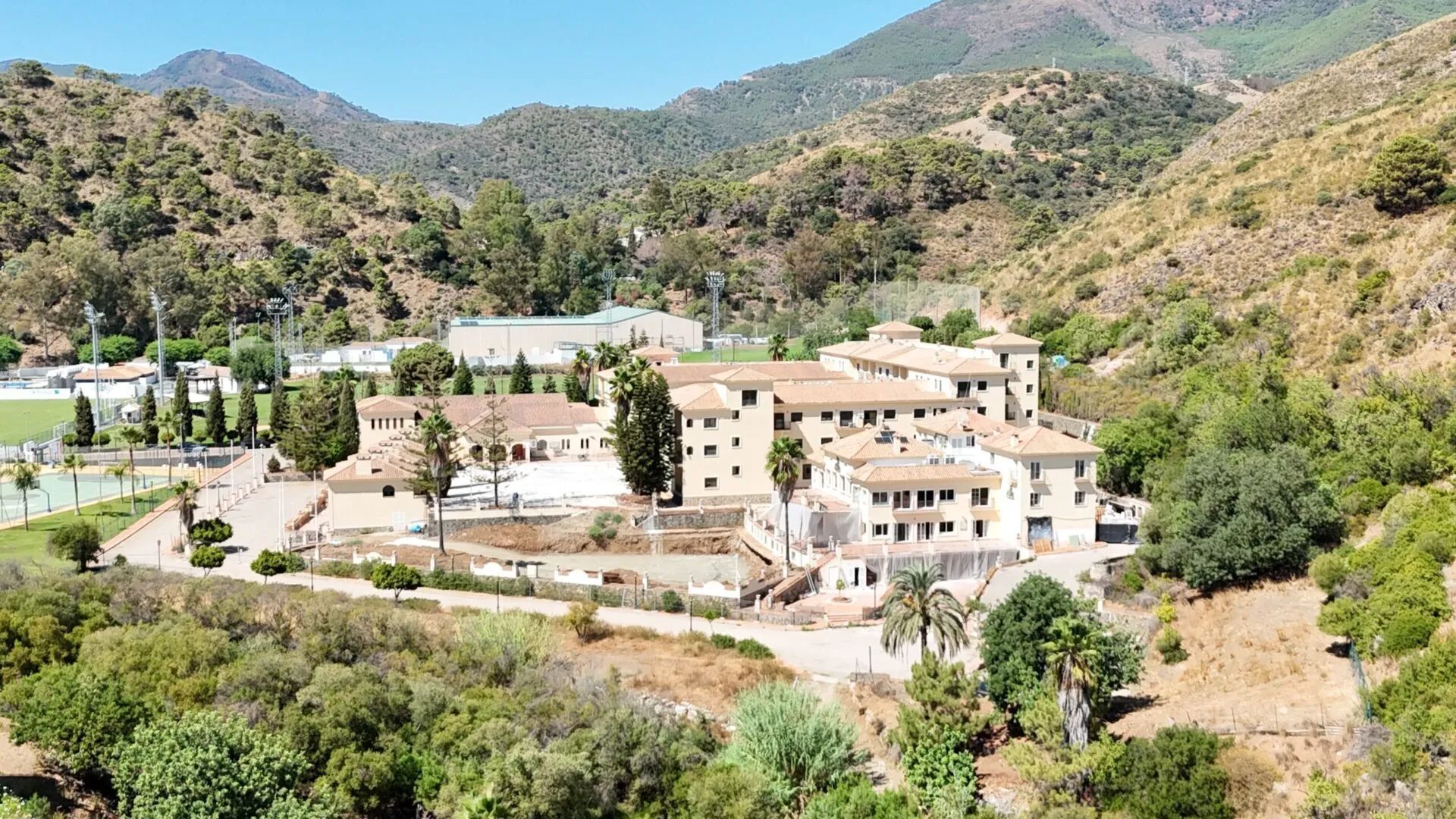


    Creators International School Benahavís future campus exteriorAt the time of writing, the former Gran Hotel Benahavís SPA is still undergoing renovation and transformation into the future home of Creators International School. The project is progressing, with the school expected to open for students in line with a forthcoming academic year — most likely targeting the start of the 2026/27 school year, subject to final approvals and completion timelines.

    As families continue to explore international schools in Benahavís and the surrounding areas, a new name is beginning to attract attention — Creators International School.

    Located in the Benahavís–Marbella corridor, this upcoming school is expected to bring a very different approach to education on the Costa del Sol. Rather than following the traditional broad international school model, Creators is designed around academic excellence in mathematics, science and technology, with a strong emphasis on small class sizes and highly focused learning.

    For the right student, it is likely to represent a compelling alternative to more established schools such as Atalaya International College or those covered in our full guide to schools in and around Benahavís.

    Overview of Creators International School

    Creators International School is expected to follow a British curriculum pathway, leading to IGCSEs and A-Levels. However, what sets it apart is not the curriculum itself, but the way it is planned to be delivered.

    Classes are expected to be intentionally small, teaching highly personalised, and students encouraged to develop deep analytical thinking rather than broad general coverage. The environment is designed for focus, discipline and intellectual curiosity.

    • British curriculum (IGCSE & A-Level pathway)
    • Strong focus on STEM subjects
    • Small class sizes (typically around 10–12 students expected)
    • Selective admissions process
    • Located within easy reach of Benahavís, Marbella and Estepona

    Planned learning environment at Creators International School Benahavís

    Fees at Creators International School

    Understanding Creators International School fees in Benahavís is an important part of choosing the right school. Based on currently available information, the school is expected to position itself in line with premium international schools on the Costa del Sol, with a clear and structured pricing model.

    Overall, this is likely to place Creators broadly in line with other premium international schools on the Costa del Sol, though its smaller class sizes and specialist academic focus may make it a more niche offering.

    • Years 3 to 6: expected to be around €15,000 per year
    • Years 7 to 10: expected to be around €18,000 per year
    • Boarding (Years 7–10): expected to range from approximately €44,000 to €50,500 per year

    In addition to tuition, there are expected to be a small number of one-off and administrative fees:

    • Admissions & evaluation fee: approximately €150
    • Enrolment fee: approximately €500 (deducted from first term)
    • Endowment fee: approximately €750 (one-time payment)

    Optional extras such as transport (from €1,200–€1,800 per year) and lunches (€1,500 per year) are also expected to apply for day students.

    For the 2025–26 academic year, the school has outlined a Founding Family offer, with reductions applied to the published figures.

    These figures are based on the school’s published fee schedule for the planned 2025–26 academic year and may be subject to change.

    As with all international schools in the area, fees are reviewed annually, and we recommend confirming the latest structure directly with the school.

    Who This School Is Best Suited For

    Creators International School is not expected to be a one-size-fits-all option. Instead, it is likely to suit students who are:

    • Academically driven and comfortable with a focused learning environment
    • Particularly strong in mathematics, science or technology
    • Looking for a more structured and disciplined academic setting
    • Comfortable with a selective admissions process

    For many families relocating to the Costa del Sol, more traditional international schools may still provide the most balanced experience. However, for the right profile of student, Creators could offer something genuinely different.

    Location and Accessibility

    The school will be located within easy reach of Benahavís, as well as key residential areas such as La Quinta, Los Arqueros and Atalaya.

    For families already considering these areas, the commute is expected to be comparable to other international schools in the region, and school transport options may develop as the school grows.

    How It Compares to Other Schools

    When comparing Creators International School to more established options, the key difference is expected to be specialisation versus breadth.

    Schools such as Aloha College, Swans or Laude San Pedro offer broader academic and extracurricular programmes, making them suitable for a wide range of students. Creators, by contrast, is expected to be more focused and selective.

    Rather than replacing these schools, it is likely to sit alongside them as a specialist alternative within the wider education landscape of Benahavís and Marbella.

    Related Education Guides

    Need Help Choosing the Right School?

    Choosing the right school is one of the most important decisions when relocating to Spain. Darren & Angelina — your Personal Property Concierge — regularly help families compare options, understand admissions and organise school visits.

    Get in touch to discuss your options →

    creators international school benahavís

    Discover Creators International School Benahavís. A new STEM-focused British school on the Costa del Sol. Who it suits and how it compares.
    [siteorigin_widget class=”WP_Widget_Custom_HTML”][/siteorigin_widget]
  • Spain’s Digital Nomad Visa in 2026 | Benahavís Collection

    Spain’s Digital Nomad Visa in 2026 | Benahavís Collection

    Why Everyone Is Talking About Spain’s Digital Nomad Visa in 2026

    A Smarter Route to European Residency, Flexibility and Lifestyle

    Spain digital nomad visa 2026 lifestyle Costa del Sol residency guide remote work Spain

    At some point, the idea of “working from anywhere” stops being theoretical.

    Tax efficiency starts to matter. So does legal certainty. So do school choices, airport connections, healthcare, safety — and the quality of the place where your family actually lives day to day.

    That is why Spain’s Digital Nomad Visa has become one of the most talked-about residency routes in Europe in 2026.

    For internationally mobile professionals, founders and remote business owners, it offers something unusually well balanced: a legitimate legal structure, a highly desirable lifestyle, and the potential for a more efficient tax position — without requiring a significant upfront property investment.

    The timing matters too. With Spain’s Golden Visa route now closed to new applicants, the conversation has shifted. The question is no longer whether Spain belongs on the shortlist — but how to structure the move properly, and where the lifestyle works best in practice.

    For many, that answer leads naturally to the Costa del Sol. Málaga’s international connectivity, the area’s established global community and the quality of life between Marbella, Benahavís and Estepona make southern Spain especially compelling for remote earners who want more than a visa alone.

    They want a life that feels expansive, elegant and secure.

    Relocating to the Costa del Sol

    Benahavís area guide

    International schools on the Costa del Sol

    Moving to the Costa del Sol with a family

    What Spain’s Digital Nomad Visa Actually Is

    Spain’s Digital Nomad Visa is designed for non-EU nationals who want to live in Spain while working remotely for companies or clients based outside the country.

    In practical terms, it is for people whose income is already international and location-independent.

    If you are employed, your work must remain tied to a company abroad. If you are self-employed or operate independently, a limited amount of Spanish-source income may be permitted — but it cannot become the primary activity.

    It is not a general work permit, and it is certainly not a “tax-free visa”, despite how it is sometimes presented online.

    The attraction is more nuanced than that: lawful residence in Spain, access to one of Europe’s most desirable lifestyles, and the possibility of applying a favourable tax regime where structured correctly.

    Why the Visa Has Become So Popular

    The appeal is easy to understand once you look beyond the headlines.

    Families want flexibility. Professionals want freedom of movement. Business owners want a European base without immediately stepping into the full tax burden that standard residency can bring.

    Spain delivers that combination unusually well — blending lifestyle, infrastructure and cultural depth.

    On the Costa del Sol, this becomes tangible. Remote work can sit alongside beach days, golf, international schools and easy access through Málaga airport.

    It is not just workable. It is genuinely enjoyable.

    Who the Digital Nomad Visa Suits Best

    The visa suits professionals whose income is already detached from location — senior employees, founders, consultants, international freelancers and business owners.

    It is particularly appealing to families who prefer to relocate gradually. Renting first, understanding areas and selecting schools carefully is often the more considered approach.

    Others arrive with a clear plan from the outset. In those cases, the visa integrates naturally with a property search in areas that offer privacy, security and long-term lifestyle value.

    New developments in Benahavís

    Luxury villas in Benahavís

    Buying property in Spain guide

    Eligibility in Plain English

    The Digital Nomad Visa is structured rather than casual. Spain expects a credible remote working arrangement, proper documentation and financial stability.

    The strongest applications are those prepared carefully from the outset, with clear corporate documentation, proof of income and a coherent tax strategy.

    How Long the Digital Nomad Visa Lasts

    One of the key advantages is flexibility. Initial permissions can extend into longer residence periods, with renewal pathways that allow families to settle gradually rather than rush decisions.

    This creates something valuable: time. Time to understand areas, test routines and make informed long-term choices.

    The Tax Position: Attractive, but Often Misunderstood

    This is where clarity matters most.

    The visa is not tax-free, but it can align with Spain’s special tax regime for qualifying individuals. Handled correctly, the outcome can be highly efficient. Misunderstood, it can become unnecessarily complex.

    Spain Digital Nomad Visa tax calculator

    Tax guide for moving to Spain

    Can Your Family Come Too?

    Yes — and this is where the visa becomes especially compelling.

    Spain allows qualifying family members to accompany the main applicant, turning a legal route into a genuine relocation strategy.

    At that point, the decision becomes less about the visa itself — and more about where life will work best day to day.

    The Lifestyle Case for the Costa del Sol

    If the visa is the legal mechanism, the Costa del Sol is often the reason the move happens.

    It offers a rare balance: refinement and ease, international outlook and Mediterranean rhythm.

    For families seeking space, privacy and proximity to everything that matters, the Marbella–Benahavís–Estepona triangle continues to stand out.

    Benahavís in particular offers a more residential, elevated lifestyle — close to everything, yet removed enough to feel calm, secure and established.

    Why move to Benahavís

    Should You Buy Property Straight Away?

    Not necessarily. One of the key advantages of this visa is flexibility.

    With no investment requirement, families can take time to understand the area before committing — and in most cases, that leads to better long-term decisions.

    Common Mistakes to Avoid

    Misunderstanding the tax position, rushing the process, or choosing a location based on perception rather than daily reality are the most common pitfalls.

    The strongest outcomes come from planning the move holistically — aligning visa, tax, schooling and property decisions from the outset.

    Final Thought

    Spain’s Digital Nomad Visa offers something rare: flexibility with substance.

    Handled properly, it creates the opportunity for a more considered European base, a more efficient structure and a better everyday lifestyle.

    And when combined with the right location, it becomes more than a visa — it becomes a well-planned next chapter.

    Related Reading

    Important Note

    This article is provided for general information only and is not legal, immigration or tax advice. Professional advice should always be taken before acting.

    Find Your Home in Benahavis

    [siteorigin_widget class=”WP_Widget_Custom_HTML”][/siteorigin_widget]
    [siteorigin_widget class=”WP_Widget_Custom_HTML”][/siteorigin_widget]
  • Costa del Sol Relocation Guide 2026 | Moving to Southern Spain

    Costa del Sol Relocation Guide 2026 | Moving to Southern Spain

    Costa del Sol Relocation Guide 2026

    A More Considered Way of Living in Southern Spain

    Family enjoying the Costa del Sol lifestyle and sea views in southern Spain

    There comes a point, for many internationally mobile families, when the question quietly shifts.

    It is no longer simply about where you can live well — but where you can live well consistently. Where the pace feels sustainable. Where daily life is not just efficient, but enjoyable. Where the environment supports the way you want to raise a family, build a business, or spend your time.

    For a growing number of people, that answer is now pointing towards the Costa del Sol.

    Not as a holiday destination, but as a place to live properly.


    A Different Kind of Appeal

    The Costa del Sol has undergone a quiet transformation over the past decade. What was once seen primarily as a seasonal destination has matured into a fully functioning international base — one that combines infrastructure, lifestyle and long-term livability in a way that feels increasingly rare.

    The appeal is not built on a single factor. It is the combination that matters.

    There is the climate, of course — over 300 days of sunshine a year. But more importantly, there is a rhythm to life here that feels markedly different from larger global cities. Days unfold more naturally. Time outdoors becomes part of daily routine rather than an occasional luxury. The environment encourages balance rather than constant acceleration.

    And yet, it remains highly connected. Málaga Airport links seamlessly with the rest of Europe and beyond. International schools are well established. Healthcare is excellent. The infrastructure is already in place.

    It is this balance — between ease and sophistication — that defines the region.


    Finding Your Place on the Coast

    Relocating to the Costa del Sol is not about choosing a single destination. It is about understanding a landscape made up of distinct, carefully layered communities.

    Marbella offers energy and immediacy — beach clubs, restaurants, a social rhythm that feels vibrant and outward-facing. It appeals to those who enjoy being in the centre of things.

    Benahavís, just minutes inland, provides a different experience. Here, the focus shifts towards space, privacy and elevation — both literally and figuratively. Gated communities, golf courses and panoramic views create a more residential, more considered environment. For many families, this is where the balance feels right.

    Estepona continues to evolve quietly to the west, offering a softer, more understated lifestyle with increasing depth and appeal.

    Choosing between them is less about which is “best,” and more about which aligns with how you want to live on a daily basis.

    Benahavís area guide


    The Family Perspective

    For families, relocation decisions tend to crystallise around one central question: does the environment support the life we want to build?

    On the Costa del Sol, the answer is often yes — but for reasons that go beyond the obvious.

    International schools are well regarded and widely accessible, particularly in and around Marbella and Benahavís. But just as important is what exists outside the classroom. The ability for children to spend time outdoors year-round. The sense of safety. The opportunity for a more active, less pressured daily rhythm.

    It is a different kind of upbringing — one that feels both international and grounded.

    Schools in and around Benahavís


    Property, Patience and Perspective

    Property is often part of the relocation conversation, but it rarely needs to be the first decision.

    One of the advantages of moving to the Costa del Sol is the flexibility it offers. Many families choose to rent initially, allowing themselves time to understand the nuances of different areas — school runs, traffic patterns, orientation, community feel.

    Others arrive with a clearer sense of direction and move directly into ownership, particularly when they already know the region well.

    There is no universal approach. The key is not to rush.

    The market itself remains active, particularly in prime locations where demand from international buyers continues to underpin values. But the best outcomes tend to come from decisions made with clarity rather than urgency.

    Download our full buying property in Spain guide


    The Practical Layer

    Every relocation has a practical dimension — cost of living, healthcare, logistics, residency.

    What distinguishes the Costa del Sol is how seamlessly these elements integrate into daily life. Private healthcare is accessible and efficient. Dining, leisure and everyday expenses offer strong value relative to the quality provided. The overall cost structure, while not low in absolute terms, tends to feel proportionate to the lifestyle delivered.

    Residency, particularly for non-EU nationals, has also become more accessible through routes such as Spain’s Digital Nomad Visa — a structure that allows internationally mobile professionals to establish a base in Spain without fundamentally restructuring their income.

    Spain’s Digital Nomad Visa in 2026


    A Shift in Daily Life

    What becomes apparent, often quite quickly, is that the move is not just geographical.

    Daily life changes in more subtle ways.

    Mornings begin with light rather than traffic. Evenings extend naturally, often outdoors. Weekends are not something to escape into — they are simply a continuation of a lifestyle that already feels balanced.

    There is a sense, difficult to quantify but easy to recognise, that life has become less compressed.

    For many, that is the real reason the move works.


    Final Thought

    The Costa del Sol is not about reinvention. It is about refinement.

    It offers the opportunity to take what already works — career, family, mobility — and place it within an environment that supports it more naturally.

    For those considering a move, the question is rarely whether the region delivers. It is whether it aligns with the life you want to build next.

    And increasingly, the answer is yes.


    Related Reading


    Important Note

    This guide is for general information only and does not constitute legal, tax or financial advice. Relocation decisions should always be supported by professional advice tailored to your individual circumstances.

    [siteorigin_widget class=”WP_Widget_Custom_HTML”][/siteorigin_widget]
  • Tax Guide for Moving to Spain (Andalucía) | Benahavís Collection

    Tax Guide for Moving to Spain (Andalucía) | Benahavís Collection

    Tax Guide for Moving to Spain (Andalucía Edition)

    A Refined Look at Property and Personal Tax on the Costa del Sol

    Benahavís property lifestyle Costa del Sol tax guide Spain

    Tax is often the quiet factor behind a relocation decision.

    Not the headline reason — but the one that determines whether a move feels sustainable over time.

    For many internationally mobile families considering Spain, the assumption is simple: lifestyle improves, but taxes rise. The reality, particularly in Andalucía, is more nuanced — and, in some cases, more favourable than expected.

    This guide focuses specifically on the Costa del Sol, with particular reference to Benahavís, where local tax levels remain notably competitive within the region.

    Costa del Sol relocation guide 2026


    Understanding the Spanish Tax Landscape

    Spain operates a layered tax system. There is national taxation, regional variation, and then local municipal taxes — each influencing the overall picture.

    For new residents, the most important distinction is between standard Spanish tax residency and special regimes such as the Digital Nomad / impatriate framework. The latter can significantly alter how income is treated, particularly in the early years of residency.

    However, regardless of structure, property ownership introduces a set of local taxes that are often more predictable — and, importantly, vary depending on where you buy.


    Buying Property in Andalucía

    For resale properties in Andalucía, the primary acquisition tax is the Transfer Tax (ITP), which is currently set at 7%.

    To this, buyers should add legal fees, notary and registry costs, which typically bring total purchase costs to approximately 10% of the purchase price.

    For new-build properties, the structure changes slightly. Instead of ITP, buyers pay VAT (IVA) at 10%, plus stamp duty (AJD), which is generally around 1.2% in Andalucía, alongside legal costs.

    These figures are consistent across the region — but what happens after purchase is where location begins to matter more.

    Buying on the Costa del Sol in 2026 as a foreigner


    Annual Property Taxes in Benahavís

    One of the lesser-known advantages of Benahavís is its relatively low ongoing property taxation compared to neighbouring municipalities.

    The annual council tax (IBI) is typically lower than in Marbella, despite many properties sharing similar values and positioning. This is due to historically lower cadastral values and municipal rates.

    Additionally, the local rubbish collection tax (basura) in Benahavís is notably modest — often in the region of approximately €18 per year for residential properties.

    While these figures may seem minor in isolation, over time they contribute to a noticeably lower cost of ownership, particularly for higher-value homes.

    This is an important distinction: two properties with similar purchase prices on the Costa del Sol can have meaningfully different annual holding costs depending on the municipality.

    In areas such as Marbella, for example, both IBI and local charges are generally higher.


    Income Tax: What Changes When You Move

    For those becoming tax resident in Spain, income tax is typically the most significant consideration.

    Spain applies a progressive income tax system, with combined state and regional rates that can exceed 45% at higher income levels. This is often the figure that creates hesitation among those relocating from low-tax jurisdictions.

    However, this does not always reflect the full picture.

    Under Spain’s special impatriate regime — commonly referred to as the Beckham regime — qualifying individuals may be taxed at a flat rate of 24% on employment income up to €600,000 for a fixed period.

    This framework can significantly alter the effective tax position during the initial years of residency, particularly for internationally mobile professionals and executives.

    It is not automatic, and it must be structured correctly, but it is one of the key reasons Spain has become increasingly attractive for relocation.

    Spain’s Digital Nomad Visa in 2026

    Spain Digital Nomad Visa requirements


    Wealth, Assets and Long-Term Planning

    Spain also applies a wealth tax framework, although Andalucía has effectively neutralised this through a 100% regional relief in most cases.

    In practical terms, this means that for many residents in Andalucía, wealth tax does not currently result in an additional payment — a notable advantage compared to other Spanish regions.

    However, tax planning remains essential. Structures, residency status and asset location all influence the final position.

    Inheritance tax is another area where Andalucía has introduced favourable reductions, particularly for close family members, making intergenerational planning more efficient than in the past.


    A Subtle but Important Advantage

    What becomes clear when looking at the Costa del Sol in detail is that not all locations are equal from a tax perspective.

    Benahavís stands out not because it is radically different — but because it is quietly more efficient.

    Lower municipal taxes, combined with the broader Andalucía framework, create a structure where ongoing ownership costs remain controlled, even for high-value properties.

    This is rarely the headline reason people choose where to live. But over time, it becomes one of the reasons they stay.


    Final Thought

    Relocating to Spain is often viewed through the lens of lifestyle — climate, scenery, pace of life. And rightly so.

    But the financial structure behind that lifestyle matters just as much.

    In Andalucía, and particularly in Benahavís, the balance between lifestyle and taxation is more favourable than many expect. It allows for a way of living that feels elevated, without unnecessary financial friction.

    And for those planning carefully, it creates a foundation that is not only enjoyable — but sustainable.


    Related Reading


    Important Note

    This article is provided for general information only and does not constitute tax or legal advice. Tax treatment depends on individual circumstances, residency status and structuring. Professional advice should always be sought before making decisions.

    [siteorigin_widget class=”WP_Widget_Custom_HTML”][/siteorigin_widget]
  • Family Guide to Moving to the Costa del Sol

    Family Guide to Moving to the Costa del Sol

    What Family Life Really Looks Like on the Costa del Sol

    Why More International Families Are Choosing Southern Spain in 2026


    Family lifestyle Costa del Sol Marbella Benahavís relocation

    For many families, moving to Spain is not simply about sunshine or scenery. It is about changing how daily life feels — the rhythm of the school run, the time spent outdoors, the sense of space, safety and balance that becomes part of everyday living.

    And increasingly, for internationally mobile families, the Costa del Sol is emerging not as an alternative — but as a clear upgrade. A place where lifestyle is not something you plan around, but something that happens naturally.

    Costa del Sol relocation guide 2026


    A Different Kind of Upbringing

    What defines family life on the Costa del Sol is not one single factor, but a noticeable shift in pace. Children spend more time outdoors, afternoons extend into evenings, and weekends become a continuation of a lifestyle already centred around space, light and accessibility.

    The climate plays its role, of course, but more important is the way it shapes behaviour. Beach days in winter. After-school sports outdoors year-round. A sense that life is not confined to interiors.

    It is a quieter, more balanced rhythm — one that many families realise they were missing.


    Education Without Compromise

    For most families, education is the defining factor in any relocation decision.

    What has changed in recent years is the strength of the offering. The Costa del Sol now provides a well-established network of international schools, with British, international and bilingual curricula available across Marbella, Benahavís and Estepona.

    Class sizes tend to be smaller, facilities are modern, and importantly, the environment is international — something many relocating families value immediately. For children, this often translates into a smoother transition, both academically and socially.

    Schools in and around Benahavís

    School bus transport in Benahavís

    After-school activities in Benahavís


    Choosing the Right Area

    Where you choose to live will shape your experience more than anything else.

    Marbella offers proximity and energy — close to schools, beaches and social life. Benahavís, just minutes away, offers something different: more space, more privacy and a slightly slower pace. Communities feel more residential, often gated, with views that extend towards the sea and mountains.

    For many families, this balance — close enough, but not within the intensity — is where the decision settles. Estepona continues to emerge as a quieter alternative, with a more understated character and growing appeal for long-term living.

    Benahavís area guide


    Safety, Space and Everyday Ease

    One of the most noticeable changes for families is how straightforward daily life becomes. Gated communities, low-density planning and strong local infrastructure create an environment where families feel comfortable quickly.

    Children gain independence earlier, movement between home, school and activities feels simpler, and the day flows more naturally. It is not something that appears in statistics — but it is often what families value most once they arrive.


    Homes Designed for Family Living

    Property on the Costa del Sol naturally supports family life.

    Villas offer space, privacy and outdoor living — pools, gardens and terraces that become part of everyday routine. Apartments within well-managed communities provide security, shared facilities and ease of maintenance.

    The key is not simply size, but how the space is lived in — open layouts, indoor-outdoor flow and an orientation towards light.

    Family homes near schools


    Healthcare and Practical Considerations

    Healthcare is often a quiet concern before a move — and a quiet reassurance afterwards. The Costa del Sol offers a strong mix of public and private healthcare, with private providers in particular delivering a level of service aligned with international expectations.

    English-speaking professionals are widely available, access is generally straightforward, and combined with transport, amenities and services, the practical side of relocation tends to settle quickly.

    Healthcare in Spain for expats


    A Lifestyle That Works Long-Term

    What often surprises families is not the initial experience, but how sustainable it feels over time. Children adapt quickly, routines establish naturally, and the environment supports the lifestyle rather than competing with it.

    For many, it becomes less about having moved — and more about having found a place that fits.


    Final Thought

    Relocating as a family is rarely a purely logical decision. It sits somewhere between instinct and planning — between what looks right on paper and what feels right in practice.

    The Costa del Sol offers both.

    And for those considering the move, the question is no longer whether it works — but whether it reflects the life you want your family to grow into.


    Related Reading


    Important Note

    This guide is provided for general information only and does not constitute legal, educational or relocation advice. Decisions should be supported by professional guidance tailored to your circumstances.

    Find Your Home in Benahavis

    [siteorigin_widget class=”WP_Widget_Custom_HTML”][/siteorigin_widget]
    [siteorigin_widget class=”WP_Widget_Custom_HTML”][/siteorigin_widget]
  • Beckham Law News 2026: Why Americans Are Moving to Spain

    Beckham Law News 2026: Why Americans Are Moving to Spain

    Why Americans Are Choosing Spain in 2026 — And the Real Story Behind the Beckham Law


    Beckham Law News in 2026 is shaping how Americans approach moving to Spain, blending tax strategy with lifestyle decisions

    Spain has always held a certain allure — climate, culture, and a lifestyle that feels both elevated and grounded. But in 2026, something more strategic is driving relocation decisions among high-net-worth Americans.

    It’s not just about where to live.

    It’s about how to live — and how to structure that life intelligently.

    At the centre of that shift is one of Spain’s most talked-about incentives: the Beckham Law.

    Luxury lifestyle in Marbella and Benahavís for Americans relocating to Spain in 2026

    A Growing American Presence in Spain

    The numbers tell a clear story.

    According to Spain’s National Statistics Institute, the number of US citizens living in Spain has risen sharply in recent years. That growth has helped turn Spain from a lifestyle aspiration into a serious relocation destination for internationally mobile professionals, entrepreneurs, investors, and families.

    However, the raw data only explains part of the trend.

    Behind it sits a more nuanced shift in priorities: stability, safety, quality of life, European mobility, and increasingly, tax efficiency as part of a broader relocation strategy.

    For many buyers and movers, Spain — and particularly areas such as Marbella and Benahavís — offers a rare combination of sophistication, lifestyle value, and long-term positioning.

    The Beckham Law — Still One of Europe’s Most Attractive Regimes

    Originally introduced in 2004 and popularised by David Beckham during his move to Real Madrid, the Beckham Law remains one of Spain’s most widely discussed fiscal incentives for new residents.

    In simple terms, the regime can allow qualifying individuals to pay a flat rate of tax on Spanish employment income rather than entering Spain’s normal progressive resident tax scale. For internationally mobile professionals, that can create a material difference in early-year planning.

    For many high earners, the appeal is obvious. Spain offers lifestyle, connectivity, and prestige, while the tax regime can offer a more efficient starting point than standard residency rules.

    Remote executive working from a luxury villa in Spain under the Beckham Law

    2026 Reality: It’s No Longer Just About Tax

    While the Beckham Law remains a powerful draw, it is no longer the only reason Americans are looking seriously at Spain.

    In practice, the tax regime now sits within a wider equation that includes remote work flexibility, a lower cost base than many major US cities, access to international education, private healthcare, security, and a more balanced pace of life.

    In other words, the Beckham Law is often the enabler, not the decision-maker.

    The actual move is usually driven by something deeper: a desire to live better, with greater freedom, in a place that still feels globally connected.

    Beckham Law News

    Beckham Law News has become one of the most closely watched parts of Spain’s relocation landscape in 2026.

    On one side, Spanish tax advisers and law firms have reported a notable increase in enquiries from American nationals, particularly among remote executives, entrepreneurs, investors, and internationally minded families. On the other, the regime has attracted intense headlines, criticism, and legal commentary that have made some potential movers pause.

    What matters is separating noise from substance.

    Despite negative press in some international publications, the underlying demand story remains strong. Interest has not disappeared. If anything, it has become more serious, more informed, and more professionally advised.

    The real shift in Beckham Law News is not that the regime is disappearing. It is that applicants now need to approach it with greater precision.

    Why the Headlines Have Turned Sharper

    Part of the recent controversy has come from criticism aimed at the way the regime is administered and interpreted in complex international cases. Some advisers have gone so far as to describe the system in highly negative terms, while Spain’s tax authorities have rejected those accusations forcefully.

    For high-net-worth Americans, the bigger point is this: complexity does not necessarily mean danger, but it does mean the structure must be handled properly.

    US trusts, retirement products, and legacy planning arrangements do not always sit neatly inside the Spanish tax framework. A structure that works well in the United States may need careful review before a move to Spain.

    That is where many of the so-called “grey areas” arise — not from the existence of the Beckham Law itself, but from the interaction between different legal and tax systems.

    Private tax planning meeting in Spain discussing Beckham Law news in 2026

    What Has Actually Changed?

    The most important development is not a dramatic rewrite of the regime, but a rise in scrutiny and sophistication.

    Applicants, particularly from the United States, are increasingly asking more detailed questions about qualification, tax exposure, remote work structures, shareholdings, retirement products, investment income, and wealth planning. Advisers, in turn, are having to work more carefully across jurisdictions.

    That is the real 2026 story.

    The Beckham Law still attracts international talent. It still offers meaningful advantages in the right circumstances. But it now sits inside a more mature, better understood, and more thoroughly reviewed relocation process.

    The Startups Law, Remote Work, and the New Buyer Profile

    Another reason the regime remains so relevant is its connection to Spain’s broader effort to attract international talent. Reforms linked to the Startups Law helped modernise Spain’s appeal to founders, remote workers, and globally mobile professionals.

    That has widened the conversation considerably. Today, Americans looking at Spain are not only retirees or second-home buyers. They are active earners, business builders, operators, creatives, and executives who want to remain internationally engaged while shifting their base to somewhere more liveable.

    However, one detail remains essential: qualification rules are specific. The Beckham Law is not a blanket solution for everyone moving to Spain, and structure matters enormously. That is especially true for digital nomads, entrepreneurs, and anyone balancing US obligations with European residency.

    Why Marbella and Benahavís Sit at the Heart of the Trend

    For Americans making a serious move, geography matters as much as tax.

    That is why the Marbella–Benahavís corridor continues to feature so prominently in high-value relocation conversations. It offers privacy, security, exceptional homes, international schools, golf, wellness, dining, and fast access to Málaga Airport. Just as importantly, it offers a setting that feels both discreet and world-class.

    In Benahavís, the appeal is especially clear. Buyers can access hillside villas, gated communities, sea-view apartments, and refined residential enclaves that feel separate from the noise, yet remain close to everything that matters.

    For many relocating Americans, property here is not simply a lifestyle purchase. It is part of a wider life design decision.

    Luxury property in Benahavís for Americans relocating to Spain

    The Reality Behind the Regime

    The Beckham Law is neither a shortcut nor a trap.

    It is a structured regime with clear potential benefits and equally clear requirements. For those who qualify and who prepare correctly, it can create meaningful tax efficiency during the early years of Spanish residence. For those who arrive with unsuitable structures or incomplete advice, the process can become far more complicated than expected.

    That is why the best outcomes tend to come not from reacting quickly, but from planning thoroughly.

    A More Strategic Type of Buyer

    There is a noticeable shift in the kind of buyer and mover arriving in Benahavís today.

    They are not simply chasing sunshine. They are thinking about residency, family lifestyle, school options, time, health, mobility, tax exposure, and the long-term quality of their day-to-day lives.

    They tend to be globally aware, financially sophisticated, and highly selective. They are not making emotional decisions in isolation. They are building an ecosystem around the move.

    In that context, the Beckham Law matters — but only as one part of a much larger picture.

    Final Thought: Why the Interest Keeps Rising

    Despite the tension in the headlines, the direction of travel remains remarkably clear. More Americans are considering Spain. More are exploring what the Beckham Law could mean for them. And more are looking beyond the obvious coastal clichés toward places that offer privacy, elegance, and real long-term value.

    That is why Benahavís, Marbella, and the wider Costa del Sol continue to stand out.

    For the right buyer, Spain offers something increasingly rare: a life that feels richer, calmer, and more intentional — without stepping away from opportunity.

    And in 2026, that combination has become one of the most compelling luxury relocation stories in Europe.

    FAQs: Beckham Law Spain 2026

    • What is the Beckham Law in Spain?
      A special tax regime allowing qualifying foreign residents to pay a flat tax rate on Spanish income instead of progressive worldwide taxation.
    • Is the Beckham Law still available in 2026?
      Yes, and demand is increasing, particularly among US nationals relocating to Spain for lifestyle and tax planning reasons.
    • Do digital nomads qualify for the Beckham Law?
      Some do, but eligibility depends on employment structure. Self-employed individuals often need alternative tax planning strategies.
    • Why are Americans moving to Marbella and Benahavís?
      These areas combine privacy, luxury real estate, international schools, and strong connectivity, making them ideal for high-net-worth relocation.
    • Is the Beckham Law risky?
      Not when structured correctly. However, US tax structures require careful alignment with Spanish regulations.

    Related Articles and Resources

     David Beckham Law News

    Looking for a home outside Benahavís?
    Holiday Homes Spain
    covers the whole Costa del Sol.

    [siteorigin_widget class=”WP_Widget_Custom_HTML”][/siteorigin_widget]
  • Health Insurance for Spain Non-Lucrative Visa

    Health Insurance for Spain Non-Lucrative Visa

    Health insurance for non lucrative visa Spain is one of the most important requirements to get right when applying for residency.

    What Kind of Health Insurance Qualifies for Spain’s Non-Lucrative Visa?


    If you are considering a move to Spain under the Non-Lucrative Visa, health insurance is one of the requirements that deserves close attention from the outset. It is not simply a formality tucked away in the paperwork. In many cases, the policy you choose can shape the success of the application itself. For anyone still comparing residency routes, our guide to Spain visa options is a useful place to begin.

    A retired couple apply for health insurance for the non-lucrative visa in Spain

    Health insurance is a core requirement for Spain’s Non-Lucrative Visa application.

    The Non-Lucrative Visa, often described as Spain’s retirement visa, remains one of the main residence routes for non-EU nationals who want to spend meaningful time in Spain without taking up employment here. It is especially relevant for retirees, second-home owners and lifestyle buyers planning a longer-term move to Benahavís, Marbella and the wider Costa del Sol.

    Why health insurance matters for the Non-Lucrative Visa

    Spain’s public healthcare system is excellent, but access is tied to the social security system. Because the Non-Lucrative Visa does not permit you to work in Spain, or remotely for an overseas employer under the normal NLV rules, the authorities want reassurance that you will not become dependent on public healthcare after arrival.

    That is why private health insurance is not an afterthought. It sits alongside proof of financial means, background checks and the other core requirements of the application. If you are preparing the wider residency process at the same time, you may also find our guide to residency and NIE essentials helpful.

    Not every policy will be accepted

    This is where many applicants encounter confusion. A general international policy, or travel insurance with some healthcare cover attached, may sound reassuring on paper, but it is usually not enough for Spain’s Non-Lucrative Visa.

    The policy must be comprehensive private health insurance issued by an insurer authorised to operate in Spain. It must provide real medical cover rather than temporary travel protection, and it should offer a level of access comparable to Spain’s public healthcare system. A similar principle also applies to Spain’s Digital Nomad Visa, although in some cases health cover may be evidenced differently where there is an applicable social security arrangement in place.

    What the policy needs to include

    For the Non-Lucrative Visa, the cover should normally run for a full year, matching the length of the initial visa. It should apply to all beneficiaries included in the application and be written without the gaps that are common in many standard private policies.

    In practical terms, this means no co-payments, no deductibles, no serious limits on essential treatment and, ideally, no waiting periods for core services. When reviewing Spanish policies, two expressions are especially important: sin copagos and sin carencias. These indicate that the policy is structured without co-payments and without waiting periods, both of which are central to what Spanish consulates typically expect.

    The cover should extend across primary care, specialist consultations, hospital treatment, surgery, diagnostic testing and out-of-hospital care. In short, it needs to feel like proper healthcare, not emergency assistance dressed up as a medical policy.

    Spain non-lucrative visa health insurance documents on table with coastal backdrop

    A common source of confusion for applicants

    One reason this requirement causes so much uncertainty is that insurers often offer several tiers of cover. Some are designed for residents and visa applicants. Others are lighter products with co-payments, exclusions or waiting periods built in. They may sound similar in conversation, but they are not treated equally for immigration purposes.

    That is why it is wise to tell the insurer from the start that you are applying for Spain’s Non-Lucrative Visa. Most established providers understand the process and can point you toward the plans most commonly used for residency applications. Among the best-known names are Sanitas, Adeslas, Asisa, ASSSA and DKV. Each offers different levels of cover, so it is the policy wording, not simply the brand name, that matters most.

    Pre-existing conditions and older applicants

    For older applicants, or those with a more complex medical history, the process can become more nuanced. Insurers will usually ask for details of current health issues, previous diagnoses, operations and medication. In some cases, a doctor will review the file or request a call before deciding what terms can be offered.

    Some applicants are accepted smoothly. Others may be offered a policy with exclusions for certain conditions or areas of treatment. Whether that is acceptable for visa purposes can depend on the individual case and on how the application is assessed. For that reason, arranging cover early is often the more comfortable approach.

    What private health insurance typically costs

    Premiums vary according to age, health profile and insurer, but many applicants find the cost relatively manageable by international standards. Younger applicants may find policies at the lower end of the range, while those of retirement age will typically pay more for full cover.

    As a broad guide, monthly premiums often sit somewhere between around €50 and €160, with older applicants generally toward the upper end of that range. It is also common for consulates to ask for proof that the first year has been paid in full, rather than simply arranged by monthly instalments. That helps demonstrate the insurance will remain active for the whole initial visa period.

    For buyers planning a longer relocation rather than only the visa process, it is often sensible to think about healthcare alongside the practicalities of the move itself, from residency paperwork to legal costs and ownership planning. Our articles on the buying process in Spain and purchase costs in Andalucía can help place those decisions in a broader context.

    Why this detail deserves proper attention

    For many people planning a move to Spain, health insurance feels like a technical requirement hidden inside a much bigger lifestyle decision. Yet it is one of the points where precision matters most. A policy that appears perfectly reasonable at first glance may still fall short of what the authorities expect.

    Choosing the right cover from the outset can make the application process far more straightforward. More importantly, it gives you confidence as you prepare for a new chapter in Spain, whether that means retirement in the sun, more time with family, or a slower and more rewarding way of living on the Costa del Sol.

    At Benahavís Collection, we always recommend confirming the latest visa and insurance requirements with your consulate, immigration adviser or legal representative before submitting an application, as interpretation can vary slightly depending on the route and the applicant’s circumstances.

    Health insurance for non lucrative visa Spain

    [siteorigin_widget class=”WP_Widget_Custom_HTML”][/siteorigin_widget]
  • Why Tech Leaders Are Choosing La Zagaleta in 2026

    Why Tech Leaders Are Choosing La Zagaleta in 2026

    Inside La Zagaleta: Why Tech Leaders Are Redefining Luxury in the Hills Above Marbella

    Published 24 March 2026

    For buyers exploring luxury property in La Zagaleta, Benahavís, the question is no longer simply where to buy — but where life works best. Increasingly, high-net-worth individuals, particularly from the technology sector, are choosing La Zagaleta for its unique combination of privacy, sustainability and long-term lifestyle value.


    There’s a particular kind of buyer you encounter in Benahavís who doesn’t arrive with urgency.

    They don’t rush viewings. They don’t ask about “what’s available this week.” And they rarely speak in absolutes. Instead, they observe. They take their time. They ask questions that are less about property and more about context — about how a place feels, how it functions, and whether it aligns with the way they now want to live.

    Increasingly, these buyers come from the same world. Technology. Founders, investors, operators — individuals who, until recently, would have been anchored to cities like San Francisco, London or Zurich. Not out of preference, but necessity. For years, proximity to people, capital and infrastructure dictated where they had to be.

    That constraint has quietly disappeared.

    What has replaced it is not simply mobility, but choice. And with that choice has come a subtle reassessment. Not just of where to live, but of what living well actually means.

    Aerial evening view of La Zagaleta in Benahavís

    It’s in that context that places like La Zagaleta begin to make sense. Not immediately, and not in the obvious way. On paper, it doesn’t compete with the global cities these buyers are leaving behind. There are no towers, no financial districts, no visible markers of status. What it offers is something far less tangible — and, to the right person, far more valuable.

    Space, for a start. Not just physical space, although that’s evident the moment you pass through the gates, but a kind of psychological space that’s increasingly difficult to find elsewhere. Silence that isn’t engineered. Distance that isn’t performative. A sense that nothing is happening unless you choose for it to.

    For individuals used to operating in constant motion, that shift can feel unfamiliar at first. Then, almost unexpectedly, it becomes essential.

    What’s interesting is that this movement hasn’t been driven by lifestyle alone. It’s not a simple desire for better weather or a slower pace, although those certainly play their part. The deeper motivation is more nuanced, and in many ways more practical.

    The way these individuals work has changed.

    They are no longer tied to offices, or even to countries. Their teams are distributed, their operations digital, their communication instantaneous. Decisions are made across time zones, often without anyone sharing the same physical space. The traditional headquarters — the glass building, the central hub — has become largely symbolic.

    And once that becomes clear, a different question emerges. Not where do I need to be? but where do I think best?

    That question has a way of leading people away from cities.

    Luxury villa office with a view in La Zagaleta

    In La Zagaleta, the answer reveals itself gradually. It’s there in the early morning, when the only sound is wind moving through the trees. It’s there in the way a house holds its temperature without effort, or how light moves through a space that has been designed to follow the day rather than fight it. There is a quiet intelligence to these homes — not in a way that announces itself, but in how little you have to think about them once you’re inside.

    Sustainable Luxury Living in La Zagaleta

    This is where the idea of the “eco-fortress” — a term that might sound abstract elsewhere — begins to feel entirely practical. Many of the most sought-after properties here operate as self-contained systems. Energy is generated on site, often invisibly. Water is collected, reused, managed without waste. Climate control happens beneath the surface, through geothermal systems that replace the need for conventional cooling altogether. None of this is presented as a feature. It’s simply how the house works.

    That distinction matters.

    Because for this generation of buyer, sustainability is not a statement. It’s an expectation. It reflects not just environmental awareness, but a broader preference for independence — for systems that don’t rely on external infrastructure, and for environments that remain stable regardless of what’s happening beyond their boundaries. If that is the lens you are buying through, our selection of eco-friendly homes in Benahavís is a natural place to continue the search.

    Modern sustainable villa design in Benahavís

    If sustainability has become quietly essential, privacy has become non-negotiable.

    It’s one of the few things that cannot be engineered retrospectively, and one of the first things these buyers look for. Not privacy in the superficial sense — high walls, security cameras, the visible trappings of exclusivity — but something more fundamental. Distance. Control. The ability to exist without being observed.

    La Zagaleta achieves this in ways that are difficult to replicate. The geography does much of the work. The plots are large, the terrain varied, the sightlines carefully broken. Properties don’t overlook one another, and movement through the estate is limited by design. Security is present, but it doesn’t dominate the experience. Instead, it recedes into the background, allowing the environment itself to provide the sense of protection.

    For individuals whose professional lives are highly visible, that kind of invisibility carries a different kind of value.

    It allows them to step out of the constant feedback loop of attention, to operate without interruption, and — perhaps most importantly — to think without distraction.

    There’s a noticeable change that happens when that becomes possible. Work doesn’t stop, but it shifts. It becomes less reactive, more deliberate. Conversations are longer. Decisions are less hurried. There’s a sense that time has been reclaimed, even if the schedule remains full.

    Natural mountain setting in Benahavís

    Around this, the wider region has been evolving in its own way. The Costa del Sol has always offered lifestyle — climate, food, access to the sea — but in recent years it has quietly developed the infrastructure to support something more. Málaga, in particular, has positioned itself as a technology hub, attracting investment and talent without the congestion of larger cities. Marbella continues to provide the services and social framework expected at this level, but without overwhelming the experience.

    What emerges is not a single centre, but a network. A place where it’s possible to remain connected to global business while being physically removed from it.

    For many buyers, that balance is the defining factor.

    It’s also what makes properties in areas like La Zagaleta increasingly difficult to replace. The combination of land, privacy, infrastructure and environmental integration is not something that can be replicated at scale. Supply is, by necessity, limited. And as more buyers begin to understand what’s being offered here, demand has been growing — not loudly, but steadily.

    This is rarely a market that announces itself. Transactions happen quietly. Decisions are made over time. And often, by the time a broader audience becomes aware of a shift, much of it has already taken place. Buyers looking for the top tier of this market often end up focusing not just on prestige, but on rarity — which is why our broader collections of luxury homes in Benahavís and €5M+ homes are often where the search becomes more specific.

    That’s where the role of guidance becomes important.

    Because from the outside, many of these properties can appear similar. Large plots, contemporary design, impressive specifications. But the differences that matter — the orientation of the land, the true level of privacy, the quality of the underlying systems — are not always visible in a listing.

    They require context.

    Buying Property in La Zagaleta: What Matters

    At Benahavís Collection, that context is what we focus on. Not simply presenting what’s available, but helping clients understand what they’re actually choosing between. Which homes offer genuine long-term value, which locations provide the right balance of accessibility and seclusion, and which opportunities exist beyond what’s publicly marketed.

    Because at this level, the decision is rarely about finding a property.

    It’s about recognising the right one when it appears.

    And if you are seriously evaluating La Zagaleta, two subjects deserve closer attention before you shortlist too aggressively: how the estate actually lives day to day, and what ownership involves in practice. Our guides to La Zagaleta micro-location and buying property in La Zagaleta explore those details in more depth.

    La Zagaleta villa with sunset pool view

    And perhaps that’s what this shift ultimately represents.

    Not a movement away from cities, but a movement towards something more considered. A way of living that prioritises clarity over proximity, control over visibility, and sustainability not as an ideal, but as a foundation.

    For those who have the freedom to choose anywhere in the world, those factors are becoming increasingly difficult to ignore.

    And for now, at least, they seem to be drawing more and more of them to the hills above Marbella.

    If you’re considering a move to La Zagaleta, we can share discreet access to on- and off-market opportunities, along with guidance tailored to your priorities. Simply reach out via our enquiry form and we’ll guide you through what’s currently available.

    Related reading

    tech leaders choosing La Zagaleta

    [siteorigin_widget class=”WP_Widget_Custom_HTML”][/siteorigin_widget]
  • Why Property in Spain Just Got Cheaper for North Americans

    Why Property in Spain Just Got Cheaper for North Americans

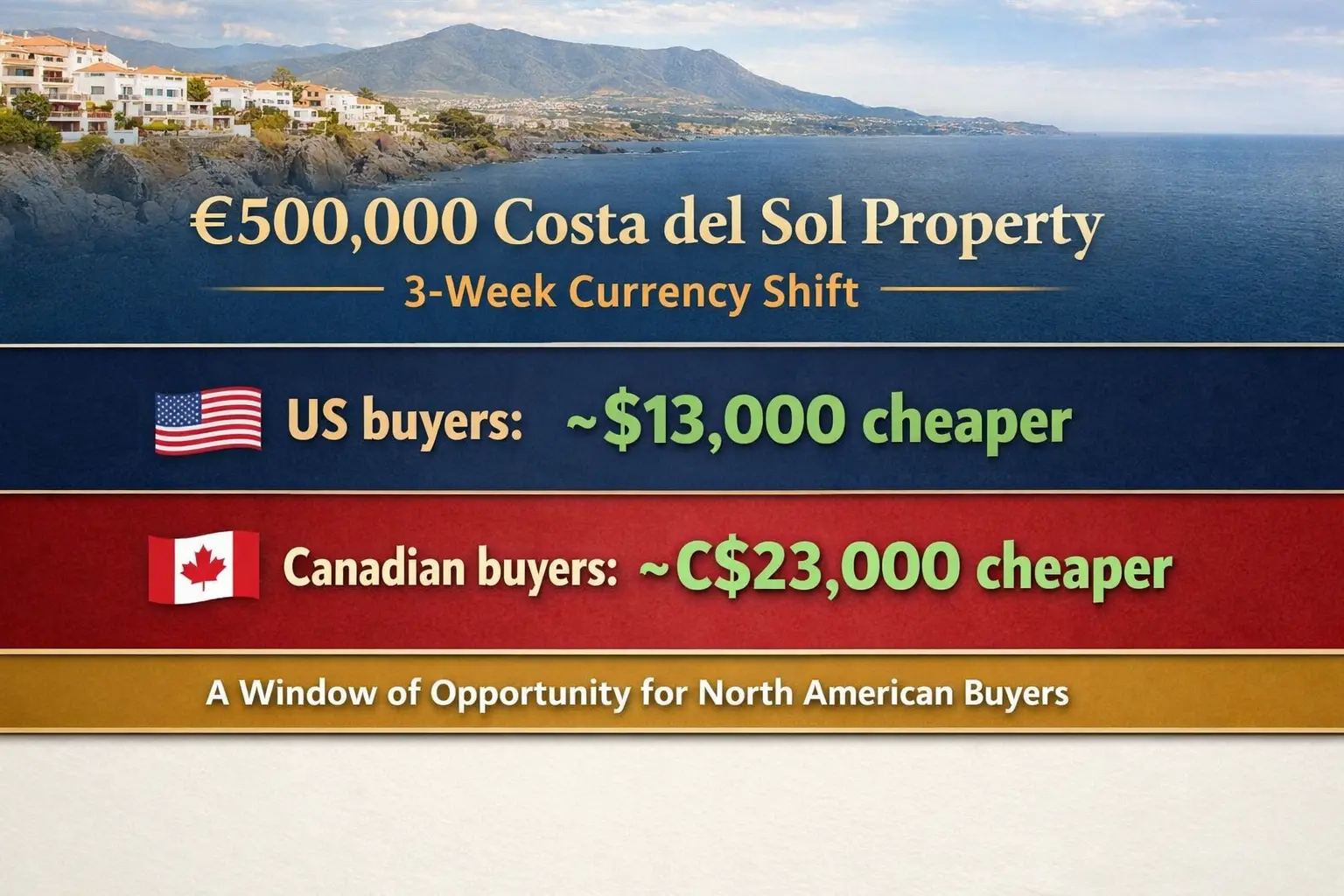
    Why a €500,000 Property in Spain Just Got Cheaper for North Americans


    Currency advantage for US and Canadian buyers purchasing property in Spain

    If you are buying property in Spain from North America, exchange rates can quietly make a meaningful difference to the final price you pay. Over the past three weeks, recent geopolitical tensions have strengthened both the US dollar and the Canadian dollar, creating a more favourable window for buyers looking at homes on the Costa del Sol.

    For anyone considering a move, a holiday home or a lifestyle investment, this shift is worth paying attention to. On a €500,000 property, the difference is no longer minor. It is large enough to influence timing, budget and purchasing power.

    What has changed?

    In periods of uncertainty, investors often move towards assets and currencies seen as more defensive. That has helped support the US dollar in recent weeks. At the same time, higher oil prices have also supported the Canadian dollar, which tends to benefit when energy markets rise.

    The result is simple: the euro now costs fewer US dollars and fewer Canadian dollars than it did just a few weeks ago.

    What does that mean in real terms?

    Using recent exchange rate movements, here is how a €500,000 property in Spain compares:

    For US buyers
    Around three weeks ago, a €500,000 property would have cost approximately $589,200. At current levels, the same property is closer to $573,800.

    That is roughly $15,400 less purely due to currency movements.

    For Canadian buyers
    Around three weeks ago, a €500,000 property would have cost approximately C$807,000. At current levels, the same property is closer to C$784,000.

    That is roughly C$23,000 less purely due to currency movements. ECB rates 16.03.2026

    Of course, exchange rates move every day and there is no guarantee this window will stay open. However, for North American buyers who were already considering a purchase, it is a timely reminder that currency can materially affect the total cost of buying overseas.

    Why this matters for Costa del Sol buyers

    The Costa del Sol continues to attract buyers from the United States and Canada for a combination of reasons: climate, lifestyle, accessibility, strong international communities and comparatively attractive property values when set against many major North American cities.

    When exchange rates move in your favour, that value proposition becomes even more compelling. A stronger home currency can improve your budget, widen your choice of homes or simply reduce the effective cost of the purchase.

    Can North Americans buy property in Spain?

    Yes. North Americans can buy property in Spain with no restrictions. Spain allows foreign buyers, including Canadian and US citizens, to purchase real estate in exactly the same way as Spanish residents.

    The process typically involves obtaining a Spanish tax identification number (NIE), opening a Spanish bank account and completing the purchase through a notary. Many international buyers work with a local lawyer who handles the legal checks and paperwork.

    For buyers considering property on the Costa del Sol, the process is straightforward and well established. North Americans regularly purchase holiday homes, investment properties and full-time residences across Marbella, Benahavís and the surrounding areas.

    Looking beyond the exchange rate

    Currency is only one part of the bigger picture, but it works best when viewed alongside running costs, lifestyle and overall buying expenses in Spain.

    If you would like to explore how Spain compares more broadly, these guides may be helpful:

    Costa del Sol cost of living vs New York, London and Toronto

    A useful moment to revisit the market

    If you are a US or Canadian buyer who had been considering a purchase in Spain, this may be a good moment to take another look. A currency move on its own should never be the only reason to buy, but when it aligns with long-term plans and the right property, it can create a genuinely useful advantage.

    Whether you are searching for a permanent move, a second home or an investment with lifestyle appeal, a stronger dollar can improve what is possible right now.

    Further reading for North American buyers

    If you are exploring the idea of buying property on the Costa del Sol, these guides provide a useful overview of the practical and lifestyle considerations involved in moving or investing in Spain.

    Request more information →

    [siteorigin_widget class=”WP_Widget_Custom_HTML”][/siteorigin_widget]
  • Why Retire in Benahavís in 2026? A Spain Guide

    Why Retire in Benahavís in 2026? A Spain Guide

    Retirement lifestyle in Benahavís with mountain and Mediterranean views

    Spain has long been one of Europe’s most desirable places to retire, attracting thousands of international buyers every year who choose to retire in Spain for its sunshine, lifestyle, healthcare and relaxed pace of life.

    But choosing where in Spain to retire is one of the most important decisions you’ll make. The country’s regions vary enormously in climate, lifestyle, costs and communities.

    For many retirees seeking the perfect balance of lifestyle, scenery and accessibility, Benahavís on the Costa del Sol has become one of the most attractive options in 2026.

    Below we explore the key factors to consider when deciding where to retire in Spain — and why Benahavís consistently stands out.

    Cost of living and property choices

    Luxury villas and apartments in Benahavís surrounded by nature

    The cost of living will shape your retirement lifestyle. Some regions of Spain — particularly inland provinces — offer very low housing costs, while others have seen property prices rise rapidly.

    Major cities such as Madrid, Barcelona and San Sebastián remain among the most expensive places to buy property in Spain. Coastal lifestyle destinations such as parts of Málaga province also command premium prices.

    However, value should be measured not only by property prices but by lifestyle quality.

    In Benahavís, for example, retirees benefit from:

    • Exceptional natural surroundings
    • World-class golf courses
    • Secure gated communities
    • Easy access to Marbella, Puerto Banús and the coast
    • A wide range of property types, from lock-and-leave apartments to luxury villas

    Spain also offers attractive residency options for retirees, including the Non-Lucrative Visa for non-EU citizens, making long-term living in places such as Benahavís straightforward with the right planning.

    If you’re exploring which area of Benahavís suits your lifestyle best, you may find our Urbanisations Guide helpful.

    Climate and year-round outdoor living

    Golf course and Mediterranean views in Benahavís

    Climate is often the main reason people choose Spain for retirement.

    The Costa del Sol enjoys more than 300 days of sunshine each year, with mild winters and long outdoor seasons. This allows retirees to enjoy golf, walking trails, beaches and outdoor dining throughout the year.

    Benahavís in particular benefits from a unique microclimate thanks to its hillside setting just above the coast. Many homes enjoy cooler summer breezes while still being only minutes from the sea.

    This balance of mountain scenery and Mediterranean climate is one of the reasons the area attracts retirees seeking a healthy outdoor lifestyle.

    Many residents describe life here as feeling permanently on holiday — with morning walks in the hills, long lunches in the village and evenings watching the sunset over the Mediterranean.

    Community, language and international connections

    Another key consideration when retiring abroad is the type of community you want around you.

    Some retirees prefer quieter regions with fewer international residents, while others appreciate having an established international community and English-speaking services.

    Benahavís offers a rare balance between both.

    The municipality has a cosmopolitan population with residents from across Europe and beyond.

    Yet it still retains an authentic Andalusian identity centred around the traditional village.

    This makes integration easier while still allowing newcomers to enjoy Spanish culture and lifestyle.

    Culture, cuisine and lifestyle

    Benahavís village restaurants and traditional Andalusian streets

    Every region of Spain has its own traditions, cuisine and cultural character.

    Andalusia is famous for its relaxed pace of life, tapas culture and vibrant local festivals. Benahavís itself is often called the gastronomic corner of the Costa del Sol, thanks to its exceptional restaurants and culinary reputation.

    Living here means being able to enjoy everything from traditional village dining to Michelin-starred cuisine, often within minutes of home.

    At the same time, Marbella’s international restaurants, beach clubs and cultural events are just a short drive away. You can discover more about the dining options available in the municipality in our Restaurants Guide.

    Accessibility and healthcare

    When choosing a retirement location, accessibility is often overlooked but extremely important.

    Benahavís benefits from proximity to Málaga International Airport, around 45 minutes away, which offers direct flights to most major European cities. This makes visiting family or welcoming guests much easier.

    The region also provides access to excellent private and public healthcare facilities, including hospitals in Marbella and Estepona.

    For many retirees, this combination of connectivity and healthcare infrastructure provides important peace of mind. Our Healthcare in Spain Guide covers the options available in much more detail.

    Why many retirees ultimately choose Benahavís

    Spain offers countless beautiful places to retire. However, few locations combine scenery, security, lifestyle and accessibility as effectively as Benahavís.

    Here retirees can enjoy:

    • Stunning mountain and sea views
    • World-class golf and outdoor activities
    • Secure gated communities
    • One of the safest municipalities on the Costa del Sol
    • Close proximity to Marbella and the Mediterranean
    • A welcoming international community
    • Authentic Andalusian charm

    For those looking to enjoy the next chapter of life in a place that balances tranquility with opportunity, Benahavís continues to stand out as one of Spain’s most compelling retirement destinations — combining natural beauty, security, community and world-class lifestyle.

    Explore more guides about retiring in Benahavís


    Got a question?

    If you are considering retiring in Benahavís and would like local insight on the best areas, communities or property options, we would be happy to help. You can contact us by email, WhatsApp or phone for friendly, no-pressure advice.


    Looking for a home outside Benahavís?
    Holiday Homes Spain
    covers the whole Costa del Sol.

    [siteorigin_widget class=”WP_Widget_Custom_HTML”][/siteorigin_widget]