Golf Shops Costa del Sol | Where to Buy Clubs & Gear
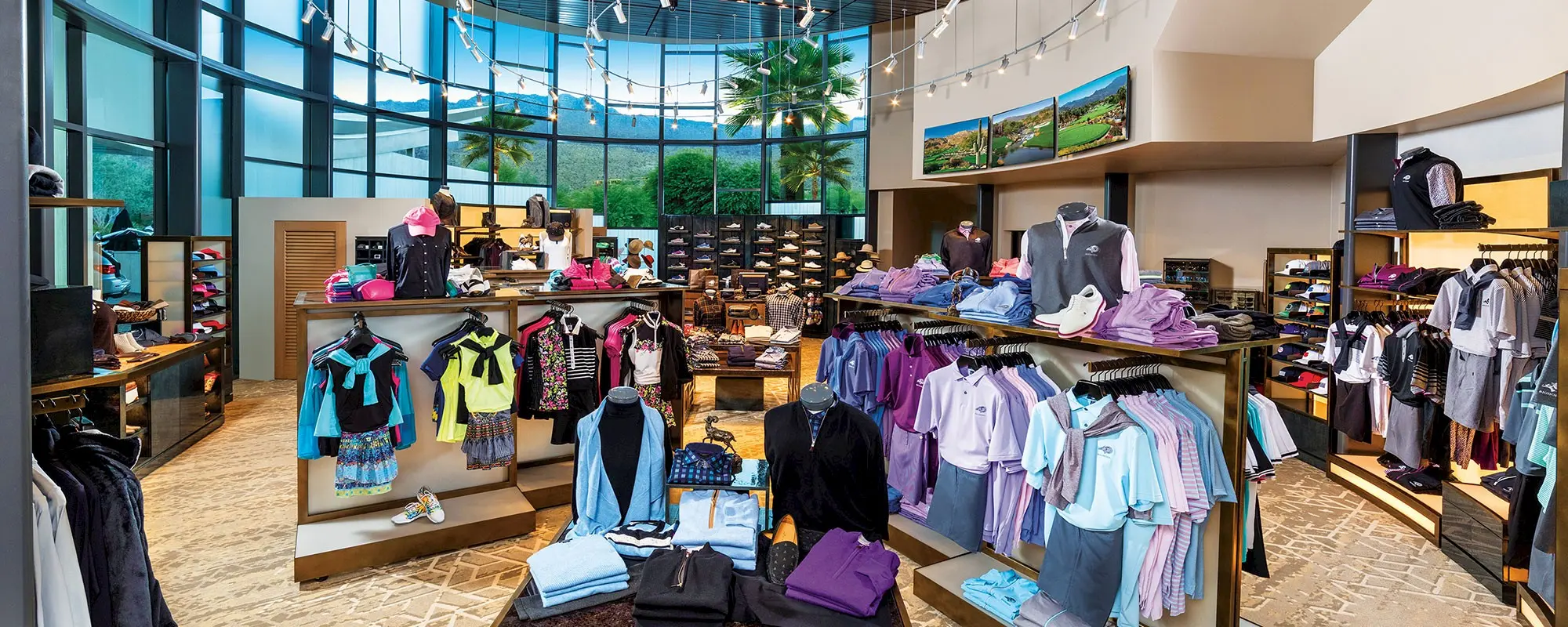
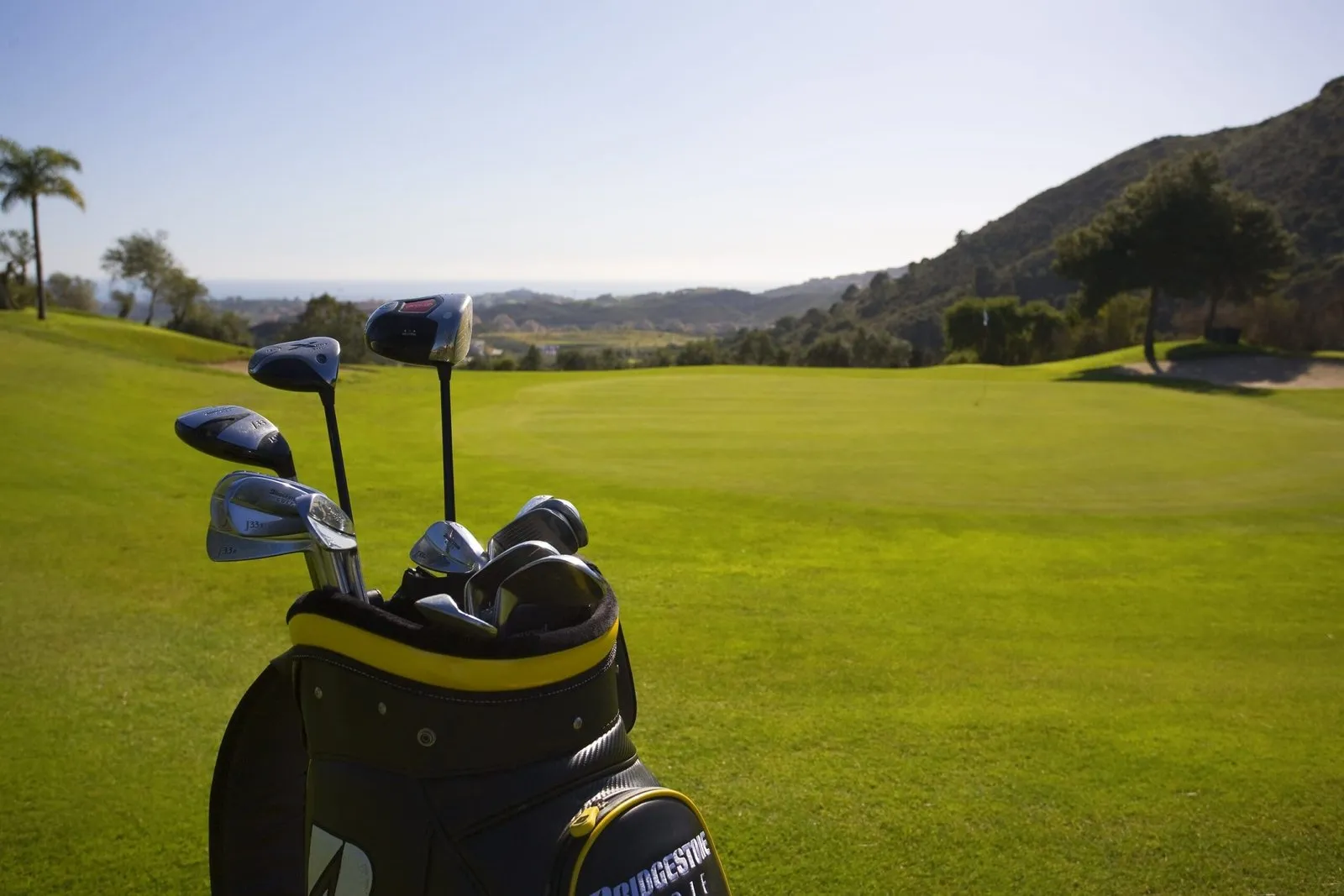
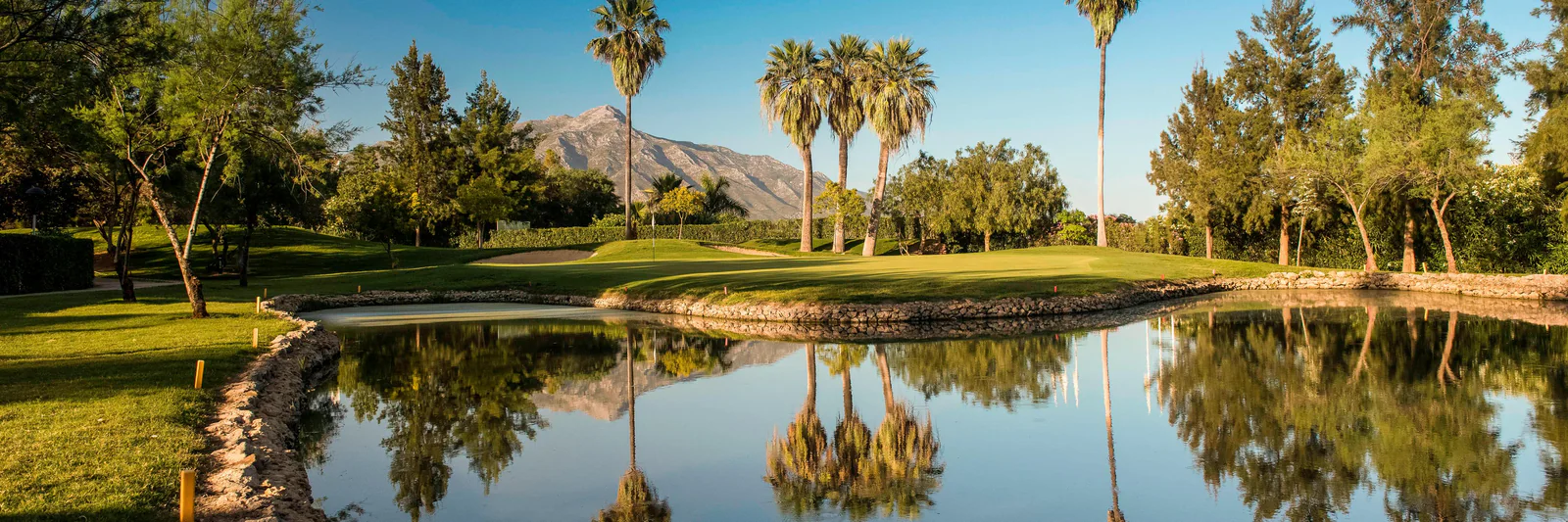
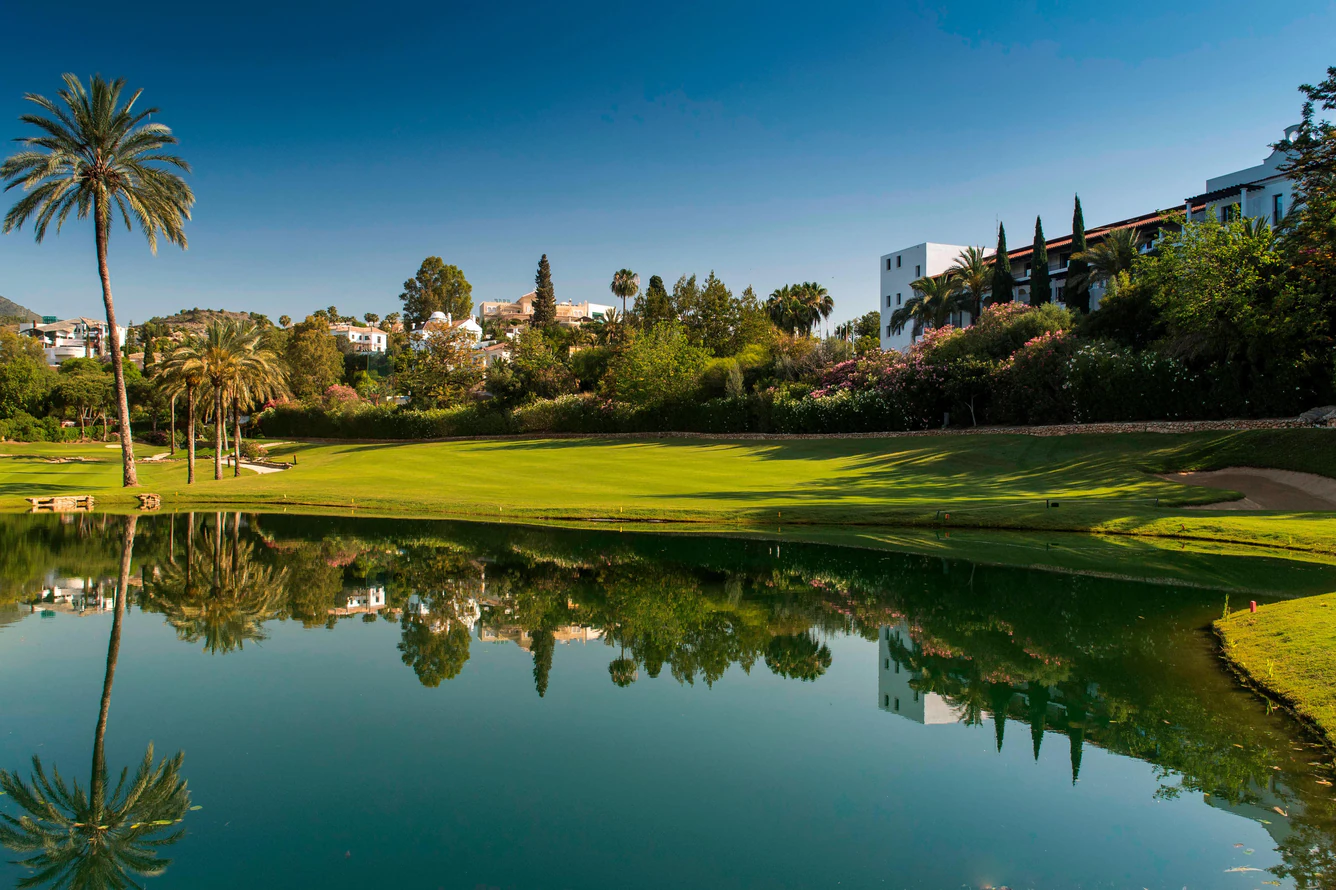
If you play regularly in Benahavís, Marbella or Estepona, you will quickly want a reliable place to buy and maintain your golf equipment. The Costa del Sol — often called the “Costa del Golf” — has a strong mix of on-course pro shops, independent golf retailers and online ordering with local collection.
This short guide highlights the main types of golf shops you will find near Benahavís, how they differ, and how to combine them with club-fittings and practice facilities at local courses. It also sits alongside our Golf in Benahavís & Costa del Sol guide and our Golf Course Homes collection if you are also looking for a property on or near the fairways.
https://moodarse.com/resources/lifestyle/golf-benahavis-guide/On-course Pro Shops in Benahavís & Nearby
Most 18-hole courses on the Costa del Sol have their own on-site pro shop attached to the clubhouse. These are the most convenient places to pick up essentials before a round and to speak directly with local
professionals about club choice and fittings.
La Quinta Golf & Country Club: popular with Benahavís residents; the pro shop typically
offers leading brands, rental sets and advice from the resident pros.
Los Arqueros Golf: a technical course with a friendly clubhouse; the on-site shop is ideal for
balls, gloves and course-specific tips.
Marbella Club Golf Resort: a more exclusive setting in the Benahavís hills; expect a focused
selection and personalised service for members and guests.
Pro shops are perfect for immediate needs — balls, tees, gloves, rental clubs, a polo shirt — and often the best place to book lessons or fittings with coaches you already know from the practice ground.
Independent Golf Shops & Fitting Specialists
Along the Marbella–Estepona corridor you will also find dedicated golf retailers with larger showrooms and extensive stock. These can be a good choice if you want to compare multiple brands side by side or book a
full club-fitting session.
Multi-brand golf stores usually stock a wide range of drivers, irons, wedges, putters, bags and trolleys, as
well as men’s, women’s and junior clothing.
Some retailers have indoor simulators or hitting bays where you can test clubs with launch-monitor
data before you buy.
Many shops also handle re-gripping, loft/lie adjustments and basic repairs, which is helpful if
you play regularly and want to keep one main set for your Costa del Sol base.
It is worth calling ahead to ask about fitting availability and whether they stock left-handed options, women’s
shafts or specific brands you prefer.
Popular stores include:
Golf’us Megastore
Golfriends Marbella
Golf City Sports Golf Shop & Discount Outlet
Online Golf Stores with Costa del Sol Delivery
Many players now combine local shopping with online ordering. Major European golf retailers ship
directly to Spain, and some offer express delivery to the Costa del Sol.
Online stores can be useful for price comparison on big-ticket items such as drivers or full iron sets.
Check shipping times and returns policies, especially if you plan to be in Spain only for part of the year.
Many golfers use online shops for repeat purchases — favourite balls, gloves or specific shafts — once
they already know what works for them.
A practical approach is to combine fittings and first-time purchases locally with occasional top-ups online, so you always have the right equipment ready in your Benahavís home.
Golf Clothing & Accessories for the Costa del Sol Climate
The Costa del Sol climate shapes what you will actually wear and carry on the course. Local golf shops usually stock lightweight, breathable fabrics designed for warm rounds, plus layers for cooler winter mornings.
Moisture-wicking polos and shorts for most of the year.
Light mid-layers, gilets and waterproofs for early starts and rare rainy rounds.
Sun-protection hats, sunglasses and high-SPF sunscreen — essentials almost year-round.
If you are relocating, it is often better to buy weather-appropriate clothing locally once you have experienced a couple of months of Costa del Sol golf rather than shipping an entire UK or northern European wardrobe.
Golf Shops & Year-Round Golf Living in Benahavís
One of the benefits of basing yourself in Benahavís is how easy it is to combine course access, practice
facilities and equipment shopping. Within a short drive you can:
Play and practise at clubs such as La Quinta, Los Arqueros, Marbella Club Golf Resort and Atalaya Golf.
Visit independent golf shops along the coast for bigger purchases or specialist fittings.
Keep a dedicated set of clubs and accessories at your Benahavís home, ready for spontaneous tee times.
If you are considering a move that centres on golf, our team can help you align the right home, favourite courses and practical shopping routes so day-to-day life feels effortless.
Thinking about a home on the “Costa del Golf”?
Darren & Angelina — your Personal Property Concierge — can shortlist homes near your preferred courses and practice facilities, from frontline fairway villas to lock-up-and-go apartments with easy access to golf shops and clubhouses.
Best Golf Courses Near Benahavís for Year-Round Residents
If you are moving to the Costa del Sol and love golf, Benahavís is one of the best bases you can choose. Several of the best golf courses near Benahavís are no more than a short drive from the village, and many have homes built around the fairways for residents who want golf on their doorstep.
Unlike purely holiday-focused resorts, Benahavís has a strong year-round community. Courses stay busy enough to feel sociable, but not so crowded that it is impossible to secure a tee time outside peak weeks. Many residents play several times a week, mixing social competitions, practice and casual nine-hole rounds.
This guide highlights the courses that tend to work best for year-round residents, rather than just occasional visitors, and links them to nearby neighbourhoods and golf course home options. For a broader overview, you can also explore our dedicated Golf in and around Benahavís guide.
What Year-Round Golfers in Benahavís Typically Look For
Residents often think about golf a little differently from visitors. While holidaymakers may focus on a single “bucket list” round, people who live here full-time want a course that feels like a second home.
A fair pace of play across the year, not just in low season.
Membership options or resident-friendly green fees that reward regular play.
Practice facilities: driving range, putting greens and short-game areas.
A clubhouse that works for coffee meetings, remote work and family lunches.
Nearby neighbourhoods that make it realistic to play before or after work.
With that in mind, here are some of the best golf courses near Benahavís for people who plan to live here and play regularly, not just during holidays.
La Quinta Golf & Country Club
La Quinta is a 27-hole layout that has long been a favourite with year-round residents. Its location between Nueva Andalucía, San Pedro and Benahavís makes it easy to reach from many neighbourhoods, and the mix of three nine-hole combinations keeps regular play interesting.
The clubhouse, practice facilities and hotel link it to the wider Marbella scene, yet the residential areas around the course still feel peaceful once you leave the main road. Many owners choose apartments or penthouses in La Quinta communities as a lock-and-leave base that still feels residential rather than purely touristic.
Los Arqueros appeals to players who enjoy a slightly more technical course with hillside views. Designed by Seve Ballesteros, it offers an interesting challenge without feeling intimidating once you know your way around.
The location just above the Ronda road works well for residents who split their time between Benahavís village, San Pedro and the coast. Communities around Los Arqueros include apartments, townhouses and villas at a range of price points, making it a flexible option for couples, families and investors.
El Higueral is a scenic nine-hole course that many residents play regularly, often fitting in a quick round before work or in the late afternoon. Its riverside setting and relaxed atmosphere suit players who like golf to feel enjoyable rather than intense.
The surrounding area includes Capanes del Golf and other established communities with indoor and outdoor pools, spa facilities and landscaped gardens. For year-round residents, this combination of comfortable apartments and a forgiving, accessible course is a strong draw.
If you are researching both golf and schooling, this corridor also keeps you within a reasonable drive of Atalaya International College.
Marbella Club Golf Resort
For buyers looking at the upper end of the market, Marbella Club Golf Resort offers a low-density course with large plots, open views and a strong country-club feel. It suits residents who want more space and privacy while staying within a manageable drive of the coast.
The combination of an eighteen-hole course, equestrian facilities and gated villa communities aligns well with people who see Benahavís as a long-term base rather than just a holiday stop. Properties here often appeal to those considering both golf homes and equestrian lifestyles.
A short drive from Benahavís, the Villa Padierna / Los Flamingos area offers three courses laid out around a luxury hotel and spa. For residents, the attraction is the combination of high-spec apartments and villas with resort-style facilities and strong on-site services.
Year-round players enjoy the variety of tee options and the ability to play multiple layouts without travelling far. Meanwhile, non-golfing family members can make the most of the spa, pools and restaurants, keeping everyone happy on weekends and school holidays.
While technically straddling municipal borders, Los Flamingos often features in searches for golf course homes near Benahavís because of its quick access to the village, Atalaya and the A-7 coast road.
Monte Mayor and More Secluded Golf Settings
If you prefer golf in a rugged, natural setting, the Monte Mayor area and nearby projects offer a more secluded version of golf course living. Plots are often larger, with expansive views across the hills and valleys, and a strong focus on landscape and privacy.
These locations suit residents who do not mind a slightly longer drive to the coast in exchange for fewer neighbours and a greater sense of escape at home. Many owners here also play at La Quinta, Los Arqueros or El Higueral to mix up their weekly golf routine.
If you are exploring both golf and country-style living, it can be helpful to view Monte Mayor alongside more central golf communities to see where you feel most comfortable.
How to Choose Your “Home Course” in Benahavís
Once you have a shortlist of the best golf courses near Benahavís that appeal to you, the next step is to test how each one fits your real-life routine.
Drive the route from potential neighbourhoods at the times you would normally play.
Ask about membership categories, resident discounts and waiting lists.
Spend time on the practice areas and in the clubhouse, not only on the course.
Check how school runs and work schedules overlap with tee-time availability.
If possible, play a couple of rounds at each course across different days of the week.
The goal is to find a course that feels natural to visit several times a week, not just somewhere you play once a month because it looks impressive in photos.
Want Help Matching Courses to Neighbourhoods and Homes?
Darren & Angelina — your Personal Property Concierge — can help you compare the main golf courses near Benahavís, introduce you to nearby communities, and shortlist homes that make regular play genuinely convenient.
Share your handicap, budget and lifestyle priorities, and we’ll design a viewing plan that combines property tours with time on the course and in the clubhouse. Get in touch →
For many buyers, living on a golf course in Benahavís is the ultimate Costa del Sol lifestyle. You swap traffic noise for golf buggies in the distance, trade city views for fairways and mountain backdrops, and keep the clubhouse, practice area and walking routes just a few minutes from your front door.
Benahavís stands out because it combines serious golf with a relaxed, year-round residential feel. Courses such as La Quinta, Los Arqueros, El Higueral and Marbella Club Golf Resort sit in low-density valleys and hills, with modern communities wrapped around the fairways. Many homes enjoy sea views as well as green views.
This guide looks at what day-to-day life is really like on a golf course in Benahavís, the difference between frontline and “on-course” homes, and the practical points to weigh up before you buy. It also links out to our dedicated Golf in and around Benahavís guide and the main collections of golf course homes and frontline golf properties.
What It’s Like to Live on a Golf Course in Benahavís
Daily life on a golf course in Benahavís is calmer than many buyers expect. Early mornings tend to be peaceful, with greenkeepers out first and the first tee times starting quietly. As the day warms up, you notice golfers on buggies in the distance rather than crowds, especially on low-density courses.
Most golf communities in Benahavís are gated and landscaped, with shared pools, gardens and often a gym or spa. You can walk or drive a short distance to the clubhouse for coffee, lunch, a practice session or dinner on the terrace. In the evenings, the fairways fall quiet again and many homes enjoy sunset views across the course towards the sea.
It’s a setting that suits year-round residents as much as second-home owners: you feel close to nature but are only a short drive from beaches, schools and town centres like San Pedro de Alcántara, Puerto Banús or Marbella.
Frontline Golf vs Homes Inside Golf Communities
Not every golf property is the same. In Benahavís it helps to distinguish between frontline golf homes and homes that simply sit within a golf course urbanisation.
Frontline golf: the property directly overlooks a hole, fairway or green with minimal visual
barriers. Views are often spectacular and resale demand is strong, but you should consider privacy, stray
balls and the orientation of terraces.
Golf course homes: properties located inside a golf community or on the perimeter roads of
the course. They still benefit from the setting, security and facilities, but may have more partial or
elevated views rather than “grass at your doorstep”.
Who Living on a Golf Course in Benahavís Works Best For
Living on a golf course in Benahavís is not just for low-handicap players. It also appeals to buyers who simply enjoy wide open views, mature landscaping and a quieter atmosphere than many coastal strips.
Year-round residents: people who want a primary home with fresh air, space to work from
home, and easy access to clubs, gyms and walking routes.
Second-home owners: buyers seeking a lock-and-leave apartment or townhouse in a secure,
well-maintained community with a reliable management structure.
Families: parents who like the safety of gated communities, on-site facilities and the option
to combine golf with nearby schools such as Atalaya International College or CEIP Daidín.
Investors: buyers interested in rental demand from golfers and winter sun seekers, particularly
in well-known venues like La Quinta and Los Arqueros.
The right match depends on how often you play, how much time you spend in Spain and whether you see the property as a pure lifestyle purchase or as part of a broader investment plan.
Practical Things to Check Before You Buy
Before committing to any golf course home in Benahavís, it is helpful to walk through a simple checklist with your agent and lawyer. A few small details can make a big difference to how the property feels once you move in.
Orientation & views: when does the sun hit your terrace, and are you looking onto tees, fairways or a quieter green?
Community fees: what do the annual charges include and how do they compare with similar golf developments in Benahavís?
Club membership: does ownership include any playing rights or discounts, or is membership separate and optional?
Noise & privacy: how close are paths, tees and buggy tracks to your outdoor areas, and are there any screens or planting in place?
Rental rules: if you plan to rent, are there any community or municipal limits on short-term lettings or touristic licences?
A good viewing schedule will include visits at different times of day so you can feel how the course and community operate in real conditions, not just at a single quiet moment.
Popular Golf Course Neighbourhoods in Benahavís
Several areas in and around Benahavís have become reference points for golf course living. Each offers a slightly different balance of views, facilities and price points.
La Quinta: a 27-hole course with established communities and new developments, close to Nueva Andalucía and San Pedro. A favourite for year-round residents and second-home owners.
Los Arqueros: hillside golf course with a mix of apartments, townhouses and villas, popular with residents who want easy access to Ronda road and the coast.
El Higueral & Capanes corridor: scenic nine-hole course with communities such as Capanes del Golf offering lush gardens, indoor pools and a tranquil feel.
Marbella Club Golf Resort: low-density, luxury homes on large plots with wide open views and a strong country-club atmosphere.
Villa Padierna / Los Flamingos: resort-style environment with hotel, spa and three courses, appealing to those who want full facilities and quick coastal access.
If you are just starting your search, it can help to compare a couple of these areas in the same day to decide which version of golf course living in Benahavís really fits your lifestyle.
Benahavís vs Marbella’s “Golf Valley”
Many buyers compare living on a golf course in Benahavís with properties in Marbella’s Golf Valley (Nueva Andalucía). Both areas offer multiple courses, strong international communities and good access to schools and amenities.
Broadly speaking, Benahavís tends to feel a little more spacious and rural, with lower-density plots and a slightly quieter atmosphere once you return home. Golf Valley, by contrast, is more compact and closer to Puerto Banús nightlife and central Marbella.
Neither is “better” – but if you value open views, hiking routes and the village feel of Benahavís, living on a golf course here can be an ideal middle ground between countryside and coast.
Planning to Live on a Golf Course in Benahavís?
Darren & Angelina — your Personal Property Concierge — will help you compare frontline golf villas with homes in wider golf communities, explain fees and club structures, and match you with neighbourhoods that fit your lifestyle, budget and school needs.
Share your requirements and we’ll curate a shortlist of golf course homes in Benahavís and arrange private viewings around your travel plans. Get in touch →
Nurseries & Early Years Options in Benahavís & Surroundings
For families with babies and toddlers, one of the first questions when considering a move is: what childcare and early years options will we have?
Benahavís and the nearby coast offer a mix of Spanish guarderías, bilingual preschools and early years classes at international schools.
This guide gives a practical overview of how early years education typically works on the Costa del Sol, with a local focus on Benahavís and the Atalaya corridor. It is designed to sit alongside our broader Education & Childcare guide and the specific school pages for older children.
Many families use these early years stages to help their children become bilingual and to build friendships before starting at primary or international schools such as Atalaya International College or CEIP Daidín.
Guarderías (Daycare) for Ages 0–3
Guarderías are nurseries for children roughly from birth to age three. You will find both municipal
and private options around Benahavís and along the coast, often with flexible schedules to suit working parents.
Opening hours typically cover the core working day, with early drop-off or late pick-up options.
Some guarderías offer basic English exposure; others are fully Spanish-speaking environments.
Fees vary by location, hours and whether the centre is private or subsidised.
For many international families, this stage is where children first absorb Spanish, songs and routines, making later transitions into local or bilingual schools much smoother.
Infantil (Preschool, Ages 3–6)
From ages three to six, children usually move into Infantil – the Spanish preschool stage. This can be at a local public school or at a private nursery or international school with early years provision.
Public Infantil classes, such as those connected to village schools, are typically Spanish-speaking with strong socialisation and early literacy.
International schools offer early years programmes following British, IB or other curricula with English as the main language.
Some families combine a Spanish Infantil setting with after-school activities in English to balance both languages.
Your choice here often shapes your child’s main language at school, so it is worth thinking about long-term plans for primary and secondary education.
Benahavís, Atalaya & Nearby Early Years Hubs
Families who choose Benahavís often divide their early years routine between the village, Atalaya and nearby coastal areas. Many eventually move on to Atalaya International College or other international schools while keeping strong links with local Spanish-speaking friends.
Benahavís village offers a close-knit community feel and easy drop-offs for local early years settings.
The Atalaya corridor provides quick access to both nurseries and the main international school campuses.
Estepona and Marbella add further nursery and preschool choices within a realistic drive.
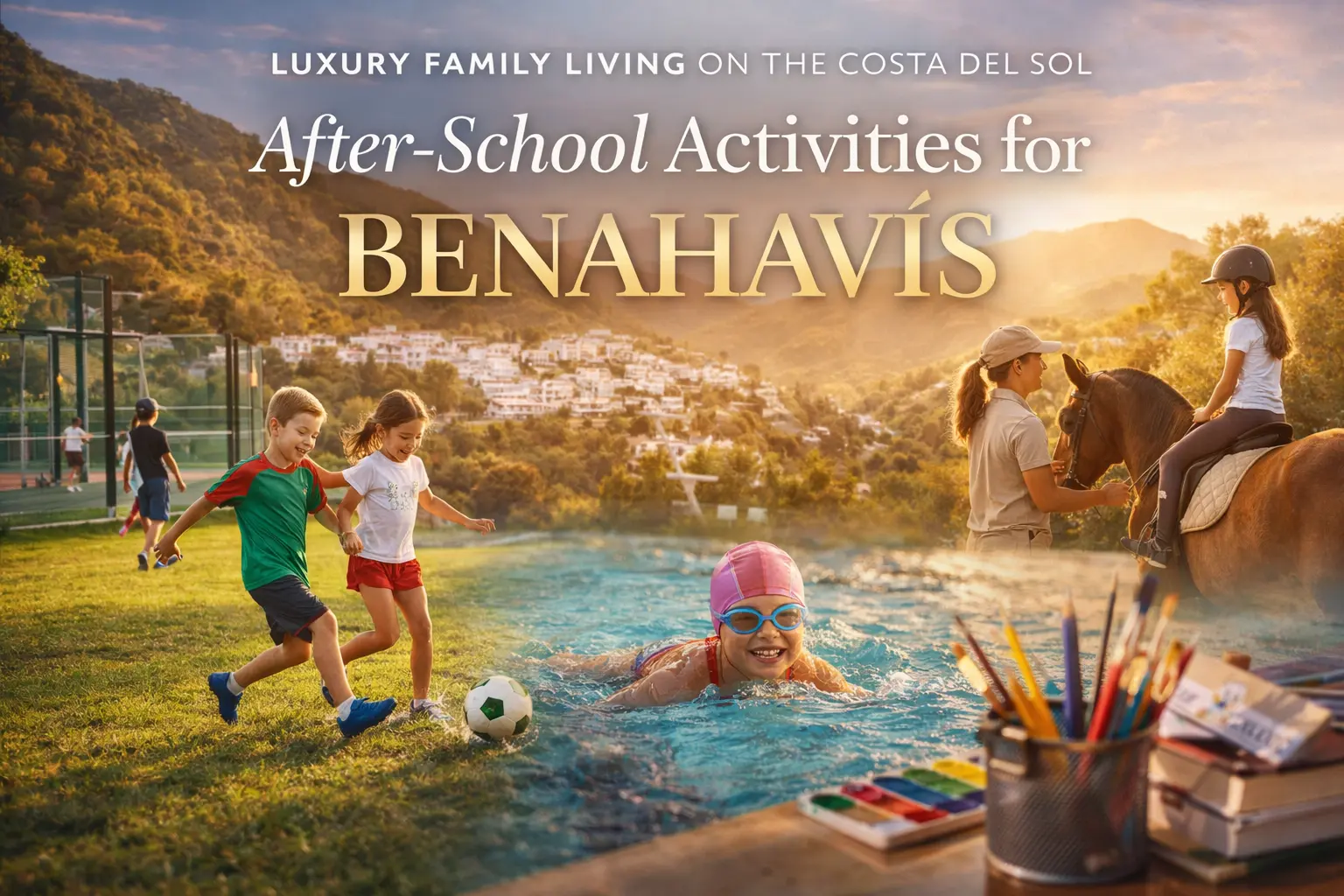
After-School Activities & Sports for Kids in Benahavís
In Benahavís, the school day rarely ends at the classroom door. Instead, it flows effortlessly into an afternoon rhythm shaped by sunshine, sport and social connection — a lifestyle that feels as natural as it is enriching.
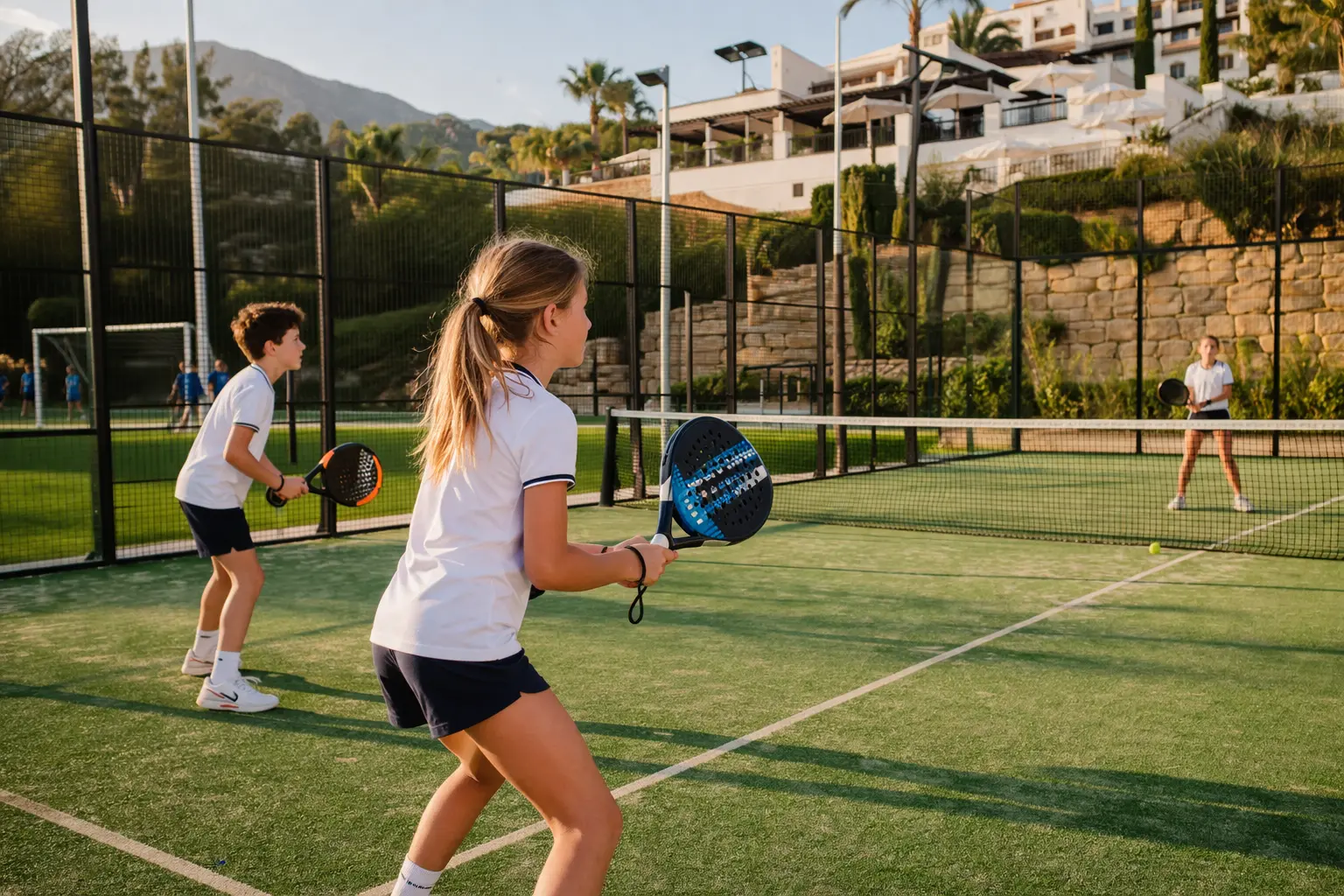
For families relocating to the area, one of the immediate joys is how easily children can stay active. Whether it is an early evening football session, padel under the fading light, or a swim before dinner, the pace of life encourages movement, independence and balance.
This is particularly true for families connected to Atalaya International College, CEIP Daidín and other nearby schools, where after-school routines are not an afterthought — they are an essential part of daily life.
Sport forms the heartbeat of after-school life in Benahavís. It is here, on pitches, courts and poolside terraces, that friendships are built and confidence quietly grows.
Football training sessions run throughout the week, often followed by weekend matches that take families along the coastline. Meanwhile, padel — the region’s signature sport — is as much a social ritual as it is a game, with children quickly finding themselves part of a wider community.
Swimming, too, plays a central role. From early water confidence classes to competitive squads, the Costa del Sol climate makes it possible to train year-round, adding another layer of consistency to a child’s routine.
Nature as a Playground: Equestrian Life & Outdoor Adventure
Set between the valley, mountains and open countryside, Benahavís offers something increasingly rare — a childhood shaped by nature as much as by structure.
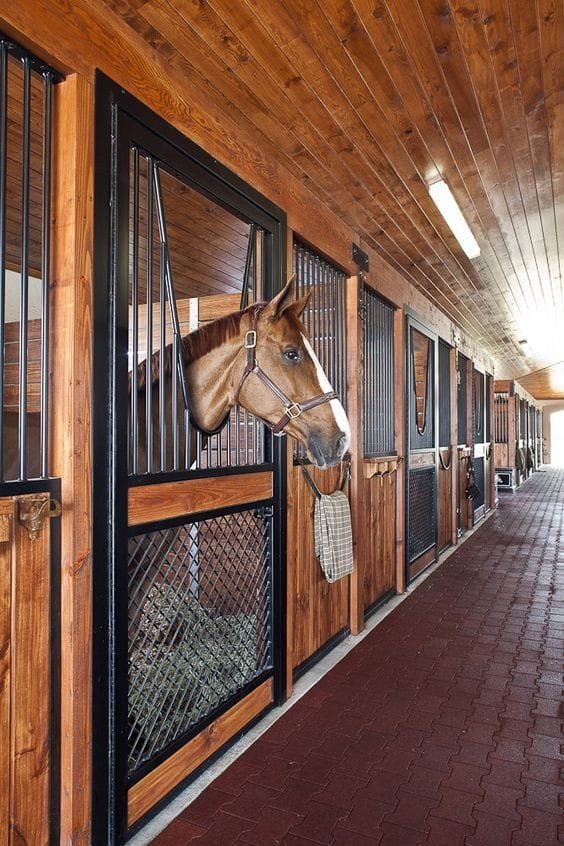
Horse riding is a natural extension of this lifestyle. Nearby equestrian centres introduce children to riding in a calm, confidence-building environment, while older riders progress to longer hacks through the surrounding hills.
Weekends often evolve organically: a morning ride followed by a walk along a river trail, or a picnic overlooking the valley. It is this blend of freedom and landscape that defines the area.
Beyond Sport: Creativity, Language & Academic Balance
While sport may dominate the afternoons, many families also weave in quieter, more focused pursuits — the kind that support both creativity and academic confidence.
Music and dance academies offer everything from piano and guitar to contemporary movement, while tutoring and language support help international children settle into bilingual education with ease.
There is also a growing ecosystem of smaller, specialist activities — coding clubs, chess sessions, even cooking workshops — reflecting the international nature of the community.
Together, these experiences create a well-rounded rhythm where learning continues naturally beyond the classroom.
Where You Live Shapes the Week
In Benahavís, choosing a home is as much about lifestyle flow as it is about design or views. The proximity to schools, sports clubs and outdoor spaces can quietly transform the ease of daily life.
Village homes offer a walkable, community-led atmosphere, where children can move between activities with a sense of independence. Meanwhile, areas such as Atalaya and La Alquería provide quick access to both schools and coastal sports clubs, making busy schedules feel manageable.
For families balancing multiple activities each week, these small differences quickly become meaningful.
What defines Benahavís is not simply the range of activities available, but how naturally they fit into everyday life.
As parents ourselves, we understand that a successful move is about more than choosing the right school. It is about creating a rhythm where children can thrive — socially, physically and academically — without the day feeling rushed or fragmented.
When you share what matters most to your family, we can help you find not just the right home, but the right lifestyle to match it.
School Buses & Transport Options for Families in Benahavís
For many families moving to the Costa del Sol, a key question is simple: what will the school run look like in real life?
In Benahavís, most parents rely on a mix of school buses, car journeys and occasional walking or cycling routes, depending on the child’s age and where they live.
This guide gives a practical overview of school bus options and everyday transport habits for families with children at Atalaya International College and CEIP Daidín, along with tips on choosing the right neighbourhood for an easier daily routine.
In Benahavís and the Atalaya–La Alquería corridor, the school run is usually a combination of:
School buses serving key pick-up points along the coast and inland.
Parents driving from nearby neighbourhoods such as Atalaya, La Alquería, Capanes del Golf and Benahavís village.
Older students occasionally cycling or walking short stretches, depending on routes and daylight.
Many families start with a car-based routine when they first arrive, then gradually move to bus routes or shared lifts once they know the area and have settled into a community of other parents.
School Transport for Atalaya International College Families
Atalaya International College draws families from Benahavís, Marbella and Estepona. Many parents choose to live in Atalaya, La Alquería or Capanes del Golf so the journey stays around 5–10 minutes by car in normal traffic.
Car journeys: Most parents use the car for at least one of the daily runs, combining drop-offs with commuting or errands on the coast road.
Bus routes: The school typically offers bus services with pick-up points aligned to popular residential areas.
Neighbourhood choice: Living in Atalaya, La Alquería or Capanes del Golf keeps the route simple
and avoids long detours through town centres.
For families using CEIP Daidín, the picture is slightly different. Many live in the village itself or in nearby developments above the river road and treat the school day as part of everyday village life.
Village families often walk or make very short car journeys for drop-off and pick-up.
Parents in Capanes del Golf or La Alquería usually drive up the valley, often combining the school run with work or shopping trips.
Parking habits and timings quickly become part of your daily rhythm, especially during busy morning drop-off windows.
For more context on Daidín and the village school community, see our CEIP Daidín guide.
Walking, Cycling & Everyday Safety
Short walking routes are realistic in and around Benahavís village and in certain parts of Atalaya, particularly for older children. However, most families still favour the car or school bus for convenience and safety, especially on routes that cross main roads.
Younger children usually travel by car or bus, even over short distances.
Cycling tends to be an option for confident teens familiar with local traffic patterns.
Families often choose homes with easy access to main roads to simplify the daily route.
If an easy walk to school is a priority, our Family Life in Benahavís guide gives more detail on village layouts, parks and everyday routines.
How We Help Families Plan the School Run
As parents with first-hand experience of local schools, we know that the right home is about more than bedrooms and views. It is also about realistic school runs, bus options and how your day will feel from Monday to Friday.
When you share your children’s ages, likely schools and work locations, we can suggest specific neighbourhoods, outline typical drive times and curate properties that keep daily life as simple as possible.
Benahavís is one of the Costa del Sol’s most rewarding riding landscapes, offering pine-clad hills, river valleys and panoramic mountain views. Whether you board at a local yard or are exploring the area before purchasing an equestrian property in Benahavís, these well-known hacking routes provide a safe introduction to the terrain.
1. Benahavís Village to the River Parque Towers
A gentle, scenic hack that follows the riverbed from the village past shaded walking paths and natural pools. Ideal for novice riders or young horses, with mostly flat terrain and wide passing spaces.
Approx. duration: 45–60 minutes
Terrain: Flat, shaded, ideal for beginners
Highlights: Water views, wildlife, relaxed pacing
Tip: Popular on weekends — early mornings offer the quietest conditions.
2. Monte Mayor Hills & Valley Trails
For confident riders, Monte Mayor’s network of elevated paths provides spectacular mountain views and varied terrain. Many riders board nearby or live in Monte Mayor’s countryside estates, making these routes a daily favourite.
Approx. duration: 90 minutes to 3 hours
Terrain: Hill tracks, forest paths, rocky sections
Ride with a guide until you are familiar with seasonal closures and fire-risk restrictions.
3. Marbella Club Equestrian Centre to Benahavís Foothills
The Marbella Club Equestrian Centre operates guided hacks into the rugged foothills above Benahavís. These routes are varied, with gentle climbs, soft forest tracks and open stretches ideal for longer trots.
Approx. duration: 60–120 minutes
Terrain: Hillside paths, woodland, open viewpoints
Highlights: Professional guides, safe routes, access to exclusive terrain
A developing favourite thanks to Real de La Quinta’s planned equestrian centre and its mix of lakeside trails and steady climbs. The routes here suit intermediate riders seeking longer, more scenic loops.
Approx. duration: 60–90 minutes
Terrain: Lakeside paths, rolling hills, wide tracks
Highlights: Water views, sunset rides, upcoming equestrian facilities
Safety & Local Regulations
Benahavís’ trails cross mixed terrain — private estates, public land and managed forestry areas — so riders should always follow posted access signs, especially during high fire-risk months.
Carry water in summer; ride early or late
Never enter restricted fire-risk zones
Use reflective gear at dawn/dusk
Ride with an experienced guide when exploring new routes
Polo on the Costa del Sol — Sotogrande, Marbella & Benahavís
The Costa del Sol is one of Europe’s best-known polo destinations, centred on the Sotogrande area yet within straightforward reach of Marbella and Benahavís. From summer tournaments watched with a glass of something cold in hand to year-round training centres, polo adds another layer to the region’s equestrian lifestyle and pairs naturally with equestrian properties Benahavis for riders who split their time between stick-and-ball, hacking and show jumping.
Why the Costa del Sol is a Polo Hub
Thanks to its climate, international flight connections and long-established clubs, the coast between
Sotogrande and Marbella has become a natural magnet for polo players and spectators. The summer
tournament season draws teams and visitors from across Europe and beyond, while milder months offer
ideal conditions for schooling, stick-and-ball and low-goal chukkas.
For many residents based in Benahavís, the combination of golf, riding and occasional trips to watch
(or play) polo in Sotogrande creates a balanced sporting lifestyle, without needing to live directly
beside the fields.
Key Polo Clubs on the Costa del Sol
The main polo activity is centred around Sotogrande, roughly an hour to ninety minutes by car from Benahavís depending on traffic and exact starting point. Three names come up again and again:
Santa María Polo Club (Sotogrande) — Long regarded as one of Europe’s leading polo venues, with multiple grass fields across sites such as Los Pinos and Río Sotogrande. The club hosts high-profile summer tournaments and international events, alongside corporate and lifestyle happenings during the season.
Ayala Polo Club — Also in the Sotogrande area, Ayala runs an extensive tournament calendar, including the International Polo Tournament with Bronze, Silver and Gold Cups, attracting players from around the world. Modern facilities and well-kept grounds make it a key reference point for serious players.
Polo Valley — A polo resort on the outskirts of Sotogrande that combines tuition, horses and relaxed Andalusian countryside living. It is popular with newcomers who want to learn polo from scratch as well as experienced riders looking for intensive training or short stays focused on the sport.
Together, these clubs anchor the Costa del Sol on the international polo map and ensure there is almost always something happening during the main season.
Polo Season & Spectator Experience
The peak polo season typically runs through late spring and summer, with highlight tournaments in July and August. Expect a mix of day and evening matches, family-friendly entertainment, hospitality areas and pop-up retail around the main fields, especially during major international events.
Many residents from Marbella and Benahavís treat polo days as full outings: driving down for an afternoon of sport, enjoying food and drinks on-site, and then heading back up the coast in the evening. It is worth checking each club’s calendar in advance, as formats and dates can vary from year to year.
Living in Benahavís, Playing in Sotogrande
One of the advantages of basing yourself in Benahavís is that you can enjoy a quiet, countryside lifestyle with quick access to both Marbella and Estepona, yet still be within realistic driving distance of the Sotogrande polo fields. For many owners, this is preferable to living directly beside the clubs, especially if family members also play golf, prefer beach clubs or work in and around Marbella.
If you ride yourself, you might split your time between local equestrian centres in Benahavís and occasional polo sessions or chukkas down the coast. Our Horse Riding & Ownership in Benahavís guide covers local riding options, livery and paperwork in more detail.
When it comes to choosing a home, it can be useful to focus on properties that combine good road access with space for horses or easy reach of boarding facilities. The equestrian properties for sale near stables in Benahavís collection is a helpful starting point if you want a base that supports both local riding and regular
polo trips.
Practical Tips for Polo Enthusiasts
Whether you plan to play or simply watch, a few practical points help you make the most of polo on the Costa del Sol:
Check club calendars for tournament dates, start times and any ticketing requirements.
Allow extra time for parking and walking to the main fields during major events.
Dress comfortably but smartly for summer evenings; wedges or flats are usually more practical than heels on grass.
If you are interested in lessons or intensive polo holidays, reach out to resorts such as Polo Valley well ahead of peak season.
For riders already based in Benahavís, combining local hacks, arena work and the occasional day of
polo in Sotogrande can be a rewarding way to enjoy the wider equestrian scene along the coast.
Thinking about a Benahavís base for golf, riding & polo?
Darren & Angelina — your Personal Property Concierge — will help you shortlist homes that work for your broader Costa del Sol lifestyle. Get in touch →
Where to Buy Equestrian Clothing, Tack & Feed — Costa del Sol & Benahavís
Benahavís sits between Marbella and Estepona, surrounded by yards, riding schools and country trails. If you keep horses on the Costa del Sol — or plan to move here — you will need reliable places for feed, bedding, tack and rider clothing. This guide highlights key equestrian shops and suppliers within easy reach of Benahavís, plus online options that deliver across the coast, and links through to equestrian properties Benahavis for buyers planning a permanent base.
Key Equestrian Stores Near Benahavís
Most horse owners based in Benahavís look first to the Estepona–Marbella corridor, where you will find a mix of large garden centres with hípica departments, specialist tack shops and on-site stores at major riding schools.
Agrojardín (Estepona) — A large garden and lifestyle centre just west of San Pedro with a dedicated equestrian section (hípica) and a well-stocked online shop. Expect everyday feed, bedding, rugs, grooming products and stable equipment, plus a selection of clothing and footwear for riders.
HB Equestrian Shop (Estepona) — A professional tack boutique located by Agrojardín, focused on higher-end brands for both horse and rider. It is a useful stop if you need quality boots, competition jackets, helmets or saddle accessories and like in-person advice from a specialist team.
Escuela de Arte Ecuestre Costa del Sol (Estepona) — As one of the region’s major equestrian centres, the facility includes on-site services for riders and horses, including access to feed, bedding and equipment alongside its livery and training operations.
Feed, Bedding & Yard Supplies
Daily horse care soon adds up, so most owners on the Costa del Sol rely on a combination of bulk deliveries and top-up purchases when they are already driving down the coast.
Feed & forage: Suppliers around Estepona and Marbella stock mainstream feed brands, baled hay and haylage, as well as supplements for joints, hooves and digestive health. Ask your vet or livery yard which local supplier they prefer and whether shared deliveries are organised.
Bedding: Shavings, pellets and straw are widely available; many yards coordinate regular deliveries so individual owners do not need to manage every order themselves.
Stable & yard equipment: Agrojardín and similar outlets carry wheelbarrows, forks, buckets, troughs, fencing materials and field accessories. Online shops fill any gaps in specialist equipment.
If you are searching for a property with space for horses, it is worth checking that delivery lorries can reach the finca easily and that there is practical storage space for feed and bedding. Our equestrian properties for sale near stables in Benahavís highlight homes where these logistics work in day-to-day life.
Clothing & Equipment for Riders
Coastal riding life can involve everything from early-morning hacks in winter to summer evenings in competition arenas, so clothing needs to cope with heat, sun and occasional cool, damp days.
Helmets & safety gear: Specialist shops such as HB Equestrian stock up-to-date certified helmets, body protectors and air vests. For fitting and safety, many riders prefer to buy these in person rather than online.
Boots, breeches & show wear: Expect a mix of everyday riding leggings, technical shirts and traditional breeches, plus jackets suitable for Spanish competition rules. The larger stores carry well-known international brands alongside mid-range lines.
Gloves & sun protection: With strong Mediterranean sunshine, many local riders favour lightweight gloves, vented hats when not mounted and quick-dry layers for yard work.
If you compete regularly or ride several times a week, it is worth visiting a couple of different shops along the coast to compare brands and sizing before settling on your favourites.
Online Tack Shops Serving the Costa del Sol
Alongside local stores, many owners in Benahavís order bulkier or more specialist items online. Spanish and EU-based equestrian shops often deliver to Málaga province within a few days, making it easy to access niche brands without leaving home.
Agrojardín online: Their web shop extends the in-store hípica range and is useful for repeat purchases of familiar feeds, supplements and stable equipment.
Specialist online tack shops: Platforms such as Zafiro Equestrian and similar Spanish or EU-based retailers carry a wide range of bits, bridles, saddle pads, competition wear and stable accessories, often with seasonal offers and rapid delivery.
Direct-from-brand orders: Some international equestrian brands ship directly to Spain, which can be helpful if you already know your sizes and preferred models.
When you first arrive, it can be helpful to buy the basics locally and then transition to a mix of local and online suppliers once you know what works for your horses in the Costa del Sol climate.
Choosing a Home with Equestrian Supplies in Mind
When you are shortlisting homes, it is worth thinking about more than just stables and turnout. Access to feed deliveries, proximity to trusted tack shops and realistic drive times to your preferred riding centre all make a real difference to day-to-day life with horses.
Our dedicated collection of equestrian properties Benahavis focuses on homes near stables, riding schools and countryside routes, with practical access for vets and suppliers. For a broader overview of the lifestyle, you may also enjoy:
Need a home that works for both horses and humans?
Darren & Angelina — your Personal Property Concierge — will match you to properties with practical access to stables, vets and suppliers. Get in touch →
Driving in Spain for Non-EU Visitors — Costa del Sol Guide (2026)
Exploring the Costa del Sol by car is one of the easiest ways to discover beaches, villages and mountain views.
Exploring the Costa del Sol by car is one of the most enjoyable ways to experience Andalucía’s beaches, mountain roads, white villages and historic towns. Whether you are visiting from the UK, US, Canada or any other non-EU country, the rules for driving in Spain are straightforward once you know what to expect.
This guide focuses on the Costa del Sol, but the core rules apply across Andalucía and the rest of Spain. Below, you will find the essentials on licence rules, age requirements for car hire, insurance, mandatory safety equipment, speed limits and how to exchange your licence if you decide to become a resident.
Visitors from the UK, US, Canada and most non-EU countries can drive in Spain using their valid national driving licence for short tourist stays. The same basic rules apply whether you are exploring Marbella, Benahavís, Estepona or other parts of the Costa del Sol.
However, additional requirements can apply depending on your country of origin and the type of licence you hold.
UK visitors
Modern UK photocard licences are accepted for short visits to Spain.
An International Driving Permit (IDP) is usually only needed if you have an older paper licence or a licence issued in the Isle of Man, Jersey or Guernsey.
Your licence must be valid and unexpired for the entire duration of your trip.
US, Canada and other non-EU visitors
Many car hire companies in Spain ask US and Canadian visitors to present both their national licence and an IDP.
Practically, carrying an IDP is strongly recommended even where it is not strictly mandatory.
If your licence is not in the Latin alphabet, an IDP or official translation is generally required.
Whatever your nationality, your licence must be valid, legible and cover the category of vehicle you intend to drive. If in doubt, confirm the requirements directly with your chosen car hire company before you travel.
Always carry your driving licence, passport, insurance and rental documentation when driving in Spain.
Key Driving Rules in Spain
Once you are on the road, driving in Spain is generally straightforward, but a few rules differ from the UK and North America. Understanding these in advance will make your Costa del Sol trip smoother and safer.
Drive on the right-hand side and overtake on the left.
Roundabouts: vehicles already on the roundabout normally have priority.
Seat belts are compulsory for all passengers, front and rear.
Using a hand-held mobile phone while driving is prohibited and heavily fined.
Children must use appropriate child seats or restraints according to their height and weight.
You must carry your personal and vehicle documents with you at all times when driving:
Passport or national identity document
National driving licence (and IDP if required)
Proof of insurance
Vehicle registration document, or rental agreement if hiring
Mandatory safety equipment
If you are driving your own car in Spain, you are expected to carry:
Reflective jackets for all passengers, accessible from inside the car
At least one warning triangle (two are often recommended)
Headlamp beam deflectors for non-EU right-hand-drive vehicles, if driving at night
Rental cars on the Costa del Sol usually come equipped with the required safety items, but it is still wise to check at pick-up.
Spain’s road network is modern and well-signed, but roundabout and priority rules may differ from your home country.
Speed Limits, Toll Roads and Low-Emission Zones
Spain’s speed limits are clearly signposted, but it helps to know the general rules before you set off from Málaga Airport or along the AP-7.
Typical speed limits
Motorways (Autopistas / Autovías): 120 km/h
Non-urban single carriageways: 90 km/h (sometimes 100 km/h where signposted)
Built-up areas: 50 km/h
Residential or calming zones: 20–30 km/h
Speed cameras are common. Fines may be applied on the spot for foreign drivers or sent later to your home address.
Toll roads on the Costa del Sol
Parts of the AP-7 and other sections of motorway near Marbella and Estepona operate as toll roads (peajes). You can usually pay:
With cash or card at crewed booths
Automatically via Telepeaje / Via-T tags (often used by frequent drivers)
Low-emission zones (Zonas de Bajas Emisiones)
Major cities such as Madrid and Barcelona already operate low-emission zones where access is restricted based on a DGT environmental sticker (0, Eco, C or B). Foreign-registered vehicles cannot easily obtain these stickers, so access to certain central streets may be limited.
Málaga is progressively preparing its own low-emission measures. If you plan to drive into the very centre of larger cities, it is sensible to check the latest rules in advance or park outside the core and use public transport.
Some Costa del Sol motorways are toll roads; watch for peaje signs and choose routes that suit your plans and budget.
Driving a Foreign-Registered Car in Spain
Many visitors choose to rent a car locally, but some drive to Spain from their home country. In that case, you must pay close attention to insurance, stickers and safety equipment.
Insurance
Before you travel, confirm exactly what level of cover your policy provides:
UK policies often include at least third-party cover for driving in the EU, including Spain.
US and Canadian policies typically do not cover driving in Europe; you may need to rely on rental insurance or specific international cover.
Consider adding comprehensive cover for extra peace of mind, especially if you are unfamiliar with the roads.
Stickers and vehicle requirements
UK-registered cars must display a UK identifier; the old “GB” stickers are no longer valid.
Ensure your number plates and any stickers are clearly visible and compliant with current rules.
Check that you have warning triangles, reflective vests and beam deflectors where required.
Car Hire on the Costa del Sol: Age Limits & Practical Tips
Málaga Airport is the main gateway to the Costa del Sol, with multiple car hire companies on site.
Hiring a car at Málaga Airport or along the Costa del Sol is usually straightforward, but the small print matters—especially age limits and surcharges.
Typical age and licence rules
Minimum age is often 21, with a full licence held for at least 12 months.
Some vehicle categories (SUVs, premium or luxury models) require drivers to be 23–25+.
Drivers under 25 frequently pay a young driver surcharge.
In some cases, drivers over 75 may need additional cover or medical documentation.
Always read the rental terms before you book. If you are unsure, contact the rental company in advance to confirm requirements for your nationality and age.
Practical tips for Costa del Sol car hire
Book well ahead for peak periods (summer, Christmas, Easter and long weekends).
Check fuel policy—“full-to-full” is often the fairest option.
Inspect and photograph the car at pick-up and drop-off, including wheels and windscreen.
If you plan to explore inland villages, Ronda or mountain roads near Benahavís, consider a car with good torque and braking performance.
Becoming a Resident in Spain: Exchanging Your Licence
Long-term residents usually need to exchange their foreign licence for a Spanish one.
If you decide to make the Costa del Sol your long-term home, your status changes from visitor to resident, and the rules for driving on a foreign licence change as well.
Driving on your foreign licence as a resident
Once you become a legal resident in Spain, you can usually drive on your foreign licence for up to six months from the date your residency is recognised. After that, you are expected to exchange it for a Spanish licence or obtain a new Spanish licence via the theory and practical tests.
Licence exchange agreements
Spain maintains reciprocal agreements with certain non-EU countries and regions:
UK: A full reciprocal agreement allows most UK licence holders to exchange without taking a driving test, provided the licence is valid and meets the criteria in force.
US & Canada: Exchange options depend on specific states or provinces; in some cases, you may need to take Spanish tests if there is no direct agreement.
Other non-EU countries: Eligibility varies; always check the current list on the DGT website or speak to a gestor (local administrative adviser).
Documents typically required include:
Valid foreign driving licence
Proof of residence in Spain (e.g. TIE card)
Passport or national identity document
Application form and payment of the corresponding fee
A basic medical and eyesight check (psicotécnico)
Procedures and fees can change, so it is wise to confirm the latest requirements with the DGT or an experienced gestor before you book appointments.
FAQs: Driving in Spain as a Non-EU Visitor
Do I need an International Driving Permit?
It depends on your country and your rental company. UK visitors with modern photocard licences generally do not need an IDP for short trips. Many US and Canadian visitors are asked to present one, and travellers from countries using a non-Latin alphabet almost always need an IDP or official translation. If in doubt, obtain an IDP before you travel.
Can I keep driving on my foreign licence after becoming a resident?
Only for a limited period. Typically, you may drive for up to six months from the date you become resident. After that, you must exchange your licence or obtain a Spanish one, depending on the agreement between Spain and your home country.
What safety equipment must I carry?
At minimum, expect to carry reflective vests for occupants, at least one warning triangle and, for non-EU right-hand-drive cars, headlamp beam deflectors if using your lights. Rental cars usually include these items, but it is worth checking at pick-up.
Are there strict drink-driving rules?
Yes. Spain’s drink-driving limits are stricter than in many countries, and enforcement is taken seriously. The safest approach is simple: if you are driving, avoid alcohol altogether.
How do I handle parking on the Costa del Sol?
In resort areas, you will find a mix of free street parking, blue-zone paid areas with time limits and underground car parks. Always check the signs carefully and pay attention to local rules, especially during busy summer months and major holidays.
Key Takeaways for Non-EU Visitors Driving in Spain
For most non-EU visitors, driving on the Costa del Sol is a straightforward and enjoyable way to explore Andalucía. With a valid licence (and IDP where required), adequate insurance, the right safety equipment and an understanding of speed limits, toll roads and low-emission rules, you can drive with confidence.
Regulations and bilateral agreements can evolve, so it is sensible to double-check official guidance from your home country and the Spanish DGT shortly before you travel. Taking a few minutes to prepare will help you focus on what really matters: enjoying the sunshine, scenery and lifestyle that make the Costa del Sol such a sought-after destination.