Category: Home Buying Tips

  • La Zagaleta Costs & Memberships Explained

    La Zagaleta Costs & Memberships Explained

    Living in La Zagaleta: Community Fees, Memberships & Lifestyle Costs (2026)

    La Zagaleta gated estate Benahavís with golf courses and mountain views

    La Zagaleta is widely regarded as one of Europe’s most exclusive residential estates. Set in the hills above Marbella in Benahavís, it combines vast private plots, strict security, and a members-only lifestyle that prioritises discretion and space.

    For buyers considering a move here, the key question is often not just the purchase price — but the ongoing cost of ownership. This guide explains the running costs most owners budget for: estate community fees, club memberships (golf vs social), and the additional “real-life” costs that come with owning a large villa in a low-density private estate.

    Important: some figures below are published as guidance across reputable local market sources, but La Zagaleta does not publicly list a full fee schedule online. Treat these as 2026 budgeting ranges, then confirm the exact costs during due diligence.

    Community fees in La Zagaleta (estate running costs)

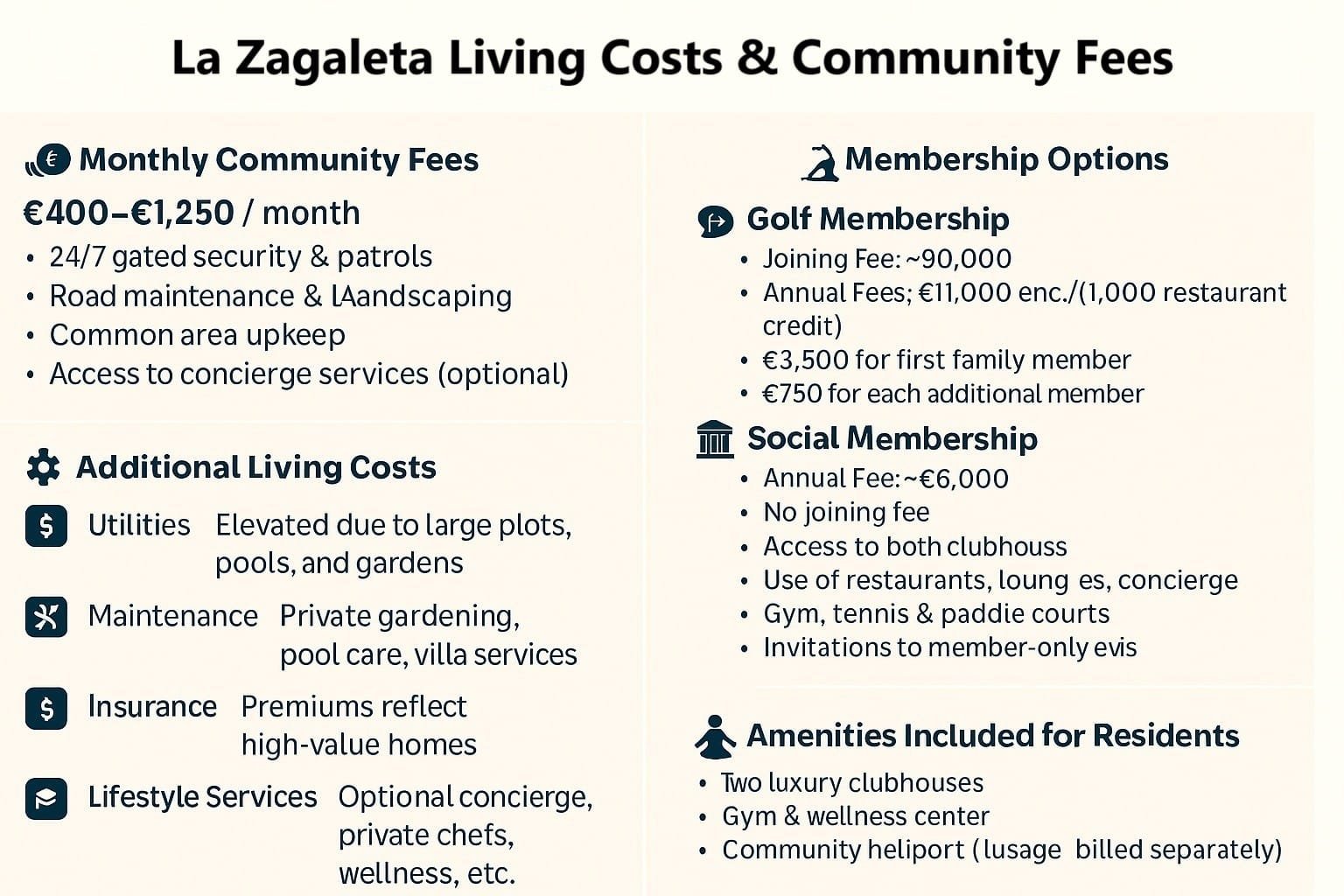
    Community fees in La Zagaleta are among the highest on the Costa del Sol — and that’s largely because the estate is huge. You’re contributing to round-the-clock gate security, private roads, protected landscape management and the general running of a controlled-access environment.

    As a practical 2026 budgeting guide, many owners allow roughly €8,000 to €15,000+ per year, with the exact amount varying by plot size, location and how the community cost structure is applied to your specific property.

    In simple terms, these fees are typically supporting:

    • 24-hour gated security and controlled access points
    • Maintenance of private roads, lighting and estate infrastructure
    • Landscaping and stewardship of communal/protected natural zones
    • Estate management and administration (including coordination services)

    What they don’t usually include: golf or social club membership, private villa maintenance, or property-specific services such as pool care, gardening, security systems, or staff.

    La Zagaleta memberships in 2026: golf vs social

    Ownership in La Zagaleta gives residents the option to join the private club. Membership isn’t compulsory — plenty of owners choose La Zagaleta primarily for the estate setting and security — but the club is central to the lifestyle for many families. The two most common options are golf membership and social membership.

    Golf membership (budgeting guidance for 2026)

    Golf membership is the “full access” option: it’s commonly described as providing access to La Zagaleta’s two private golf courses and the broader club environment. Most published guidance references a significant one-off joining fee plus annual dues.

    Typical reported costs (guide only):

    • Joining fee: commonly reported in the region of €90,000–€100,000
    • Annual fee (title owner): often reported around €11,000 per year (some sources note restaurant credit may apply)
    • Additional family members: often reported as an extra annual fee per person (commonly quoted around €3,500 for the first additional member, then lower for further members)

    What you’re effectively paying for is privacy and availability: limited tee times, a quieter playing environment, and a club rhythm that feels more “members-only country club” than “commercial golf resort”.

    Note: different membership categories can exist (for example, owner vs limited non-resident options), and terms can change — so treat the figures above as a budgeting anchor and confirm the live schedule directly with the club.

    Social membership (budgeting guidance for 2026)

    Social membership is designed for owners who want the club atmosphere — dining, social life and facilities — without golf course access. It’s a popular option for families who use the estate as a retreat but still want a sense of community when they’re in residence.

    Typical reported costs (guide only):

    • Joining fee: often reported as none (confirm for your membership category)
    • Annual fee: commonly reported around €6,000 per year

    As always, membership pricing and inclusions can change; confirm the current terms directly with the club as part of due diligence.

    What residents actually use: amenities & services

    Beyond golf, La Zagaleta operates as a private estate with club-style infrastructure. Some facilities are tied to membership, while others are pay-as-you-use. The key point is that life here is intentionally low-footfall — the facilities are built for residents, not day visitors.

    Clubhouses & dining

    Owners often describe the clubhouses as the social heart of the estate: dining, terraces, meeting spaces and quiet “third spaces” that make the estate feel complete, especially for longer stays.

    Wellness, tennis & day-to-day activity

    Depending on membership level and service model at the time, residents may have access to gym facilities and racket sports, with coaching and treatments typically billed separately. The overall feel is private and curated, rather than “busy gym schedule”.

    Helipad access and the “private helipad” question

    La Zagaleta is widely associated with helicopter access. The estate has a community helipad, while private helipads within individual villas are generally described as restricted in practice due to community rules and noise considerations — something to check carefully if it’s important to you.

    Equestrian facilities

    The estate also offers equestrian facilities and riding trails through protected countryside — one of the reasons La Zagaleta feels more like a private country estate than a typical gated community.

    Other costs to budget for in 2026 (often overlooked)

    The biggest misunderstanding we see is assuming “community fees + membership” equals the full running cost. With large villas and big plots, the real-world ownership budget is usually driven by the property itself: staffing, maintenance, gardens, utilities and preventative upkeep.

    Here are the main categories owners typically plan for:

    • Local property taxes: IBI (annual council tax) plus basura (refuse collection) — both vary by cadastral values and local rates
    • Utilities: electricity, water, internet, alarm monitoring (large homes can vary significantly by usage)
    • Garden & pool: a major line item for big plots, especially if you’re maintaining a “show home” standard
    • Home insurance: rebuild cost and contents, plus optional liability / staff cover
    • Staffing: housekeeping, gardeners, security, property management — depending on how often you’re in residence
    • Planned maintenance: resurfacing terraces, repainting, HVAC servicing, pool plant, waterproofing, and ongoing upgrades to keep the home “turnkey”

    If you’d like, we can help you model a realistic annual budget based on the specific villa you’re considering (plot size, build size, orientation, gardens and technical systems), not a generic headline figure.

    What you’re really paying for

    The cost of living in La Zagaleta reflects its position as a low-density, ultra-secure estate with extensive land, strict planning controls and long-term value protection. For many owners, the fees are justified by privacy, consistency, and the absence of overdevelopment — while the “true” running costs are mostly tied to maintaining a large home to the standard the estate is known for.

    FAQs

    Are La Zagaleta memberships compulsory?
    No. Many owners choose to join, but membership is optional.

    Is the golf membership really a €90k–€100k joining fee?
    Multiple published local sources commonly reference a joining fee in that region plus annual dues (often cited around €11k for the title owner). Confirm the exact schedule directly with the club during due diligence.

    Do community fees include golf or club access?
    Typically no — estate community fees and club memberships are separate line items.

    Can a villa have a private helipad?
    Some villas may show helipad features, but usage is commonly described as restricted in practice due to community rules and noise considerations. Treat this as a “confirm early” topic if it matters to you.

    What’s the most underestimated cost?
    Villa upkeep on a large plot: gardens, pool plant, technical systems, preventative maintenance, and (if needed) staffing or professional property management.

    Related reading

    You can explore current villas for sale in La Zagaleta here.

    Considering alternatives? See our comparison guide:
    La Zagaleta vs El Madroñal vs El Herrojo.

    [siteorigin_widget class=”WP_Widget_Custom_HTML”][/siteorigin_widget]
  • How Estate Agents Work on the Costa del Sol

    How Estate Agents Work on the Costa del Sol

    [siteorigin_widget class=”Ert_Title_Widget”][/siteorigin_widget]

    The Costa del Sol is one of Europe’s most international property markets. Buyers arrive from across the globe—Britain, Scandinavia, Belgium, France, the Netherlands, the Middle East, the United States, Canada, and beyond. With such a diverse client base, the real estate sector here has developed a unique way of working: collaboration between agencies.

    Unlike some countries where agencies guard their listings closely, the Costa del Sol real estate market thrives on cooperation. This benefits not only buyers and sellers but also the agents themselves, creating an ecosystem where everyone can succeed.

    A Multi-National Buyer Landscape

    One of the defining features of the Costa del Sol property market is its global reach. International buyers often prefer to work with an agency that speaks their mother tongue, understands their cultural expectations, and can guide them through the Spanish legal and financial framework.

    For example:

    • A Swedish family might feel more comfortable with a Scandinavian-run agency.

    • A British retiree may seek advice from a UK-origin agent familiar with pension transfers and non-lucrative visas.

    • A Belgian investor might prefer to speak in French or Flemish when discussing taxation.

    This is where the collaborative system shines—because no single agency can cater to every nationality with the same depth of cultural understanding.

    [siteorigin_widget class=”SiteOrigin_Widget_Image_Widget”][/siteorigin_widget]

    How Agency Collaboration Works

    On the Costa del Sol, most agencies operate within a shared listing network. Properties listed by one agency are often available to others, allowing them to present the same homes to their own clients.

    Here’s how it works in practice:

    1. Exclusive Listing – A seller signs a contract with one agency to market their property. That agency becomes the “listing agent.”

    2. Shared Access – Other agencies are granted access to the property details, photos, and pricing through central databases or personal collaboration agreements.

    3. Buyer Representation – A second agency may introduce the property to their client, negotiate on their behalf, and accompany them through the purchase.

    4. Commission Split – When a deal is completed, the commission is shared between the listing agent and the buyer’s agent, typically on a 50/50 basis.

    This system ensures that a buyer from, say, Norway can work with a trusted Norwegian-speaking agent, but still gain access to the full range of properties across Marbella, Benahavís, Estepona, and beyond.

    [siteorigin_widget class=”SiteOrigin_Widget_Image_Widget”][/siteorigin_widget]

    Why Collaboration Benefits Buyers

    For international buyers, this collaborative model is highly advantageous:

    • Access to the Entire Market – You don’t have to jump between dozens of agencies. Your trusted agent can show you virtually any property available on the Costa del Sol.

    • Language & Trust – You work with someone who speaks your language, understands your culture, and is on your side—while still tapping into the wider market.

    • Streamlined Process – Instead of negotiating separately with multiple sellers’ agents, your buyer’s agent handles everything, from scheduling viewings to coordinating with lawyers.

    • Read our top 3 tips to buying a property here ->

    Why Collaboration Benefits Sellers

    Sellers also reap the rewards:

    • Wider Reach – Their property is marketed not just by one agency, but by many—reaching international buyers across multiple countries.

    • Professional Representation – The listing agent ensures consistent information, quality photography, and controlled pricing, while partner agents bring qualified buyers to the table.

    • Faster Sales – With so many agents collaborating, the chances of finding the right buyer—whether from Madrid, London, Stockholm, or Toronto—are significantly higher. Learn more about how we work for our vendors here ->

    Final Thoughts

    The Costa del Sol real estate market is unlike most others in Europe. It thrives on collaboration, not competition.

    This cooperative system makes buying property in southern Spain far more transparent and efficient for international buyers, while giving sellers unparalleled exposure to a global audience. Most importantly, it allows buyers to work with an agency they feel most comfortable with—often one that speaks their mother tongue—while still enjoying full access to the region’s finest properties.

    If you’re considering buying on the Costa del Sol, we work within this collaborative framework every day—partnering with trusted agencies, developers, and specialists to make sure our clients have the widest possible choice and the most reliable guidance. We also have a comprehensive guide to Buying A Property in Spain which you can download here ->

  • Top 3 Tips for Buying Real Estate in Spain as a Foreigner

    Top 3 Tips for Buying Real Estate in Spain as a Foreigner

    [siteorigin_widget class=”Ert_Title_Widget”][/siteorigin_widget]

    Buying property in Spain has long been a dream for international buyers—from retirees seeking sunshine, to investors eyeing strong rental yields, to families looking for a second home by the sea. The process is straightforward when you know what to expect, but there are nuances that foreign buyers should be aware of—especially if you’re considering prime destinations such as the Costa del Sol.

    As a team specialising in helping international clients navigate the Spanish property market, here are our top three expert tips for buying real estate in Spain as a foreigner.

    1. Understand the Legal & Financial Framework

    Foreigners can freely buy property in Spain, but you’ll need to obtain an NIE (Número de Identificación de Extranjero)—your tax identification number—before completing the purchase. Without this, the property cannot be registered in your name.

    You should also be aware of transaction costs. On top of the purchase price, budget for:

    • Property Transfer Tax (ITP) on resale homes (typically 7–10%, depending on region).

    • VAT (IVA) and Stamp Duty for new-builds (10% + 1.2%).

    • Legal fees, notary, and registry costs (1–2%).

    If you’re financing the purchase, most Spanish banks offer mortgages to non-residents, usually up to 60–70% of the property value. Having documents such as proof of income, tax returns, and bank statements in order will make the process smoother.

    Learn more about obtaining an NIE number here ->

    💡 Expert Insight: The Costa del Sol is particularly mortgage-friendly for foreigners, with many local banks and brokers specialising in international buyers.

    [siteorigin_widget class=”SiteOrigin_Widget_Image_Widget”][/siteorigin_widget]

    2. Work with Local Experts You Can Trust

    While online portals are useful for browsing, navigating the Spanish property market requires local expertise. There are differences in zoning, community regulations, and even hidden costs that are not always visible in a listing.

    Key professionals to have on your side:

    • Independent Lawyer (Abogado): They will check the title deed, debts, planning permissions, and ensure a secure purchase.

    • Real Estate Buyer’s Agent / Personal Shopper: Unlike traditional estate agents who work for the seller, a buyer’s agent represents your interests—shortlisting properties, negotiating terms, and guiding you through the process. You can learn more about how estate agents in Spain work here ->

    • Tax & Financial Advisor: Especially important for non-residents, ensuring you understand ongoing costs such as annual property tax (IBI), non-resident income tax, and wealth tax where applicable.

    💡 Expert Insight: On the Costa del Sol, properties in areas like Marbella, Benahavís, and Estepona may belong to exclusive gated communities with their own rules and fees. Local guidance ensures there are no surprises post-purchase.

    [siteorigin_widget class=”SiteOrigin_Widget_Image_Widget”][/siteorigin_widget]

    3. Think Long-Term: Lifestyle, Resale & Rental Potential

    It’s easy to be swept away by sea views and Mediterranean sunshine, but smart buyers also consider the practical and long-term aspects of ownership.

    Ask yourself:

    • Lifestyle Fit: Is the property close to international schools, golf courses, or healthcare? Does the community suit year-round living or is it more seasonal?

    • Resale Value: Areas with high demand (such as Nueva Andalucía, La Quinta, or beachfront zones) hold value better. Look at upcoming infrastructure projects that may boost desirability.

    • Rental Potential: If you plan to rent, check local regulations on tourist licenses, which vary by municipality. On the Costa del Sol, short-term rental demand is strong—particularly near golf resorts and beachside locations.

    💡 Expert Insight: Properties with a balance of location, amenities, and accessibility (airport, schools, beaches) are more resilient in value and easier to rent out, making them a safer long-term investment.

    Final Thoughts

    Buying property in Spain as a foreigner can be one of the most rewarding decisions you make, whether for lifestyle or investment. The key is to understand the legal framework, surround yourself with trusted experts, and think strategically about your long-term goals.

    With the right guidance, the process is not only safe but also enjoyable—allowing you to focus on what really matters: creating your new life in the Spanish sun.


    If you’re considering buying on the Costa del Sol, our team specialises in guiding international clients through every step—from property search to completion and beyond. We’re here to ensure your purchase is secure, stress-free, and tailored to your lifestyle needs. We also have a comprehensive guide to Buying A Property in Spain which you can download here ->

  • El Madroñal: Marbella’s Rising Luxury Real Estate Destination

    El Madroñal: Marbella’s Rising Luxury Real Estate Destination

    El Madroñal Luxury Property Market — Benahavís


    Luxury villas in El Madroñal, Benahavís

    Nueva Andalucía, the Golden Mile and La Zagaleta have long defined the upper end of the Costa del Sol property market. In recent years, however, attention has been quietly shifting towards El Madroñal — a gated hillside community in Benahavís that offers a different kind of luxury.

    Rather than visibility or prestige branding, El Madroñal appeals through privacy, space and consistency. Limited supply, generous plots and a mature residential character have combined to make it one of the most resilient high-end micro-markets in the area.

    Location and elevation

    Set high in the Benahavís hills, El Madroñal occupies an elevated position that brings both practical and lifestyle advantages. The setting delivers open views, cooler summer temperatures and a clear sense of separation from the busier coastal strip.

    Despite this, access remains straightforward. San Pedro de Alcántara, Puerto Banús and Marbella are all within a short drive, which makes El Madroñal viable for year-round living as well as international second-home ownership.

    Privacy, security and plot size

    El Madroñal’s gated structure and low housing density are central to its long-term appeal. Multiple controlled entrances and 24-hour security create a calm, residential environment that attracts buyers who value discretion over exposure.

    Large plot sizes play an equally important role. Homes are typically set well back from one another, allowing for mature gardens, meaningful outdoor space and a level of privacy that is increasingly difficult to find closer to the coast.

    Architecture and liveability

    Architecturally, El Madroñal is varied rather than uniform. Traditional Andalusian villas sit alongside contemporary homes designed to maximise light, views and indoor–outdoor living.

    Recent development activity has been limited but carefully absorbed by the market. Buyers increasingly prioritise comfort, energy efficiency and year-round usability over purely decorative finishes, a shift that newer properties tend to address well.

    Day-to-day amenities and lifestyle

    El Madroñal is intentionally residential, but everyday amenities are close at hand. Monte Halcones provides cafés, restaurants and essential services, while San Pedro and Marbella offer a full range of shopping, healthcare and international schools.

    Golf courses, countryside walks and inland routes towards Ronda all sit within easy reach, reinforcing the area’s appeal to buyers seeking a quieter, more balanced lifestyle.

    Market behaviour and pricing context

    El Madroñal sits firmly in the upper tier of the Benahavís market, but price behaviour here is driven more by scarcity than by trend. Supply is naturally constrained, and large-scale future development is unlikely.

    As a result, pricing tends to be resilient rather than speculative. Well-positioned homes — particularly those offering views, privacy and modernised interiors — continue to attract consistent international interest.

    What buyers should understand

    El Madroñal is not a fast-turnover market. Buyers typically approach it with a medium- to long-term horizon, prioritising lifestyle quality and capital preservation over short-term gains.

    For those priorities, the area continues to perform quietly and consistently — which is precisely why demand remains steady.

    Explore property opportunities in El Madroñal

    If you’d like help comparing current listings or understanding which parts of El Madroñal best align with your priorities, we’re happy to advise.


    View current properties in El Madroñal →

    [siteorigin_widget class=”WP_Widget_Custom_HTML”][/siteorigin_widget]
  • Atalaya International School Benahavís | Bilingual Education & Homes

    Atalaya International School Benahavís | Bilingual Education & Homes

    Atalaya International School – Education & Homes Nearby


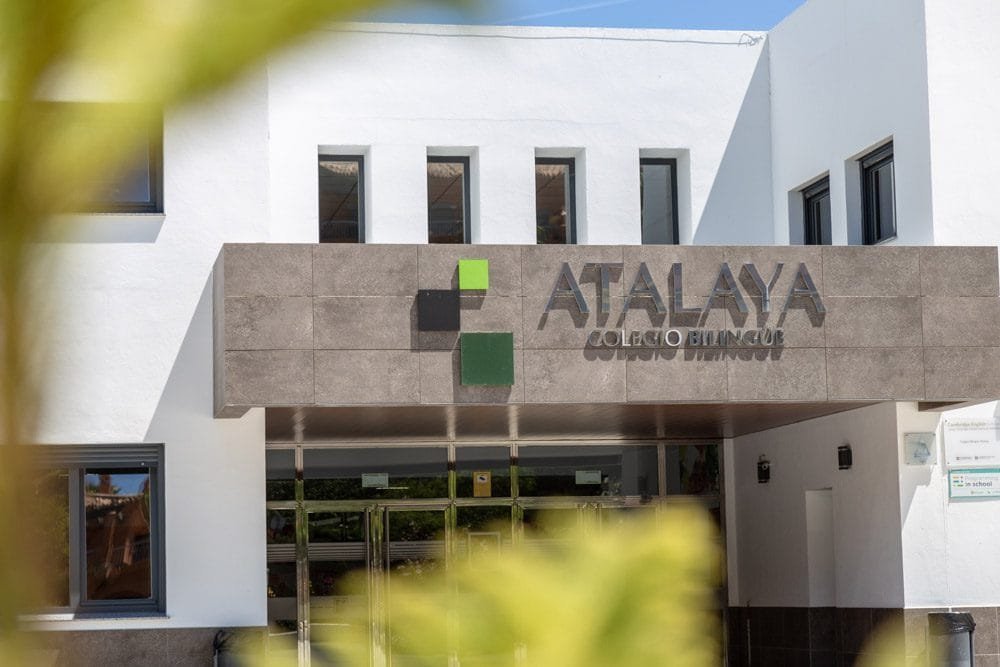
    Atalaya International School campus near Benahavís

    Atalaya International School (often referred to as Atalaya International College or AIC) is a prestigious bilingual school for children aged roughly 3 to 18. Set just a short drive from Benahavís, it combines a modern campus with a strong academic programme and a genuinely international community.

    For many relocating families, Atalaya becomes the anchor around which they organise both school life and their choice of neighbourhood. Below, we look at the campus, curriculum, school life, transport, what parents say – and how the local property market shapes up if you want to live within a practical school run.

    For a more detailed academic overview, you can also see our dedicated Atalaya International College School Guide →

    Campus & Facilities

    The Atalaya campus covers around 16,000 m², thoughtfully split between teaching spaces and sports facilities. Approximately 6,000 m² is dedicated to classrooms and learning areas, with a further 6,000 m² for sports courts, pitches and outdoor activity zones.

    Buildings are modern, light and purpose-built, designed to be secure and child-friendly while supporting up-to-date teaching technologies. Students benefit from well-equipped classrooms, specialist rooms for science and the arts, and generous outdoor play and sports spaces.

    Healthy, in-house prepared meals are an important part of the school day, helping children to stay focused and energised through a busy timetable of lessons, clubs and sports.

    Curriculum, Languages & Academic Approach

    Atalaya is a bilingual school with a strong international focus. In the early years and primary stages, there is a clear emphasis on English-language instruction, helping children arriving from abroad to settle quickly while building a solid academic base.

    As students move into the upper years, Spanish-led immersion becomes progressively stronger, and a third language option is introduced at secondary level. This layered approach means many students graduate with a high command of English and Spanish, plus a working knowledge of an additional language.

    Teaching is supported by collaborative, project-based methodologies. Classrooms tend to emphasise teamwork, communication and critical thinking, preparing students for international university pathways and careers.

    Extracurricular Activities & School Life

    School life at Atalaya goes well beyond the formal timetable. Students take part in a wide range of activities, from ballet and theatre to skiing trips, cultural excursions and sports. These experiences help children build confidence, friendships and a sense of belonging.

    The school’s own news and communications often highlight student-led initiatives such as awareness campaigns and community projects. Recent examples include a “Blood Donation” awareness project and the internal “Atalaya Awards” ceremony, showcasing academic effort, creativity and contribution to school life.

    Overall, the feel is one of a busy, holistic school environment where academics, wellbeing and personal development are all taken seriously.

    Transport, Catchment & School Runs

    Atalaya International School is particularly attractive to families who want flexibility with the school run. A dedicated bus service operates across six main routes, serving areas such as:

    • Calahonda
    • Estepona
    • Marbella / San Pedro
    • Nueva Andalucía
    • Sotogrande
    • La Cañada and surrounding areas

    Morning drop-off is typically between 08:00 and 09:00, with pick-up windows around 16:00–17:00, depending on year group and bus route. Families living nearer the school – in Atalaya, La Alquería, Benatalaya and Capanes del Golf – often mix car drop-offs with bus use as children grow older.

    If you are comparing neighbourhoods, our Homes Near Atalaya International School collection is a useful way to see what is realistically within a five to ten-minute journey.

    What Parents Say

    On independent review platforms and local feedback, Atalaya is frequently described as one of the leading private / international schools in the Estepona–Marbella corridor, particularly for bilingual families.

    Parents regularly highlight:

    • Strong academic standards and preparation for higher education.
    • Excellent bilingual development in English and Spanish.
    • Impressive sports and physical education facilities.
    • A warm, values-led environment where children feel supported.

    Typical comments include parents noticing their child’s English skills staying strong while Spanish becomes almost fluent in a matter of months, and graduates moving on to university with both academic results and a solid sense of personal responsibility.

    Many families also appreciate the school’s focus on human values – kindness, respect and community – as much as its exam performance.

    Atalaya International School – At a Glance

    • Location & Access:
      Estepona-side campus, convenient for Benahavís, Marbella and Estepona, with multiple bus routes.
    • Bilingual & International:
      Balanced English–Spanish instruction, with a third language introduced at secondary level.
    • Facilities & Learning:
      Modern 16,000 m² campus, collaborative learning methods and healthy in-house meals.
    • Extracurriculars:
      Wide-ranging activities from arts and theatre to sports, skiing and cultural excursions.
    • Community & Reputation:
      Well-regarded by parents for bilingual proficiency, pastoral care and values-based education.

    Property for Sale Around Atalaya School

    Living near Atalaya International School places you in a practical, well-connected residential area with a strong family focus. The broader Atalaya–La Alquería corridor offers apartments, townhouses and villas at a range of price points.

    Apartments & Penthouses

    Several apartment complexes sit within walking or short driving distance of the school, with prices often starting around €400,000 and rising towards €900,000 for larger or newer homes. Many of these gated communities include:

    • Communal pools and landscaped gardens
    • On-site gyms, paddle courts and spa-style facilities
    • Easy access to the Mercadona supermarket and local cafés
    • Proximity to Atalaya Golf & Country Club

    Townhouses

    Townhouses in the Atalaya area typically range from around €550,000 to €950,000, set in small to mid-sized complexes above the N-340. These suit families who want a bit more space, private outdoor areas and straightforward access to schools, shops and the coast road.

    Villas

    Villa options are varied, from more traditional homes around €1,750,000 on plots of roughly 600 m², through to sleek new-build projects and ultra-luxury estates.

    Well-known contemporary developments such as Belfry, The Sanctuary Villas and Arboleda offer clean-lined design, modern layouts and secure gated environments. At the very top of the market, the Lamborghini-branded Tierra Viva villas can reach the €4–9 million range, combining striking architecture with elevated Mediterranean views.

    To see what is currently available, you can browse our dedicated collection:

    Homes Near Atalaya International School →

    What Makes This Location Special

    The Atalaya area is not only about the school itself – it also offers a practical, well-rounded
    lifestyle for the whole family.

    • Education hub: Atalaya International School sits at the heart of a cluster of family-friendly communities, making the area highly attractive to parents looking for quality bilingual education.
    • Lifestyle & amenities: Nearby centres such as Diana Park, Isdabe del Sol and Atenea offer supermarkets, cafés, restaurants and services, while beaches, golf courses and coastal towns like Marbella and Estepona are an easy drive away.
    • Varied real estate: From lock-up-and-leave apartments to family townhouses and statement villas, there is usually something to suit different budgets and life stages.

    Many families see the area as a way to combine a calm everyday base with quick access to work, leisure and the wider Costa del Sol.

    Final Thoughts & How We Can Help

    Atalaya International School offers more than a strong academic education – it anchors a community where children can walk or take a short bus ride to school, and where parents have a good choice of homes, amenities and outdoor lifestyle on their doorstep.

    You can see all properties currently for sale within a short drive of the school in our online collection. If you are juggling multiple listings, budgets and property types, it can be helpful to have a curated shortlist.

    As parents with first-hand experience of Atalaya International School, we understand both the admissions journey and the day-to-day realities of the school run. We are happy to share that insight when helping you choose between neighbourhoods and specific homes.

    If you would like help comparing options or narrowing your search based on budget, size or property type, simply get in touch with your requirements and we will suggest a tailored shortlist of homes near Atalaya International School that are worth viewing.


    “My daughter is happier, her English levels have remained strong, she loves school projects and the variety of subjects… speaks Spanish almost fluently after just 6 months here.”


    “My children went on to university, propelled by the top-notch education and personal orientation at this school… the most valuable aspect was the human values they gained.”


    Properties for sale close to Atalaya International School. Villas and Apartments for sale in Benahavis and Estepona on the Costa del Sol

    [siteorigin_widget class=”WP_Widget_Custom_HTML”][/siteorigin_widget]
  • Schools in and around Benahavis

    Schools in and around Benahavis

    Schools in and Around Benahavís: What Families Need to Know

    International Education on the Costa del Sol, Within Easy Reach of Home


    International schools near Benahavís Costa del Sol family lifestyle education Spain

    For many families considering a move to Benahavís, the school question comes early — and often decides everything else.

    That is one of the area’s real strengths. While Benahavís village itself has a limited number of local options, the surrounding area offers a remarkably strong network of international, bilingual and Spanish schools. Within a relatively short drive, families can access British, international and IB pathways, alongside respected Spanish public education.

    This is one of the reasons Benahavís has become such an attractive base for international families. It offers a quieter, more residential setting without asking parents to compromise on schooling. Many families start by understanding the wider area and lifestyle first through our Costa del Sol relocation guide.

    Family guide to moving to the Costa del Sol

    Important for Public & Spanish Schools: For access to Spanish public schools in Benahavís and surrounding municipalities, families are typically expected to live within the relevant school catchment area and to have their residency properly registered. In practice, this usually means being registered with the local town hall through the empadronamiento process. Places are allocated using an admissions points system that can include proximity to the family home or workplace, siblings already enrolled and other official criteria.This requirement does not usually apply to private international schools, although early application is still advisable because demand can be high.

    International Schools Near Benahavís on the Costa del Sol

    The majority of international schools used by Benahavís families are located between Atalaya, San Pedro, Nueva Andalucía and Estepona, all within practical reach for day-to-day family life.

    These schools serve a highly international student base and are well suited to both long-term residents and globally mobile families.

    Atalaya International School

    Ages 3–18 | Bilingual education with IB pathway

    Located on the Benahavís–Estepona side of the New Golden Mile, Atalaya International School is one of the closest and most convenient options for families living in this part of the Costa del Sol.

    It offers a bilingual educational model in English and Spanish, with a well-established campus and strong day-to-day practicality for families based in La Alquería, El Paraíso, Atalaya and nearby parts of Benahavís.

    Contact details:
    Website: www.colegioatalaya.es
    Phone: +34 952 003 171
    Address: Calle Pico Alcazaba 24–28, Urbanización El Marqués, 29680 Estepona, Málaga

    Homes near Atalaya International School

    Laude San Pedro International College

    Ages 2–18 | British curriculum + Spanish ESO/Bachillerato

    Laude San Pedro offers a well-established British curriculum alongside Spanish pathways, making it a flexible option for families who may want the option of fuller integration into the Spanish system over time.

    Located in San Pedro de Alcántara, it is typically around a 10–15 minute drive from many parts of Benahavís, which makes it a practical everyday option.

    Contact details:
    Website: www.laudesanpedro.com
    Phone: +34 952 799 900
    Address: Avenida de la Coruña, 2, 29670 San Pedro de Alcántara, Marbella, Málaga

    Aloha College Marbella

    Ages 3–18 | British international curriculum with IB Diploma

    Aloha College, situated in Nueva Andalucía, is one of the most established and widely recognised international schools on the Costa del Sol.

    It follows a British international curriculum with the IB Diploma in later years and attracts a diverse, globally minded student body. For families seeking a mature international environment, it remains one of the leading choices in the area.

    Contact details:
    Website: www.aloha-college.com
    Phone: +34 952 814 133
    Address: Urb. El Ángel, Nueva Andalucía, 29660 Marbella, Málaga

    Swans International School Marbella

    Ages 3–18 | British curriculum + IB Diploma

    Swans International School combines a British curriculum with IB options in the senior years, offering a strong academic pathway in a structured and well-regarded environment.

    Located slightly further east in Marbella, it is still within a manageable commute for some families based in Benahavís, especially those prioritising curriculum and long-term academic continuity.

    Contact details:
    Website: www.swansschoolinternational.es
    Phone: +34 952 773 248 (Primary) / +34 952 902 755 (Secondary)
    Address: Primary — El Capricho s/n, 29602 Marbella, Málaga | Secondary — C/ Lago de los Cisnes, s/n, 29602 Marbella, Málaga

    The International School Estepona

    Ages 2–12 | British curriculum (early years and primary)

    A smaller, more intimate British-style school located to the west, The International School Estepona is often chosen by families looking for a more personalised setting in the early and primary years.

    For some parents, that smaller environment is part of the appeal.

    Contact details:
    Website: www.marbellaschool.com
    Phone: +34 951 742 736
    Address: Calle Azahar 12, Urbanización El Paraíso, 29688 Estepona, Málaga

    School Comparison at a Glance

    School Ages Curriculum Indicative drive from Benahavís
    Atalaya International School 3–18 Bilingual + IB pathway Approx. 10–15 mins
    Laude San Pedro International College 2–18 British + Spanish pathways Approx. 10–15 mins
    Aloha College Marbella 3–18 British international + IB Diploma Approx. 15–20 mins
    Swans International School Marbella 3–18 British + IB Diploma Approx. 20–25 mins
    The International School Estepona 2–12 British early years + primary Approx. 15–20 mins
    Sotogrande International School 3–18 Full IB + boarding Approx. 35–40 mins

    Drive times are indicative and vary by urbanisation, school-run timing and traffic conditions.


    Premium Boarding and Full IB Option

    Sotogrande International School

    Ages 3–18 | Full IB curriculum + boarding

    Located approximately 35–40 minutes from Benahavís, Sotogrande International School offers a full IB programme from primary through to diploma level, alongside boarding facilities.

    It is widely regarded as one of the leading international schools in southern Spain and is particularly well suited to families with international lifestyles or older children seeking a more independent structure.

    Contact details:
    Website: www.sis.ac
    Phone: +34 956 79 59 02
    Address: Av. de la Reserva, s/n, 11310 Sotogrande, Cádiz

    Spanish and Bilingual Education Options

    Alongside international schools, there are also strong Spanish public and bilingual routes for families looking for fuller integration into the local system.

    CEIP Daidín (Benahavís Village)

    Ages 3–12 | Spanish public primary school

    Located within Benahavís itself, CEIP Daidín provides primary education in a local, community-focused environment. It can be a strong option for families seeking Spanish-language immersion from an early stage.

    For families considering this route, residency registration and catchment-area eligibility are important parts of the admissions process.

    Contact details:
    Website: www.ceipdaidin.es
    Phone: +34 951 270 733
    Address: Avenida La Moraleda s/n, 29679 Benahavís, Málaga

    IES Monterroso (Estepona)

    Ages 12–18 | Spanish secondary with bilingual programmes

    A well-regarded public secondary school offering bilingual pathways, IES Monterroso is a practical option for families continuing within the Spanish education system.

    Contact details:
    Website: www.iesmonterroso.org
    Phone: +34 951 270 583
    Address: Calle Santo Tomás de Aquino, s/n, 29680 Estepona, Málaga

    School Transport and Daily Practicalities

    Most international schools provide organised bus routes covering the main residential areas of Benahavís, including La Quinta, Los Arqueros, El Madroñal and La Zagaleta.

    This makes daily logistics much easier, even when the school itself is located 10–20 minutes away.

    School bus routes in Benahavís

    School term dates and key dates in Andalucía


    How to Choose the Right School

    With several strong options within easy reach, the decision is rarely about finding a good school. It is about finding the right fit for your child, your routine and your long-term plans.

    Curriculum is often the starting point. British, international and IB pathways each offer different advantages depending on future mobility, language preferences and academic direction.

    Location matters too. While many schools are within a 10–20 minute drive, daily routines, traffic patterns and school transport routes can influence the experience more than parents initially expect.

    Finally, consider environment and feel. Some schools offer larger, more established campuses with extensive facilities, while others provide a more intimate and personalised setting.

    The best approach is always to visit, ideally during term time, to understand how the school feels in practice.


    Specialised Education and Lifestyle Context

    Benahavís also has an educational dimension that reflects the village’s identity and culture.

    Escuela de Hostelería Benahavís

    Professional hospitality and culinary training

    While it is not part of the main school shortlist for children, it still adds useful context to a broader guide to education in Benahavís.

    The Escuela de Hostelería reflects the village’s long-standing gastronomic reputation and may be of interest to older students, career-switchers or families considering longer-term lifestyle opportunities in the area.

    Contact details:
    Website: www.saboramalaga.es
    Phone: +34 952 855 242
    Address: Avenida de Andalucia, 23, 29679 Benahavís, Málaga

    Final Thought

    What distinguishes Benahavís is not the number of schools within the village itself, but the quality and accessibility of those around it.

    Within a short drive, families can access some of the most respected international schools on the Costa del Sol while still enjoying a quieter, more residential lifestyle at home.

    That balance is one of the main reasons the area continues to stand out for long-term family living.

    Find Your Home in Benahavis

    [siteorigin_widget class=”WP_Widget_Custom_HTML”][/siteorigin_widget]
    [siteorigin_widget class=”WP_Widget_Custom_HTML”][/siteorigin_widget]
  • Community Fees: What are they and what’s included

    [siteorigin_widget class=”Ert_Title_Widget”][/siteorigin_widget]

    Community fees — known locally as gastos de comunidad — are regular payments made by owners of apartments, townhouses and villas within shared developments. These fees ensure that the communal areas you use and enjoy every day are well maintained, safe and functional. Although every community is different, most cover a similar set of services.

    What Community Fees Typically Include

    In most developments, your fees contribute to the upkeep of shared areas. This usually covers the cleaning of hallways, stairwells and gardens, as well as the electricity and water needed for lighting, irrigation and pool systems. Buildings with lifts will also use part of the budget for routine lift servicing and repairs, along with general maintenance of shared infrastructure.

    Many communities employ staff to look after the development. This may include a caretaker or concierge, gardeners, pool technicians and, in some cases, lifeguards during the summer months. Larger or higher-end communities often add security patrols or 24-hour gate staff. Most also hire a professional administrator or management company to handle budgets, meetings and day-to-day organisation.

     Insurance is another essential part of the budget. Community fees normally include buildings insurance for the communal structure, plus public liability cover. Legal and accounting services also fall into this category, ensuring the community stays compliant with Spanish regulations.

    In some private urbanisations, the community may also be responsible for costs that are normally handled by the town hall — for example rubbish collection, private road repairs, or street lighting within the estate.

     How Much Do Community Fees Cost?

    The cost varies widely depending on the size of the development and the level of amenities. As a general guide:

    • Basic communities: around €50–€100/month

    • Mid-range communities: €100–€250/month

    • Luxury or full-service developments: €300–€1,000+ per month, especially where you have features such as staffed security gates, lush landscaped gardens, multiple pools, gyms, spas or on-site sports facilities like tennis and golf

    Your exact amount is determined by your property’s cuota de participación — its ownership share expressed as a percentage. This figure is based on the size, position and characteristics of your home within the development, and it dictates how much you contribute toward the annual budget.

    In Summary


    🏘️ Maintenance & Utilities

    • Cleaning of communal areas (hallways, stairwells, gardens)
    • Electricity and water for shared spaces (lighting, irrigation, pools)
    • Lift maintenance and repairs
    • General repairs to shared infrastructure

     👷‍♂️ Staff & Services

    • Concierge or caretaker salaries
    • Gardeners, pool cleaners, and lifeguards
    • Security services (especially in gated communities)
    • Property management fees (administrator or management company)

     🛡️ Insurance & Legal

    • Insurance for communal buildings and liability
    • Legal and accounting services for the community

     🗑️ Municipal Charges

    • Rubbish collection fees
    • Street lighting and road maintenance (in private urbanizations)

     💰 How Much Do They Cost?

    • Basic communities: €50–€100/month
    • Mid-range: €100–€250/month
    • Luxury developments: €300–€1,000+/month
      (Includes extras like gyms, spas, golf courses, and 24-hour security)

  • Community Insurance Policies

    Community Insurance Policies

    [siteorigin_widget class=”Ert_Title_Widget”][/siteorigin_widget]

    Community insurance policies in Spain—known as “seguro de comunidad”—are designed to protect the shared spaces and responsibilities within residential buildings or urbanisations. Here’s a breakdown of what they typically cover and how they work:

    🏢 What Is Community Insurance?

    Community insurance covers common areas of a building or residential complex, such as:

    • Hallways, staircases, elevators
    • Roofs, façades, and foundations
    • Gardens, swimming pools, and shared aerials
    • Civil liability for accidents in communal areas (e.g., someone slipping on a wet staircase)

    It’s meant to ensure habitability and comfort for all residents by protecting against risks like fire, flooding, vandalism, and structural damage.


    📜 Is It Mandatory?

    • Not compulsory nationally, but highly recommended.
    • Some regions have local regulations that require minimum coverage.
    • The Horizontal Property Law (Ley de Propiedad Horizontal) encourages communities to maintain a reserve fund for repairs and insurance.

    💧 What Does It Cover?

    Typical coverage includes:

    • Civil liability (e.g., falling tiles injuring someone)
    • Material damage (fire, explosion, lightning)
    • Water damage from mains (coverage for private pipes is optional)
    • 24/7 emergency assistance
    • Legal protection and claims for damages
    • Accidents involving community employees

    🏠 Does It Cover Individual Apartments?

    No. Community insurance does not cover damage inside your private apartment or your personal belongings. For that, you need a separate home insurance policy.


    👥 For Expats and Residents

    Expats often find that community policies don’t meet their needs, as many communities try to keep premiums low by limiting coverage. It’s wise to:

    • Request a copy of your community’s policy
    • Review it carefully (many are available in English)
    • Consider additional private insurance for full protection


  • La Zagaleta vs El Madroñal vs El Herrojo Alto

    La Zagaleta vs El Madroñal vs El Herrojo Alto

    La Zagaleta vs El Madroñal vs El Herrojo

    A practical guide to choosing the right gated community in Benahavís — privacy, access, lifestyle and price context.

    La Zagaleta gated estate Benahavís with golf courses and mountain views

    La Zagaleta, El Madroñal and El Herrojo are three of the best-known gated residential communities in Benahavís. They all offer security and a strong sense of privacy, but day-to-day life feels very different in each one.

    This guide compares them in a practical way — location, setting, lifestyle, property style and the type of buyer each tends to suit — so you can narrow down which community fits your priorities.

    When you’re ready, you can explore current listings here:

    If La Zagaleta is your front-runner, these two guides are worth reading alongside this comparison: La Zagaleta micro-location explained and buying property in La Zagaleta. For running costs, see La Zagaleta community fees and memberships.

    Location & setting

    La Zagaleta is a vast private estate in the Benahavís hills where the sense of space and separation is part of the appeal. It feels self-contained, and internal driving time within the estate can be a consideration depending on where a home sits. (If you haven’t yet, this is where micro-location becomes a key factor.)

    El Madroñal runs along the Ronda Road (A-397) and offers elevation, greenery and open views, while remaining very practical for San Pedro and the coast.

    El Herrojo sits close to La Quinta and is typically chosen for convenience: quick access to golf, schools, Nueva Andalucía and Puerto Banús, while still benefiting from a gated, residential feel.

    Privacy & security

    La Zagaleta is often the benchmark for discretion. Its scale, controlled access and private-road environment appeal to buyers who want maximum separation from the outside world.

    El Madroñal is accessed via multiple gated entrances and is widely regarded as one of the most private residential areas in Benahavís. In practice, the feeling of privacy comes as much from plot size and low density as it does from security infrastructure.

    El Herrojo is also gated and secure, but tends to feel more connected day to day — often attractive to families who want a residential rhythm alongside easy access to schools and golf.

    Lifestyle & everyday practicality

    La Zagaleta suits buyers who prefer a more self-contained environment, with a private, members-style feel and facilities that reduce the need to leave the estate frequently. (If club access and running costs matter, see community fees and memberships.)

    El Madroñal is quieter and more nature-led. Daily amenities are nearby (Monte Halcones, San Pedro), and the lifestyle tends to be calm and private rather than “resort-centred”.

    El Herrojo is the most convenience-led. Being close to La Quinta and Nueva Andalucía makes it easy to combine gated living with restaurants, sports clubs and everyday services.

    Homes & price context (high-level)

    La Zagaleta is villa-only at the very top end, with large plots and a strong emphasis on discretion. Pricing spans widely depending on views, position and build standard, with the upper end among the highest on the Costa del Sol.

    El Madroñal is also predominantly villa-led, typically on generous plots. It appeals to buyers who want “estate space” and a hillside setting without La Zagaleta’s full scale and internal driving distances.

    El Herrojo leans towards contemporary family villas and modern builds. Plots can be more manageable, and many buyers like the “lock-up-and-leave” practicality while still enjoying open views.

    Who each one tends to suit

    Choose La Zagaleta if maximum discretion, scale and a self-contained estate environment are your priorities — and you’re comfortable with the practical reality of a very large private domain.

    Choose El Madroñal if you want privacy, greenery and panoramic views with a calmer, more nature-led feel — while keeping access to San Pedro and the coast straightforward.

    Choose El Herrojo if you want gated living with quicker access to schools, golf and Marbella’s lifestyle hubs — and you prefer a more connected, residential rhythm over a secluded hillside estate feel.

    A simple way to decide

    If you’re torn, start with day-to-day priorities: do you want complete separation (La Zagaleta), quiet hillside privacy with practical access (El Madroñal), or gated convenience close to golf, schools and Marbella (El Herrojo)? Once that’s clear, the right community usually becomes obvious.

    If you’d like help comparing current listings, budgets or lifestyle trade-offs between these communities, we can talk you through the options and shortlist suitable homes.

    Explore La Zagaleta →
    |
    Explore El Madroñal →
    |
    Explore El Herrojo →

    For La Zagaleta-specific due diligence, you can also read Buying property in La Zagaleta: what buyers should know.

    [siteorigin_widget class=”WP_Widget_Custom_HTML”][/siteorigin_widget]
  • How to Get a NIE Number in Spain (2026 Step-by-Step)

    How to Get a NIE Number in Spain (2026 Step-by-Step)

    How to Get a NIE Number in Spain in 2026

    A step-by-step guide for expats


    If you’re planning to live, work, study or buy property in Spain, one of the first things you’ll need is a
    NIE number (Número de Identificación de Extranjero).

    This unique foreigner identification number is essential for most legal, financial and administrative processes in Spain — from opening a bank account and signing a property deed to paying taxes or enrolling children in school.

    This updated 2026 guide explains what a NIE is, who needs one, how to apply, what documents are required, typical costs, and practical tips to avoid delays.

    What is a NIE number?

    A NIE is a personal identification number issued to non-Spanish nationals for tax and legal purposes. It is used across all interactions with Spanish authorities and institutions.

    Important: The NIE itself is permanent. Once issued, it is valid for life and does not expire — even if your residency status changes.

    Who needs a NIE in Spain?

    • EU / EEA citizens: Must register as residents and obtain a NIE if staying in Spain for more than 90 days.
    • Non-EU citizens (UK, USA, Canada, etc.): Are automatically assigned a NIE as part of their residency (TIE) application.

    Even non-residents often need a NIE to buy property, open a Spanish bank account or pay taxes.

    How to get a NIE number in Spain (step-by-step)

    1. Book your appointment (cita previa)

    NIE applications must be submitted by appointment through Spain’s official government booking system.

    • Visit the official cita previa portal
    • Select your province
    • Choose the correct procedure:
      • “Certificados UE” — for EU citizens
      • “Asignación de NIE / Tarjeta de Identidad de Extranjero” — for non-EU citizens
    • Enter your personal details and confirm the appointment

    Tip: In popular areas such as Málaga, Marbella or Madrid, appointments can take 4–8 weeks. Applying via a Spanish consulate abroad may take longer.

    2. Prepare the required documents

    While requirements can vary slightly by province, you will typically need:

    • Application form
      – EU citizens: Form EX-18
      – Non-EU citizens (NIE-only request): Form EX-15
    • Proof of purpose (why you need a NIE): property purchase, job offer, business activity, study enrolment, etc.
    • Passport: original plus photocopies
    • Passport photos (usually 1–2, colour)
    • Proof of legal entry or visa (non-EU citizens)
    • Form 790 Código 012 — NIE tax payment receipt

    📌 All forms must be completed in Spanish. Only Spanish-language versions are accepted.

    3. Pay the NIE fee

    The NIE fee is paid using Form 790, Código 012.

    In 2026, the fee is typically around €12, though minor adjustments may occur. Payment can be made at most Spanish banks or ATMs after printing the form.

    4. Attend your appointment

    Attend your appointment at the Oficina de Extranjería or Policía Nacional with all original documents and copies.

    Depending on the office, your NIE may be issued immediately or collected within 5–10 working days.

    Helpful tips to avoid delays

    • Bring photocopies of everything — including your passport
    • Check local requirements in advance, as rules can vary slightly by region
    • Arrive early for your appointment
    • Store your NIE safely — you’ll need it frequently

    Frequently asked questions

    Is a NIE number permanent?
    Yes. Once issued, your NIE is valid for life.

    Can I apply for a NIE before moving to Spain?
    Yes. Applications can be made through a Spanish consulate abroad, though processing times are usually longer.

    Do I need a job or property to get a NIE?
    No, but you must provide a legitimate reason for requesting one.

    How much does a NIE cost in 2026?
    Approximately €12, subject to minor annual adjustments.

    Final thoughts

    Obtaining a NIE is one of the most important first steps when moving to Spain. Once you have it, you can legally:

    • Open Spanish bank accounts
    • Buy or rent property
    • Sign employment or business contracts
    • Pay taxes and register for healthcare or education

    If you’re planning to relocate or buy property, understanding the NIE process early will save you time and stress later on.