Category: General News

  • Whats On in August

    Whats On in August

    [siteorigin_widget class=”Ert_Title_Widget”][/siteorigin_widget]

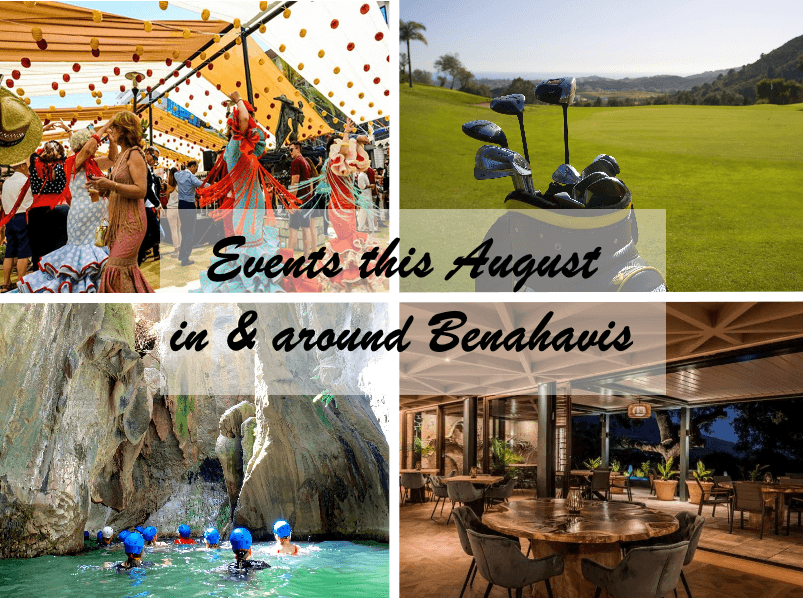
    It’s August! Which means it is time for the Feria de Benahavís, which this year runs from the 14th to 17th August. This vibrant local fair features an official ribbon‑cutting, lighting of the fairgrounds, a parade (cabalgata), speeches, and the crowning of Feria royalty — Junior and Senior Queens. 
       
    In conjunction with the Feria is the Torneo de Golf “Feria 2025”, organized by the town’s Delegation of Festivities — a traditional golf tournament held during the fair.
    [siteorigin_widget class=”SiteOrigin_Widget_Image_Widget”][/siteorigin_widget]
    [siteorigin_widget class=”SiteOrigin_Widget_Image_Widget”][/siteorigin_widget]

    🎉 Local Events in Benahavís

             
    • 1st August:  Mercadillo de Verano (Summer Market). Avenida Andalucía.Browse artisan crafts, clothing, food, cosmetics, decoration stalls, and more
    • 1st August:  Cinema under the stars, Parque Torre Leonera, Benahavis
    • 1st August:  Candlelight Open Air: Tributo a Bad Bunny. Anantara Villa Padierna Palace
    • 1st-3rd August:  Art Space – Marbella Art Fair. Anantara Villa Padierna Palace. Contemporary art showcase with galleries and featured artists including Mason Newman, Tori Woolley, Kate Paul, and James McQueen
    • 2nd August:  Candlelight Open Air: Lo Mejor de Ennio Morricone. Anantara Villa Padierna Palace
    • 4th August:  “Feria 2025” Golf Tournament. Marbella Club Golf Resort
      The Festivities Committee is organising its traditional Feria Golf Tournament – a much-anticipated sporting event in our town’s festive calendar. A fantastic opportunity to enjoy golf in a superb setting, surrounded by great atmosphere and competitive spirit
    • 7th August:  Mercadillo de Verano (Summer Market). Avenida Andalucía.Browse artisan crafts, clothing, food, cosmetics, decoration stalls, and more
    • 8th August:  Mercadillo de Verano (Summer Market). Avenida Andalucía.Browse artisan crafts, clothing, food, cosmetics, decoration stalls, and more
    • 8th August:  Cinema under the stars, Parque Torre Leonera, Benahavis
    • 8th August:  Candlelight: Vivaldi’s Four Seasons. Anantara Villa Padierna Palace
    • 9th August:  Candlelight Open Air: Anillos y Dragones. Anantara Villa Padierna Palace
    • 10th August:  Coto Restaurante’s 3 Year Anniversary Party
    • 14th August:  Mercadillo de Verano (Summer Market). Avenida Andalucía.Browse artisan crafts, clothing, food, cosmetics, decoration stalls, and more
    • 14th-17th August:  Feria de Benahavís
    • 15th August:  Mercadillo de Verano (Summer Market). Avenida Andalucía.Browse artisan crafts, clothing, food, cosmetics, decoration stalls, and more
    • 15th August:  Candlelight Open Air: Tribute to Ludovico Einaudi in Marbella. Anantara Villa Padierna Palace
    • 16th August:  Candlelight Open Air: The Best of Hans Zimmer in Marbella. Anantara Villa Padierna Palace
    • 21st August:  Mercadillo de Verano (Summer Market). Avenida Andalucía.Browse artisan crafts, clothing, food, cosmetics, decoration stalls, and more
    • 22nd August:  Mercadillo de Verano (Summer Market). Avenida Andalucía.Browse artisan crafts, clothing, food, cosmetics, decoration stalls, and more
    • 18th August:  Mercadillo de Verano (Summer Market). Avenida Andalucía.Browse artisan crafts, clothing, food, cosmetics, decoration stalls, and more
    • 22nd August:  Candlelight Open Air: Tribute to The Beatles in Marbella. Anantara Villa Padierna Palace
    • 23rd August: Candlelight Open Air: Tribute to Coldplay in Marbella. Anantara Villa Padierna Palace
    • 29th August:  Mercadillo de Verano (Summer Market). Avenida Andalucía.Browse artisan crafts, clothing, food, cosmetics, decoration stalls, and more
    • 29th August:  Candlelight Open Air: Tribute to Queen in Marbella. Anantara Villa Padierna Palace
    • More events to be added as announced… 
      
    Visit the townhall’s Facebook page for more information on these events. 

    🌄 Outdoor Activities

      
    Benahavís is renowned for its natural beauty and offers numerous outdoor activities:
            
    • Hiking and Nature Trails: Explore trails like the Guadalmina River path and the Cañón de las Angosturas, offering scenic views and opportunities for swimming in natural pools. 
    • Canyoning Adventures: For thrill-seekers, canyoning in the Guadalmina River combines swimming, climbing, and jumping in a stunning natural setting. 
    • Golfing: Benahavís boasts some of Spain’s finest golf courses, including La Quinta Golf & Country Club and Los Arqueros Golf & Country Club, catering to both amateurs and professionals. 
       

    🎵 Music at Coto Restaurante

             
    We are proud to sponsor the music at Coto Restaurante. This months events include:-
         
    • Every Thursday evening – Thursday Groves with Eva & Raul
    • Every Friday evening – Chill Out Fridays with Johnny Baker
    • Every Saturday evening – Saturday Sessions with Lucas Gonzales
    • Every Sunday lunchtime – Sunday Lunch with Gema Cabanas
    • 4th & 18th August – Mojito Mondays with live Cuban music
    • 10th August – Coto 3 Year Anniversary Party
      
    Coto Restaurante can be contacted here.

    🌞 Weather in August


    August in Benahavís is typically warm and sunny, with average daytime highs around 30 °C (86 °F) and about 10 hours of sunshine per day. UV index: high to very high (7–10), requiring good sun protection. It can feel like 33°C (91.4°F) in the shade, and even warmer in direct sun.

    Rainfall is minimal and nighttime lows are generally around 21 °C (69.6 °F).

    You can expect hot, sunny, and dry days — perfect for outdoor summer events like markets, cinema evenings, and concerts. Evenings are comfortably warm, sleeping under light covers is fine. Just don’t forget: sunscreen, hat, sunglasses, and plenty of water are must-haves during the day.

    📍 Nearby Events

          
    While in Benahavís, you might also consider attending nearby events:
              

    Starlite Occident Festival (June 13 – Aug 30)

    A marquee summer event in Marbella’s Nagüeles quarry offering over 60 nights of music, gastronomy & culture.  Key August highlights:

    • 3rd August:  Santana
    • 4th August: Gypsy Kings
    • 5th August:  Tom Jones
    • 6th August: Clean Bandit
    • 11th August: Texas
    • 13th August: Bresh

    Logistics tip: A free “line 10” shuttle bus runs every night during the festival from Marbella centre to Nagüeles (8 PM–6 AM).


    I Love Reggaeton / Oasis Marbella Fest (Marbella) – 8th August

    Features classic reggaetón artists like Cali & El Dandee, Fuego, Joey Montana, and Trebol Clan


    Full Moon Beach Party (Marbella beaches) – 19th August

    Beach celebration with DJs, fire shows, dancing barefoot on the sand—free-spirited and open-air


    Marbella International Film Festival

    Held annually mid‑August in Marbella, with screenings and visual arts exhibits


    Festival Internacional de Ópera de Marbella

    Month-long opera festival in August at Teatro Ciudad de Marbella, with classic productions like Carmen, Madame Butterfly and more

    What else happens this August?


    Main summer ‘Operación Salida‘ to take place

    Spain’s grand summer exodus will take place this month as thousands escape the hot cities and head for the beaches and the mountains. This is known as ‘Operación Salida’. This year it will mainly take place from 1pm on July 31st up until midnight on Sunday August 3rd. Spain’s General Directorate of Traffic (DGT) is expecting more than 100 million long-distance journeys to be made by road this summer alone.

    The roads will again be busy at the end of the month with people returning to the cities from the coasts, particularly the weekend of August 30th – 31st. The DGT has warned people to try and avoid these busy times if possible.

    Spain closes up shop

    OK while it’s not totally true that everyone takes their holiday in August in Spain, it can seem like that with many small and independent businesses taking a break for the month. While big supermarket chains, large stores and many restaurants will likely stay open, many admin businesses, local independent cafes and trade workers will close up shop.

    Around 18 percent of businesses in Spain close during August according to Madrid-based business management consultant Grant Thornton. That means that almost one in five businesses shut their doors and shut up for the month or at least part of the month. Businesses close to the coast are more likely to open than ones further inland.

    Public Holidays

    As mentioned, the whole of August may seem like one month-long public holiday in Spain, but there is actually only one official public holiday this month. This is on Friday August 15th and celebrates the Day of the Assumption of the Virgen, which according to Christians, commemorates the day the Virgin Mary entered heaven. Any businesses not already closed will close on this day, including big supermarkets.

    Fiesta time

    Most of Spain is holiday, but doesn’t mean that the celebrations do too. August is prime festival month in Spain. Málaga, Bilbao and San Sebastián all celebrate their most important events this month.

    Málaga’s annual feria takes place this year from August 16th to 23rd, while Bilbao’s Aste Nagusia or Semana Grande, held in honour of the Virgen de Begoña, will be held from August 16th to 24th.

    San Sebastián also has its own Semana Grande with lots of fireworks, traditional games, sports and music. It takes place just before Bilbao’s from August 9th to 16th.

    The well-known Tomatina tomato fight in Buñol also takes place on the last Wednesday in August – this year August 27th.

    Airbnb to start sending information to the Spanish government

    Starting in August, Airbnb has agreed to send all the information on tourist and temporary rentals to the Housing Department on a monthly basis, including the corresponding state and regional registration numbers. It has also agreed to remove listings that show irregularities in the national registry or do not appear on it at all.

    As landlords had until July 1st 2025 in order to register all tourist, temporary and seasonal rentals with the government, and many had not done so by the deadline, expect to see many more rentals being removed from the platform this summer. You can read more about the new rental laws here

    More Events Coming Soon!


    Please feel free to ask about any of the events listed on this page. If you have an event you would like to be included in our guide, you can contact us at info@benahaviscollection.com

    Whats On in Benahavis – August 2025

  • Andalucia’s most beautiful villages and towns

    Andalucia’s most beautiful villages and towns

    Benahavis is a beautiful pueblo blanco, set in stunning mountains and cliffs, with offering great local cuisine, artisan crafts and a respite from the busy coast… but what if you want to try someone else for a few days?

    Andalucía is home to some of Spain’s most enchanting villages and towns. From picturesque hillside whitewashed hamlets to dramatic gorge‑spanning cities, here’s your guide to the most beautiful places in the region:

    Ronda (Málaga province)

    Perched over a dramatic gorge and connected by the iconic Puente Nuevo, Ronda is a historic gem dating back to Roman and Moorish eras, and one of Andalucía’s most famous and romantic towns.

    Zahara de la Sierra (Cádiz)

    Set against a turquoise reservoir and crowned by a ruined Moorish castle, Zahara offers sweeping views and rich history in a small but unforgettable package.

    Setenil de las Bodegas (Cádiz)

    This unique village is partially built into cliff overhangs—its “cave‑houses” and shaded rock streets make it visually striking and cooler on hot days.

    Frigiliana (Málaga)

    With its narrow cobbled alleys, hanging flower pots, and sea views, Frigiliana is both photogenic and steeped in Moorish charm. It’s frequently cited as one of Spain’s prettiest villages.

    Zuheros (Córdoba)

    A jewel of the Subbética hills with a crag‑top castle and olive‑oil producing surrounds. Zuheros is remote, stunning, and often named among the very best beyond the usual routes .

    Grazalema & Benaocaz (Cádiz)

    Grazalema sits in the pine‑forested Sierra de Grazalema; Zahara’s neighbour, both excellent for mountain lovers and local gastronomy.

    Arcos de la Frontera (Cádiz)

    Clinging to a limestone ridge with Ottoman churches and sweeping valley views, Arcos is both elegant and atmospheric.

    Olvera (Cádiz)

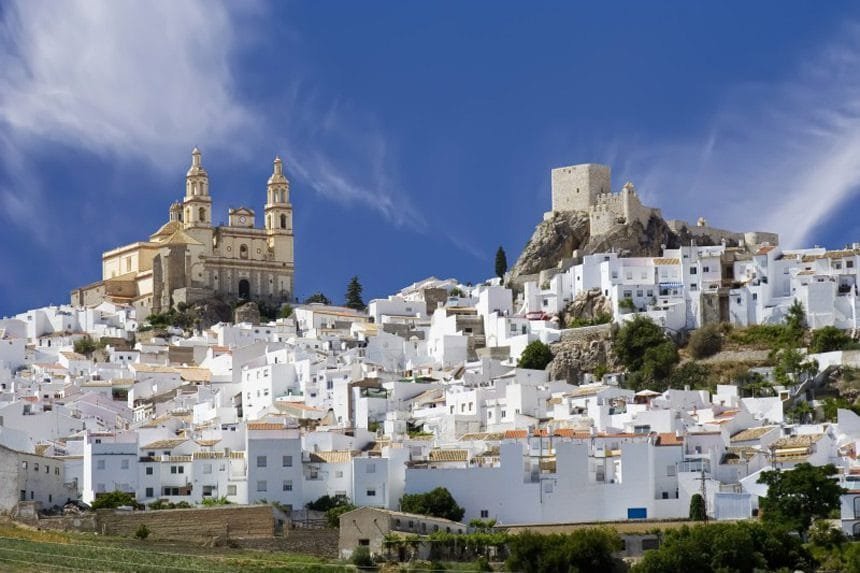
    A striking hilltop town with a soaring church and castle dominating whitewashed homes—one of Andalucía’s most scenic viewpoints.


    🏔  Mountain Villages in the Alpujarras & Sierras

    • Pampaneira, Bubión, Capileira (Granada’s Alpujarras): Moorish‑heritage villages set against the stark beauty of Sierra Nevada, connected by walking trails and known for whitewash, flowing mountain streams, and serene ambiance.

    • Lanjarón: A well‑known spa town where bottled mineral water originates. Surrounded by hills and wellness resorts, offering both history and relaxation.

    • Trevélez: Spain’s highest village (~1,476 m), famed for ham‑curing and snowy winter charm in the southern Sierra Nevada.


    🌊 Coastal & Cultural White Villages

    • Mojácar (Almería): A terraced white village rising from the coastline, with floral lanes, expansive views and proximity to Cabo de Gata‑Níjar Natural Park.

    • Vejer de la Frontera (Cádiz): A hilltop retreat near Atlantic beaches, blending Andalusian beauty with Atlantic breezes and a strong historic vibe.

    • Canillas de Albaida & Gaucín (Málaga region): Smaller gems set in Tejeda‑Almijara mountains. Teenie burgs offering serene scenery, traditional gastronomy, and views of Gibraltar and the Mediterranean in Gaucín’s case.


    📋 Suggestions for a Memorable Andalucían Route

    Start Point Suggested Itinerary
    Málaga or Granada Visit Alpujarras (Capileira → Pampaneira → Bubión), then north to Zuheros, onward to Iznájar (hilltop lake views and castle).
    From Cádiz Explore Arcos de la Frontera, Zahara de la Sierra, Grazalema, and Olvera/Setenil via the Ruta de los Pueblos Blancos.
    Coast & mountain mix Combine Frigiliana, Mojácar, Vejer, and Ronda—an ideal blend of sea views and white village charm mid‑mountains.

    🌿 Why these towns enchant

    • Whitewashed beauty: Reflective facades, Moorish layout, blooming bougainvillea, narrow alleys.

    • Views: From cliffs, reservoir surfaces, sea and mountain panoramas.

    • Authenticity & pace: Many still preserve local cuisine, artisan crafts, festivals (Semana Santa, local ferias).

    • Accessible yet unspoiled: Away from major cities and crowds, these offer quieter, cultural immersion.


    ✨ Hidden Treasures & Local Picks

    Many villages are part of the “Pueblos más bonitos de España” network, praised for their beauty and sustainable tourism. Among the most visited are Níjar and Vejer de la Frontera—especially popular from May to October along the coast.

    Readers’ travel tips also recommend El Rocío near Doñana for birdwatching, and Segura de la Sierra in Jaén for its scenic charm within a UNESCO biosphere area.


    ✅ Final thoughts

    Whether you’re drawn to photogenic vistas, historic lanes, or tapas by the reservoir, Andalucía’s villages offer something for every traveler. Prioritize destinations like Ronda, Frigiliana, Zahara, and Zuheros for a mix of visual drama and cultural depth. And if you’re road‑tripping, don’t miss the Ruta de los Pueblos Blancos, weaving together centuries of heritage and postcard‑perfect views.

  • The Most Exclusive Property For Sale in Spain

    [siteorigin_widget class=”SiteOrigin_Widget_Hero_Widget”][/siteorigin_widget]

    Villa Ensō

    🏡 Villa Ensō is a jaw-dropping mega-mansion nestled in the ultra-exclusive La Zagaleta community near Marbella, Spain. It’s not just a home—it’s a statement.


    🌟 Key Highlights

    • Size & Layout: Sprawling across a 6,460 m² plot, the villa boasts a built area of 3,274 m² spread over three floors.
    • Bedrooms: 10 luxurious bedrooms, including a master suite with its own private wing and a serene Japanese garden.
    • Staff Quarters: 6 additional bedrooms for staff, ensuring seamless service.


    🚗 Car Lover’s Dream

    • A garage fit for royalty—with space for 15 cars, including Ferraris, and lounge areas to showcase the collection.


    💆‍♀️ Spa & Wellness

    • Dual swimming pools: a 25-meter outdoor pool and a 20-meter indoor heated pool, separated by glass and featuring a gigantic outdoor TV.
    • Spa amenities include saunas, massage rooms, an ice room, hair and beauty salon, and two showrooms.


    🎉 Entertainment Galore

    • Champagne room, multiple bars, high-end cinema, gym, and games room.
    • Open-plan living areas with double-height ceilings and panoramic sea views stretching to North Africa and Gibraltar.


    💰 Investment Potential

    • Listed at €34 million, with a projected rental yield of 16.9% and annual revenue of around €200,500.


    Villa Ensō isn’t just a residence—it’s a modern-day palace designed to impress at every turn.


    [siteorigin_widget class=”SiteOrigin_Widgets_ImageGrid_Widget”][/siteorigin_widget]
  • Keeping Cool in Benahavís: Your Summer Survival Guide

    Keeping Cool in Benahavís: Your Summer Survival Guide

    [siteorigin_widget class=”WP_Widget_Block”][/siteorigin_widget]

    ☀️ Keeping Cool in Benahavís: Your Summer Survival Guide


    Nestled in the Andalusian hills, Benahavís is a sun-drenched paradise—but when summer temperatures soar past 30°C (86°F), even paradise needs a plan. Whether you’re a local or a lucky visitor, here’s how to stay cool, calm, and collected during the sizzling months.

    🏡 Chill at Home

    • Close blinds and shutters during the day to block out heat, especially on south-facing windows.
    • Create cross-ventilation by opening windows on opposite sides of your home in the early morning and late evening.
    • Use fans strategically—place a bowl of ice in front of a fan for a DIY air conditioner.
    • Switch to cotton for bedding and sleepwear. It breathes better and helps wick away sweat.

    🧊 Hydration & Diet

    • Drink water regularly, even if you’re not thirsty. Add lemon, mint, or cucumber for a refreshing twist.
    • Avoid heavy meals—opt for gazpacho, fresh salads, and chilled fruit like watermelon or grapes.
    • Limit alcohol and caffeine, which can dehydrate you faster than you think.

    🌳 Outdoor Tips

    • Avoid the midday sun (11 a.m. to 3 p.m.) when UV rays are strongest.
    • Wear light-colored, loose-fitting clothes and a wide-brimmed hat.
    • Cool down at local spots like the Guadalmina River walk or shaded terraces in the village.
    • Take a dip—Benahavís has some stunning natural pools and nearby beaches just a short drive away.

    🧘‍♀️ Bonus Hacks

    • Mist yourself with a cooling spray or keep a damp cloth in the fridge for a quick refresh.
    • Freeze your sheets (yes, really!) or pop your pillowcase in the freezer before bed.
    • Sleep low—heat rises, so consider moving your mattress closer to the floor.


    What Do The Locals Do? 

    🍷 Drink tinto de verano

    There are lots of refreshing drinks to enjoy in summer in Spain, but one of the most popular is tinto de Verano or summer wine. Spaniards don’t often drink sangría – this is mainly for tourists. Instead, they’ll drink tinto de verano made from red wine mixed with fizzy lemonade.

    🔅 Don’t dare go outdoors in the middle of the day

    In Benahavis village you’ll find that the streets will be completely quiet and empty between around 1pm – 5pm. The shops that are still open during summer will likely be closed and everyone will be home hiding from the sun. It may even feel like you’ve stumbled across a ghost town but it’s just that Spaniards know that it’s way too hot to spend time outdoors.  

    💤 Take a siesta

    Siestas during most of the year in Spain are actually a bit of myth – people are too busy working, kids are at school and life is as hectic here as it is in any other country. But in summer, siestas are almost a necessity in many parts of the country because it’s simply too hot to get anything done, especially with a full stomach after lunch.

    💃 Keep an abanico fan with you at all times

    Take a leaf out of the book of the Spanish abuelas (grandmas) and carry a handheld fan with you during summer. You never know when you’ll need some extra cooling down, they’re not just for flamenco! 

    🏖 Take as many home comforts as possible to the beach

    Spaniards don’t only take a towels and buckets and spades with them to the beach, no they come laden with as many comforts as possible to sustain them during the whole day. Think deck chairs, small tables, huge parasols, cool boxes, homemade food – the works. You are likely to feel quite jealous of everything they’ve brought, so come prepared.

    🎊 Enjoy local festivals

    Summer is a time for going away, shutting up shop and having siestas, but it’s also a time for celebration as many towns, villages and neighbourhoods celebrate their annual festivals at this time. Some of the biggest include the Moros y Cristianos festival in Villajoyosa, La Tomatina tomato fight in Buñol and the San Fermín bull runs in Pamplona.

    August 15th is the day with most local festivals, as 1,205 municipalities across the country hold their local fiestas patronales.

    🍅 Take advantage of all of Spain’s cold soups

    Forget trying to cook a hot meal in summer, it’s far too hot to turn the oven or the stove on, instead do as the locals do and live on a variety of cold soups. Spain has several traditional cold soups – which are mostly from different areas in Andalusia. The most famous is of course gazpacho made from tomatoes, peppers, cucumber, garlic and olive oil. salmorejo is thicker with the addition of bread, boiled egg and ham, and is most typical from Córdoba. Porra is again even thicker and can be found in the historic city of Antequera. Other cold soups include ajo blanco found around Málaga and Cádiz and made with almonds, bread, garlic and sherry vinegar. There’s also la pipirrana from Jaén and variations of gazpacho made with watermelon or cherries.

    🏠 Spend la tarde al fresco

    When evening comes and the day finally begins to cool a bit, Spaniards start to head out outside again to catch some breeze. As many people don’t have air-con or can’t afford to run it all the time, going outside is one of the only ways to get cool again. You’ll often find that locals in their barrios (neighbourhoods) grab a chair and sit outside their houses when the sun goes down, making it an extension of their living rooms as they chat to their neighbours. In theory, you could do the same on a balcony. 

    Benahavís may bring the heat, but with a few clever tricks, you’ll be basking in the sunshine without breaking a sweat. 

  • Trends in the Benahavis property market this June

    Trends in the Benahavis property market this June

    As of June 2025, the Benahavís property market continues to attract discerning buyers seeking a blend of luxury, tranquillity, and scenic beauty. Known for its picturesque village charm and proximity to Marbella and the Costa del Sol’s coast, Benahavís remains a sought-after enclave for both primary residences and second homes.

    Key Trends in June 2025:

    Price Developments: Property prices in Benahavís have experienced steady growth, with an average increase of approximately 4-5% compared to the previous year. High-end villas and boutique developments remain at the forefront of demand, supporting premium pricing.

    Luxury Real Estate: The market for exclusive villas and gated community homes continues to flourish, driven by affluent international buyers and investors seeking privacy and luxury amenities.

    Market Confidence: Economic stability and positive sentiment towards real estate investment have bolstered buyer confidence. Low mortgage rates and flexible financing options make purchasing appealing.

    Development and New Projects: Several new luxury developments are underway, emphasizing sustainability and modern design, while existing enclaves such as La Zagaleta, Los Arqueros, and Benahavís Village continue to be popular.

    Lifestyle and Investment Appeal: Nature lovers and golf enthusiasts are particularly drawn to the area’s scenic landscapes and world-class golf courses, adding to the region’s attractiveness.

    Market Dynamics: Supply remains relatively limited, especially in the high-end segment, creating a competitive market environment. This scarcity supports price stability and growth potential.

    Overall, the Benahavís property market in June 2025 is characterized by resilience and a focus on luxury, making it an appealing market for high-net-worth individuals and investors seeking exclusivity, natural beauty, and investment security. Buyers and investors are encouraged to collaborate with local specialists to capitalize on emerging opportunities in this prestigious area.

  • 90-day rule, borders and taxes: What the Gibraltar deal means in practice

    [siteorigin_widget class=”WP_Widget_Block”][/siteorigin_widget]

    Almost a decade after the vote, Spain, the UK, the EU and Gibraltar have finally signed a deal that “resolves the last major unresolved issue from Brexit” on the British overseas territory. Here’s what we know so far, from passport checks to sovereignty.

    The EU on Wednesday announced that it had come to an agreement with the UK, Spain and Gibraltar, tying up the last loose end of the Brexit process some five years after the UK formally left the block and almost a decade after the referendum vote.

    This follows years of negotiations to settle Gibraltar’s post-Brexit status, a tiny British overseas territory that has a land border with Spain and, by extension, the EU.

    Negotiations stuttered at various junctures, especially under the previous Conservative government in London. The arrival of a new Labour government last summer, however, is widely viewed to have kick-started talks and formed part of a wider reset of relations with Europe.

    Spain’s premier Pedro Sánchez spoke to his British counterpart Keir Starmer by phone on Wednesday. “Prime Minister Sánchez congratulated the Prime Minister on his leadership,” Downing Street said in a statement.

    “Both leaders also agreed that this development unlocks huge opportunity to advance the bilateral relationship between the UK and Spain, on behalf of the British and Spanish people.”

    Gibraltar’s Chief Minister Fabian Picardo said in a statement that he was “delighted” to finalise an agreement, adding that it will give “legal certainty to the people of Gibraltar, its businesses and to those across the region who rely on stability at the frontier.”

    The deal, he said, “will protect future generations of British Gibraltarians and does not in any way affect our British sovereignty.”

    British Foreign Minister David Lammy said in a statement: “Alongside the government of Gibraltar, we have reached an agreement which protects British sovereignty, supports Gibraltar’s economy and allows businesses to plan for the long-term once again.”

    Spain’s Foreign Minister José Manuel Albares said that “With this agreement, the barrier will disappear. That’s the last wall on continental Europe, and we will guarantee free movement of persons and goods. Gibraltar will be linked to the Schengen area, and Spain will control entry and exit.”

    What’s been agreed?

    We don’t know exactly yet. Until the specifics of the text are published and ratified, it’s difficult to know for sure.

    However, though the text of the deal is as of yet unpublished, reports suggest the deal ensures a fluid border for both people and goods over La Línea, the land border, and will allow for Spanish police officers to do passport checks in Gibraltar’s airport to maintain the integrity of the Schengen area.

    What happens now?

    The deal must now be ratified via the “internal procedures” in each country, something that is far from a certainty, especially in Spain.  With governments described as centre-left in both London and Madrid, the deal will also be heavily scrutinised by the right-wing in Britain and Spain. 

    This will be especially true among pro-Brexit Conservative and Reform MPs, but also on the Spanish right, for whom ‘The Rock’ is something of a blood and soil nationalist issue.

    According to the joint-statement: “The way is now clear for negotiating teams swiftly to finalise the full legal text and proceed with the respective internal procedures leading to the signature and ratification of the future Agreement.”

    Key points of the Gibraltar deal:-

    What about the border?

    The deal aims to maintain a ‘fluid’ border between Gibraltar and Spain. One of the main points of the agreement is the removal of the physical border separating Spain from Gibraltar, with the aim of facilitating the movement of the 15,000 people who travel daily between the two territories. Many Andalusians living in the area travel to Gibraltar and Gibraltarians often have business and family ties to the area across the border in Cádiz province.

    The agreement also creates ‘dual’ EuroStar-style border controls carried out by both Gibraltarian and Spanish officers at the port and airport, while most controls at the border crossing between Gibraltar and La Línea will be removed. It’s notable that Spanish police will do passport checks in Gibraltar airport, rather than Frontex officers, the EU’s border agency, as was expected.

    Spanish daily El País reports that the British Government believes border checks “will be implemented in a similar way to the one already in place with the French police operating at St Pancras train station in London.”

    “Spain will be responsible for ‘carrying out full Schengen checks’,” it adds.

    What abouts goods controls?

    Similarly, the agreement also seeks to eliminate goods controls between Gibraltar and the EU via Spain. “In the area of goods, the Parties agreed on the principles underpinning the future customs union between the EU and Gibraltar, providing for strong cooperation between the respective customs authorities and removing checks on goods,” according to the joint statement. 

    Like with cross-border workers, thousands of businesses in Gibraltar and the Campo de Gibraltar area of Càdiz across the border depend on fluid crossings with minimal goods controls.

    How does this impact British military bases?

    The joint statement does not refer specifically to the issue of military bases, but London has emphasised that the agreement guarantees the “full operational autonomy” of British military facilities in Gibraltar. 

    The recent strategic defence review presented by the Starmer government emphasised “the importance of maintaining a British military presence’ on the Rock, particularly protecting “British territorial waters around Gibraltar” and providing a launching pad for British military operations.

    Concessions on military bases would’ve likely been a step too far for London and interpreted as a ‘Brexit-betrayal” by the British right.

    What about the 90/180 day rule?

    Again, the exact details are unknown but reports suggest that, due to the new dual EuroStar-style passport checks, the deal will establish Schengen rules to non-resident Britons arriving in Gibraltar.

    The Guardian notes that “This means they could be turned away at the border if they have already spent 90 days in the Schengen zone over a 180-day period.”

    What about sovereignty?

    In theory, the agreement has no direct impact on sovereignty. However, the issue of Spanish police on British territory — border guards in the airport, in this case — was long a sticking point during negotiations and has for decades been a point of contention among Gibraltarians who remember the tough years when dictator Francisco Franco closed the border for thirteen between 1969 and 1982.

    British and Gibraltarian sources have been keen to downplay sovereignty losses. However, Eurosceptic voices in the UK will likely view the passport checks as a concession to the Spanish.

    Some in Madrid may view this as a victory, and reports suggest that the fluid land border was made conditional on ‘Spanish boots on British territory’ at the airport.

    What about tax?

    The Times reports that as part of the deal Gibraltar will end its VAT-free regime so a new import duty or “transaction tax” will be introduced. Spanish authorities have long called for tax reform on the Rock, arguing the lack of sales tax encourages smuggling of contraband goods into Spain.

    This is particularly true on tobacco and alcohol sales. Albares announced that the deal will include a “fiscal convergence process” because the Rock “is joining the customs union.” The aim is to prevent indirect taxes applied in Gibraltar, such as on tobacco, from distorting competition in the Campo de Gibraltar area.

    The deal also pledges to fight money laundering, another historical complaint of Madrid.