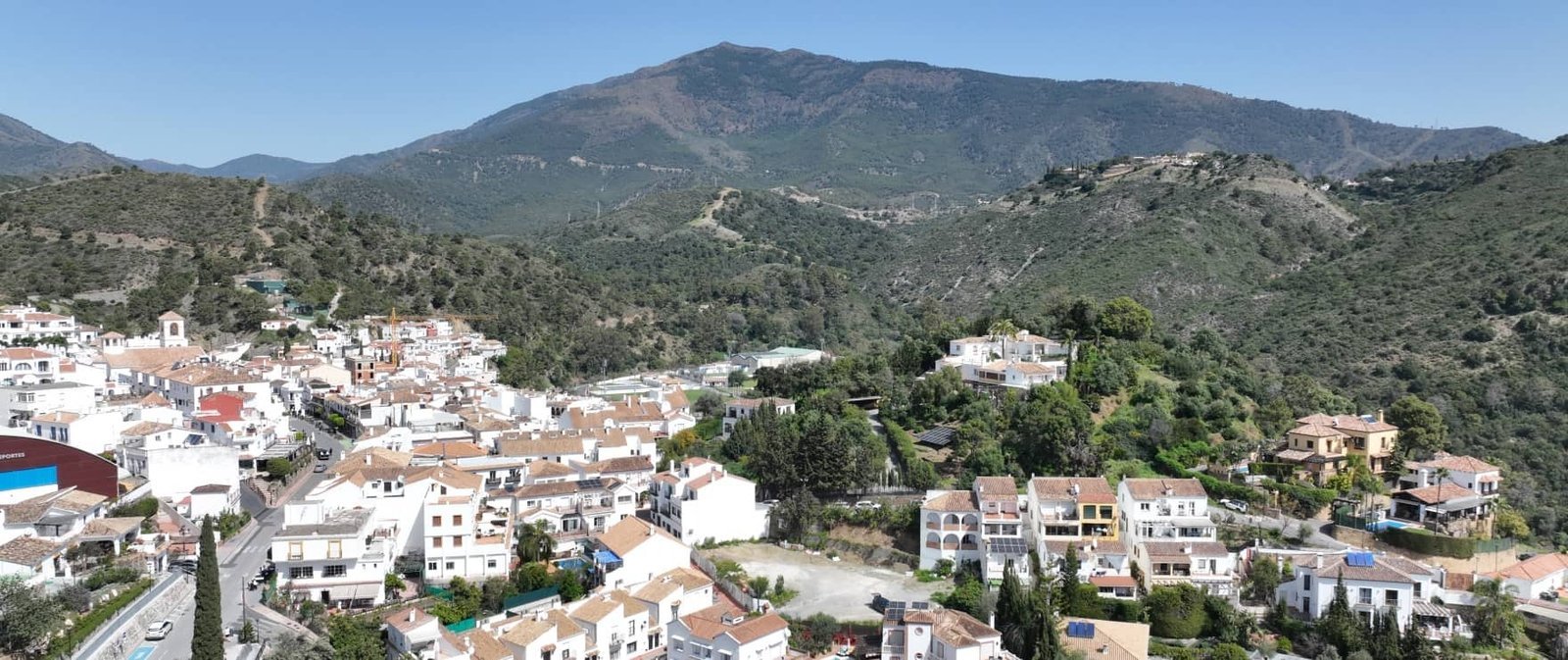
The conversation around short-term rentals on the Costa del Sol has shifted noticeably over the past year. What was once a simple question of holiday income has become a more nuanced discussion about lifestyle, governance, and long-term value. Across Marbella, Benahavís and Estepona, communities now have clearer legal pathways to restrict or regulate tourist rentals — and with that has come a natural concern among buyers and owners alike: does limiting short-term rentals reduce property values?
The evidence so far suggests something more interesting. Rather than creating downward pressure on prices, these decisions are reshaping the market into two distinct — and equally resilient — segments.
A market that is evolving, not declining
Since the recent legal clarifications, communities have been given greater control over how properties are used. In practice, this has not triggered widespread price corrections. Instead, it has refined buyer intent.
Properties with established tourist licences continue to command a premium. Their appeal is clear: they offer immediate, legally compliant rental income in one of Europe’s most in-demand destinations. For investors, that certainty has tangible value, particularly in prime areas such as Marbella and the golf valleys of Benahavís.
However, communities that choose to restrict or prohibit short-term rentals are not experiencing a loss of demand. Quite the opposite. These developments are increasingly attracting buyers who prioritise tranquillity, privacy and a more residential atmosphere — qualities that are becoming rarer, and therefore more valuable, on the Costa del Sol.
Two buyer profiles, one strong market
What is emerging is not a divide between “good” and “bad” investments, but a clearer distinction between two different types of ownership.
On one side, there is the investor-driven buyer, focused on yield, flexibility and short-term returns. For this audience, properties with touristic licences remain highly desirable and are often priced accordingly.
On the other, there is the lifestyle-driven buyer — typically seeking a second home, a relocation base, or a long-term residence. For these buyers, communities without short-term rental activity offer a sense of calm, consistency and exclusivity that can be difficult to replicate elsewhere.
Importantly, both segments are supported by strong international demand. Buyers from across Europe, the United States and beyond continue to view the Costa del Sol as a secure and attractive destination, which helps underpin pricing across both categories.
Price stability through clarity
One of the less obvious effects of rental restrictions is the clarity they bring. In communities where rules are well-defined and consistently applied, buyers know exactly what they are purchasing into. That certainty reduces friction, builds confidence, and in many cases supports long-term value.
Rather than introducing volatility, restrictions can remove ambiguity. They signal that the community has taken a considered position on how it wishes to operate — something that many buyers interpret as a sign of strong governance.
At the same time, licensed properties benefit from a different form of clarity: the ability to generate income within a defined legal framework. This dual clarity is what allows both segments of the market to perform well simultaneously.
The real takeaway for buyers and owners
The idea that banning short-term rentals leads to falling property prices is, at least in the current Costa del Sol market, largely unsupported. What we are seeing instead is a more sophisticated landscape, where value is defined not just by location and design, but by the intended use of the property.
For investors, the presence of a touristic licence remains a powerful advantage. For lifestyle buyers, communities that limit rental activity can offer a quieter, more cohesive living environment — and increasingly, that is something buyers are willing to pay for.
Ultimately, the decision is less about market risk and more about alignment. The strongest outcomes tend to come when the property, the community rules and the buyer’s objectives all point in the same direction.
Costa del Sol vs London, New York and Toronto in 2026
“Living on the Costa del Sol in 2026 costs significantly less than life in London, New York or Toronto — while offering 300 days of sunshine and a calmer, more outdoor lifestyle.”
More people than ever are asking a simple question:
“Is there somewhere I can live better — not just cheaper?”
For many, the answer is yes: the Costa del Sol. Sunshine, lower everyday costs, Mediterranean food culture and strong international communities make the region one of Europe’s most appealing places to relocate.
This guide compares the cost of living on the Costa del Sol vs London, New York and Toronto using realistic 2026 figures, so you can see how far your money really goes.
Living Costs on the Costa del Sol (2026)
The Costa del Sol remains one of Europe’s best-value regions for day-to-day living, especially when you compare it with major English-speaking cities. Mild winters help keep utility bills down, fresh produce is affordable, and household insurance is typically a fraction of what residents pay in the UK, US or Canada.
Fresh produce at Málaga’s local markets keeps weekly food costs under control.
Typical monthly spending for a couple (Costa del Sol)
For two adults living a comfortable, non-extravagant lifestyle in Málaga and surroundings, a realistic monthly budget looks like this:
Insurance (home + car combined): €650–1,050/year (≈ €55–88/month)
Typical total monthly spend (excluding rent or mortgage): €1,000–1,200
For most people moving from London, New York or Toronto, that alone is a big adjustment: bills become more predictable and manageable, and a larger share of your income goes on lifestyle rather than fixed costs.
Jump to your city
See the full cost of living breakdown, lifestyle notes and real examples:
London remains one of the world’s most expensive cities. Energy prices, transport and insurance are all significantly higher than in southern Spain, and many households feel that most of their income disappears on basics before they even think about going out.
Monthly costs for a couple in London (excluding rent)
Food & dining: £760–950/month
Utilities & telecoms: £320–450/month
Public transport (Zone 1–3 style pass): £170+/month
Typical total monthly spend (excluding rent or mortgage): £1,450–1,800 (≈ €1,700–2,100)
Property snapshot: London vs Costa del Sol
London 2-bed flat: £575,000–750,000
London 3-bed townhouse: £1.05–1.30m
Costa del Sol 3-bed townhouse: €575,000–725,000
For many London homeowners, selling a family house can fund an outright purchase on the Costa del Sol with money left over, turning a mortgage payment into additional income.
Real example: selling in London → moving to Spain
Imagine a London couple selling a £1.2m semi-detached home. After agent and legal fees, they might walk away with roughly £1.16–1.17m.
On the Costa del Sol, they buy a modern townhouse in a gated community for around €700,000, plus approximately €70,000 in purchase costs. Their total outlay is roughly €770,000.
That leaves a substantial amount of released equity which, invested modestly at 3–4% per year, can help offset monthly costs and provide a meaningful lifestyle cushion.
Monthly non-housing costs:
London: £1,450–1,800
Costa del Sol: €1,000–1,200 (often noticeably lower even with a similar lifestyle)
Summary: in this scenario, the couple lives mortgage-free, reduces monthly spending and can often cover a meaningful part of their new lifestyle from investment income alone.
New York City: Cost of Living Breakdown (2026)
New York offers incredible energy and opportunity, but everyday costs add up fast — especially groceries, eating out and insurance. For many New Yorkers, moving to Spain feels like taking the pressure off without giving up big-city connections.
Monthly costs for a couple in NYC (excluding rent)
Typical total monthly spend (excluding rent or mortgage): $2,100–2,800 (≈ €1,950–2,600)
Property snapshot: New York vs Costa del Sol
2-bed condo (Manhattan): $1.9–2.6m
Costa del Sol 2-bed apartment: €300,000–420,000
Costa del Sol detached villa: €750,000–1.15m
Real example: selling in NYC → moving to Spain
A New York couple sells a two-bedroom Manhattan condo for around $2.0m and nets roughly $1.85m after closing costs. They purchase a high-quality Costa del Sol townhouse for around €770,000 all-in (roughly $830,000–860,000, depending on exchange rate).
Capital released: often close to (or above) $1.0m. Invested at 3–4% annually, that can generate meaningful income — frequently enough to offset a large share of living costs in Spain, before considering pensions or other income.
Monthly non-housing costs:
New York City: $2,100–2,800
Costa del Sol: €1,000–1,200 (≈ $1,080–1,320, exchange-rate dependent)
Summary: many New Yorkers find they can reduce fixed expenses dramatically, turn home equity into income, and swap crowded commutes for a Mediterranean lifestyle with sunshine and outdoor living.
Toronto: Cost of Living Breakdown (2026)
Toronto’s cost of living has risen sharply over the past decade. Groceries, utilities, mobile phone plans and insurance are among the highest in the world — and homeowners also face substantial property tax and water bills.
Monthly costs for a couple in Toronto (excluding mortgage)
The figures below reflect a typical two-adult household with two cars and a detached or semi-detached home:
On top of that, most Toronto homeowners pay significant municipal charges:
Property tax: typically C$4,800–7,200/year (≈ C$400–600/month)
Water & sewage: typically C$1,300–2,000/year (≈ C$110–170/month)
When you include property tax and water, the true non-mortgage monthly cost for many Toronto households rises to around:
C$3,850–5,050 per month (≈ €2,600–3,400, exchange-rate dependent)
Property snapshot: Toronto vs Costa del Sol
Toronto 2-bed condo: C$850,000+
Toronto 3-bed townhouse: C$1.25m+
Toronto detached house: C$1.6–2.2m+ (area-dependent)
Costa del Sol 3-bed townhouse / semi-detached: €575,000–725,000
Real example: selling in Toronto → moving to Spain
A Toronto family sells a 3-bedroom detached home in a desirable neighbourhood for around C$1.55m and nets roughly C$1.49m after fees. They purchase a Costa del Sol townhouse in a modern community with pool and gardens for about €770,000 all-in.
Their everyday costs also change dramatically. Instead of spending C$3,850–5,050 each month on food, utilities, telecoms, insurance, transport, property tax and water, they now spend around:
€1,000–1,200 per month in Spain (often roughly C$1,500–2,000, exchange-rate dependent).
Summary: for many Toronto households, moving to the Costa del Sol meaningfully reduces monthly outgoings, while swapping long winters for a climate where outdoor life is possible most of the year.
The financial savings are important, but for most people the real attraction is how different everyday life feels. Instead of planning your week around bills, weather and commuting, you start planning it around daylight, terraces and time outside.
Around 300 days of sunshine per year
Outdoor cafés, coastal walks, golf and hiking as part of normal life
Excellent public healthcare and affordable private options
Safe, international communities with English widely spoken
Easy flights back to the UK, Europe, Canada and the US
Many people who move from London, New York or Toronto say the biggest change is not just lower costs, but a lighter, calmer daily rhythm: fewer long commutes, more time outside, and the feeling that they are finally getting value from the money they spend.
How much do I need per month on the Costa del Sol?
Everyone’s lifestyle is different, but these ballpark figures are a useful starting point:
Comfortable couple (excluding housing): most two-adult households live well on around €1,000–1,200 per month for food, utilities, telecoms, local transport and insurance.
Comfortable couple (including rent or mortgage): adding a mid-range long-term rental or modest mortgage, many couples find that a total budget of around €2,100–2,800 per month provides a very comfortable lifestyle in much of the Costa del Sol.
Single professional or remote worker: a single person can often cover non-housing costs on €750–950 per month, with total budgets from around €1,600–2,050 including rent (depending on location and housing choice).
These are guide figures only, but the pattern is clear: for many people relocating from London, New York or Toronto, the Costa del Sol offers a noticeably lower monthly outlay for a similar – or better – standard of living.
Final Summary: Why the Costa del Sol Wins on Cost of Living in 2026
When you combine lower living costs, better-value property, predictable household expenses, sunshine, outdoor living and a calmer pace of life, the Costa del Sol becomes one of the most compelling relocation and retirement choices for 2026.
For many people leaving London, New York or Toronto, the reality is simple: life on the Costa del Sol is not only cheaper — it is richer, healthier and more enjoyable.
“In 2026, the Costa del Sol offers a richer lifestyle — for less.” moodarse.com/
Holiday Rental Licences in Andalusia: What Happens When You Sell?
A Clear Guide for Costa del Sol Property Owners and Buyers
For homeowners and investors across the Costa del Sol, few topics have generated as much uncertainty in recent years as holiday rental licences. With demand for short-term lets continuing to grow, clarity around how these licences behave during a sale has become increasingly important.
The key question is simple: does a VFT (Vivienda con Fines Turísticos) licence stay with the property — or with the owner?
Recent legal interpretations in Andalusia now provide a much clearer answer — and for many owners, it is a positive one.
Does a VFT Licence Transfer with the Property?
In practical terms, a registered VFT licence is generally understood to be linked to the property itself rather than the individual owner.
This means that when a property is sold, the ability to operate it as a holiday rental can typically continue — provided the new owner updates the registration and the property remains compliant with current regulations.
The process is therefore not a full “reapplication,” but rather an administrative update with the Junta de Andalucía, confirming the change of ownership and responsible operator.
Background: Regulatory Changes in 2025
Regulatory updates introduced in 2025 initially created uncertainty around whether VFT licences were personal or property-based.
Subsequent legal clarifications — including interpretations from Spain’s Directorate-General for Legal Security — have reinforced a more consistent position: the licence forms part of the property’s authorised use, rather than being a strictly personal permit.
However, this remains subject to administrative compliance, local planning rules and community statutes, all of which must be considered during a transaction.
Community Rules & Existing Licences
One of the most significant changes in recent years is the ability for communities of owners to regulate holiday rentals within their buildings.
Under current rules, a 3/5 majority vote can restrict or prohibit new VFT registrations.
Importantly, properties that were already operating with a valid licence prior to such restrictions are generally considered to retain their rights — a concept often referred to as “grandfathering”.
That said, owners must continue to comply with community rules regarding noise, behaviour and building use, and should always verify the specific statutes of their development.
Why This Matters for Buyers and Sellers
For years, uncertainty around licence continuity created hesitation in the market. Today, the landscape is more predictable — and this has clear implications for both buyers and sellers.
For sellers:
A registered VFT licence can enhance the marketability of a property
Buyers increasingly value homes with proven rental history
Legal clarity strengthens negotiating position
For buyers:
Reduced risk when acquiring a rental-ready property
Faster transition into income-generating use
Greater transparency around legal status
In lifestyle markets such as Benahavís and the wider Costa del Sol, this clarity plays an important role in long-term investment confidence.
Practical Steps for Buyers
Request and verify the VFT registration number
Confirm compliance with current regulations
Review community statutes regarding short-term rentals
Submit ownership update to the Junta de Andalucía after completion
Taking these steps ensures continuity and avoids unexpected issues after purchase.
What to Watch Going Forward
Local planning controls — particularly in areas such as Málaga city — may limit new licences
The regulatory environment continues to develop, making professional advice increasingly valuable.
The Bottom Line
The Costa del Sol’s holiday rental framework is now clearer, more structured and — importantly — more predictable than in previous years.
A VFT licence is no longer viewed as a fragile, owner-dependent permit, but rather as a regulated use attached to the property — provided all legal and administrative requirements are met.
For owners, this offers reassurance. For buyers, it removes one of the key uncertainties around entering the short-term rental market.
Scarcity, style and sustainable value — what really supports prices (and liquidity) in Benahavís.
Benahavís is often described as the jewel of the Costa del Sol’s “Golden Triangle” — a hillside municipality where Marbella prestige meets Andalusian calm. It attracts international buyers who want privacy, views and a quieter pace, yet still want the coast within easy reach.
However, the best way to understand Benahavís isn’t through headlines. Resale strength here comes from a few specific forces — and when you understand them, pricing (and timing) becomes much easier to read.
Below is a practical framework we use when advising buyers and sellers: scarcity, quality, and the features that protect demand over time.
Scarcity as a safeguard
Benahavís has limited developable land, and planning control tends to be tighter than in many coastal zones. That naturally constrains supply — particularly for well-located apartment stock and new resort-led communities.
In practice, the lack of “endless new phases” is one of the quiet reasons values hold up across cycles. The market can slow, but prime homes remain prime when replacement is difficult.
Where new supply does appear — for example around Real de La Quinta — it’s watched closely because it sets the tone for both design expectations and pricing benchmarks.
Cooling signs: asking vs achieved prices
One point that matters in 2025–2026 is the difference between asking prices and achieved prices. Much of the public data reflects what sellers hope to achieve — not what completes at the notary.
That gap widens when vendors price a home as if it were turnkey, but the property needs modernisation. In the current market, premium results are still achievable, but they tend to be earned through realistic positioning, strong presentation, and a clear understanding of the buyer pool.
In other words: Benahavís remains resilient, but it rewards accuracy more than optimism.
Liquidity: patience rewarded
At the top of the market — large villas with the best views, privacy and architecture — the buyer pool is smaller and more selective. That’s normal. Time on market is often part of the process, especially when homes are unique.
For the mid-to-high segment, liquidity improves when pricing is competitive relative to condition, orientation and location. Overpricing usually does the opposite: it increases “time exposed” and weakens negotiating leverage.
This is why two seemingly similar homes can sell months apart — and at very different outcomes.
What protects resale value
Across Benahavís, a few fundamentals consistently support resale value. These aren’t marketing points — they’re the features that widen your buyer pool and reduce future friction.
Location and orientation: sea views, south / south-west aspect, and proximity to golf tend to outperform.
Condition: renovated or well-maintained homes usually sell faster and closer to asking.
Exclusivity: gated privacy and well-run communities remain strong price supports.
Positioning: demand often concentrates in “core” brackets where choice is limited and buyers are active.
Who’s buying (and why that matters)
Northern European demand — including the UK, Benelux and Scandinavia — remains a foundation of the Benahavís market. At the same time, interest from North American and Middle Eastern buyers has become more visible, especially in the €2M–€5M range.
That mix helps. When demand comes from several regions with different motivations (lifestyle, second homes, longer stays, or investment), the market tends to be less dependent on a single trend.
The common thread is consistent: design-led homes, privacy, security, and value versus beachfront equivalents nearby.
Energy efficiency is becoming a value lever
Energy performance is moving from “nice to have” to “value lever”. Buyers increasingly ask about insulation, glazing, solar readiness, heating/cooling efficiency and year-round comfort — especially for full-time or winter use.
Homes with smart energy management, modern HVAC or heat-pump systems and good insulation tend to appeal to a broader pool — and that typically improves resale alignment with asking price.
Did you know? A meaningful share of €1M+ transactions in Benahavís completes without mortgage financing — one reason the market can remain steady even when borrowing costs shift.
Benahavís: market at a glance
Figures vary by source and reflect different methodologies (asking vs sold), but these headlines are useful as a directional snapshot:
Average asking price (Q2 2025): €5,071/m²
Baseline average sold: New — €4,325/m² | Resale — €3,576/m²
Growth trend: +9% (5-year) | +10% (10-year)
Resale share (Q2 2025): ~98% of sales are resales
Top zones: La Zagaleta & El Madroñal
Mid/high demand areas: Los Arqueros, La Quinta & Los Flamingos
Market outlook for 2026
The most realistic expectation for 2026 is normalisation rather than correction. Scarce supply, higher construction costs and enduring lifestyle appeal continue to support the municipality — particularly in the best micro-locations.
In the luxury bracket, the homes that lead the next cycle are likely to be those that combine quality, presentation and sustainability features — not simply the highest asking prices.
Takeaways for buyers and sellers
For buyers: resales offer immediacy and established settings. Meanwhile, constrained new supply can support long-term value retention — especially in well-run communities.
For sellers: premium pricing is achieved when condition, presentation and positioning match the market. Overpricing usually lengthens time on market and reduces negotiating power.
Why Americans, Canadians & Brits Are Buying Property in Benahavís | 2025 Market Insight
As interest rates climb across North America and the UK, and economic uncertainty continues to ripple through global markets, a growing number of buyers from the U.S., Canada, and Britain are looking beyond their borders for stability, lifestyle, and long-term value. One destination quietly gaining traction? Benahavís — a picturesque enclave in southern Spain known for its luxury real estate, natural beauty, and international appeal.
The Global Shift: Why Buyers Are Looking Abroad
In recent months, central banks in the U.S., Canada, and the UK have maintained elevated interest rates to combat inflation. This has made domestic borrowing more expensive and cooled local housing markets. At the same time, geopolitical tensions, cost-of-living pressures, and a reevaluation of work-life balance have prompted many to consider overseas alternatives.
Spain — and particularly the Costa del Sol — offers a compelling mix of affordability, lifestyle, and legal pathways for non-EU buyers. Benahavís, nestled between Marbella and Estepona, stands out for its low-density planning, high-end developments, and proximity to international schools like Atalaya International College.
Why Benahavís Appeals to International Buyers
Stable Property Market: Spain’s real estate market has shown resilience, with Benahavís offering strong long-term value and rental potential.
Lifestyle Migration: With remote work now normalized, buyers are prioritizing sunshine, safety, and wellness — all hallmarks of life in Benahavís.
Currency Advantage: The strength of the U.S. dollar and British pound against the euro has made Spanish property more accessible to foreign buyers.
Education Access: Families relocating or investing for future use appreciate the proximity to international schools like Atalaya International College, Aloha College, and Sotogrande International.
Residency Options: Spain’s numerous Visa options remains a draw for non-EU investors, offering residency in exchange for qualifying property purchases.
Living the Benahavís Lifestyle
From golf at Los Arqueros and La Quinta to hiking trails and Michelin-starred dining, Benahavís offers a lifestyle that’s both luxurious and laid-back. Properties range from modern apartments with panoramic views to gated villas with private pools and gardens. The area is just 10–15 minutes from the coast, Puerto Banús, and Marbella, yet feels worlds away in terms of tranquility and space.
What’s Next for Buyers?
As global interest rates remain high and domestic markets cool, the appeal of Benahavís is likely to grow. For Americans, Canadians, and Brits seeking a safe haven for capital, a better quality of life, or a strategic relocation, this Andalusian gem offers more than just sunshine — it offers a future-proof investment.
North American and UK borrowers are coming off a bumpy rate cycle at home. Meanwhile, the euro area has eased materially since the 2023 peak: Euribor has fallen, the ECB is on pause, and Spanish mortgages for well-qualified non-residents remain accessible—especially at 60–70% LTV. For affluent buyers who want year-round sunshine, golf, international schools and a refined lifestyle, Benahavís is rising to the top of the shortlist. European Central Bank, euribor-rates.eu
The macro picture (as of 20 Oct 2025)
United States (Fed): The Fed cut in September to a 4.00–4.25% target range and is widely expected to trim again at the Oct 28–29 meeting. Translation: US financing costs are easing from restrictive levels, but uncertainty remains into December. Federal Reserve, Barron’s
Canada (BoC): The policy rate was cut to 2.50% in September; the next decision is scheduled for Oct 29. Markets are debating how much easing is left. Bank of Canada
United Kingdom (BoE): Bank Rate stands at 4.00% after an August cut; policymakers now signal a slower pace of any further reductions as inflation proves sticky. Reuters, Bank of England
Euro area (ECB/Euribor): The ECB has kept rates unchanged since September, with the deposit facility at 2.00%. The 12-month Euribor—what Spanish variable and mixed mortgages often reference—is ~2.16% (17 Oct). In short: down sharply from 2023 highs above 4%. global-rates.com, European Central Bank, Reuters
Why this matters to your Benahavís purchase
Spanish banks typically underwrite non-resident mortgages at ~60–70% LTV, with fixed or mixed (fixed for a period, then Euribor-linked) structures. When Euribor stabilises or falls, mixed products become especially compelling for buyers who want payment visibility now and optionality later.
Quick “rate snapshot”
• Fed funds: 4.00–4.25% (Sep 17); next meeting Oct 28–29. Federal Reserve • BoC overnight: 2.50% (Sep 17); next decision Oct 29. Bank of Canada • BoE Bank Rate: 4.00% (held Sep 17). Bank of England • ECB deposit facility: 2.00% (held Sep 11). European Central Bank • 12-month Euribor: ~2.16% (Oct 17 print). global-rates.com
The lifestyle ROI
Beyond the maths, buyers from the US, Canada and the UK are re-weighting for quality of life—year-round climate, golf/wellness, international schooling and connectivity. Foreign demand remains a structural force in Spain (mid-teens share nationally over the last year), with Málaga province among the country’s leaders—supporting liquidity and choice across Benahavís communities. CaixaBank Research
Case study (illustrative only):
A €1.2M Benahavís purchase with a Spanish mortgage. Assume a 60% LTV (loan €720,000) and a 20-year term:
At 2.5% nominal, monthly ≈ €3,710 per €720k.
At 3.5% nominal, monthly ≈ €4,060 per €720k.
Rule of thumb: every 1 percentage point on a 20-year loan moves payments by roughly €50 per month per €100k of debt. Use this to sanity-check offers as you negotiate both price and finance. (Note: lender offers vary by profile; this is not advice.)
Buyer playbook for US/CA/UK clients (what to prepare now)
Get a Spanish NIE and open a Spanish bank account early.
Mortgage in principle: line up a fixed or mixed product; expect 60–70% LTV for non-residents, with terms often 20–25 years.
Currency plan: decide whether to stage transfers or hedge; small FX moves can affect your effective budget.
Legal team: independent bilingual solicitor; confirm due diligence, taxes and completion timelines.
Insurance & holding structure: discuss life/building insurance requirements and whether buying personally or via a company fits your tax context.
Residency perspective: note that Spain ended the real-estate Golden Visa on 3 April 2025—so plan stays around the standard rules or alternative residency routes if needed. El País
What could change next?
Central bank path: October/November policy meetings (Fed/BoC/BoE/ECB) and inflation prints could nudge borrowing costs. Reuters, Barron’s, Bank of Canada
Euribor trend: if the slowdown persists, the 12-month series could drift sideways or lower—supportive for mixed-rate Spanish products. euribor-rates.eu
UK inflation & BoE guidance: a slower disinflation path argues for patience on cuts; that matters for sterling sentiment and UK buyer psychology. Reuters
Request more information
Want to know more or arrange a viewing? Darren & Angelina — your Personal Property Concierge — will share full details and organise a private tour. Use the enquiry form on this page and we’ll be in touch promptly.
The Non-Lucrative Visa (NLV) remains the most popular pathway for non-EU citizens—such as Americans, British, Canadians, Australians, and others—looking to settle in Spain.
Designed for individuals who do not intend to work during their initial stay, the NLV allows applicants to gain Spanish residency while bypassing the standard 90-day tourist rule that restricts stays in the Schengen Area.
In recent years, the application process has evolved, with consulates around the world increasingly using third-party agencies (such as BLS International in some regions) to manage submissions. But a major update introduced in mid-2025 now gives applicants far greater flexibility when planning their relocation.
What’s Changed?
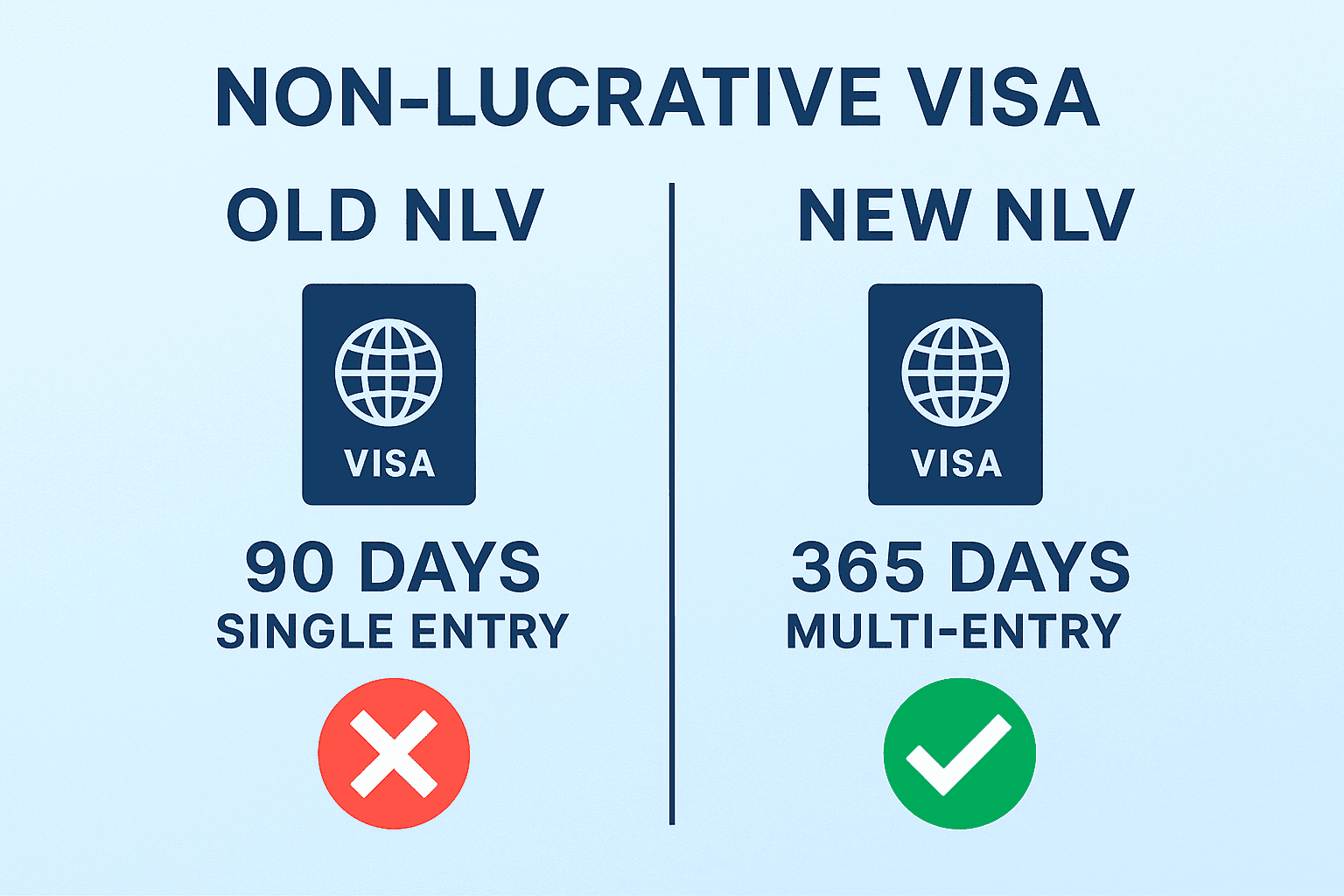
Previously, once approved by a Spanish consulate abroad, successful applicants received a visa sticker in their passport valid for just 90 days. This meant you had to enter Spain within three months of issuance.
As of June 2025, the validity has been extended to 365 days, and the visa is now issued as a multi-entry visa. This gives new residents much more freedom when arranging their move.
Why This Matters
No rush to relocate With the extended validity period, you’re no longer pressured to move within 90 days. If you’re waiting for a property sale, closing down affairs back home, or simply needing more time to prepare, the 12-month window is a huge relief.
Travel flexibility Because the NLV is now multi-entry, you can travel in and out of Spain during that first year. This is especially useful if you’re renting while house-hunting, or if you have ongoing family or business commitments back home.
Relocation experts confirm this is a positive change: “Moving abroad is a major step which often throws up unexpected issues. The extended visa validity gives applicants more breathing room and avoids unnecessary stress,” notes one Spanish immigration advisor.
Key Deadlines to Keep in Mind
Start of residency: Your official residency date begins when you first enter Spain on the visa (the entry stamp in your passport is proof).
TIE application: Within one month of arrival, you must apply for your TIE card (Tarjeta de Identidad de Extranjero) at the local police station.
Renewal requirements: To renew your NLV after the first year, you must prove you spent at least 183 days in Spain during that period.
⚠️ Important: Spending 183+ days in Spain makes you a Spanish tax resident, meaning your worldwide assets and income may be subject to Spanish taxation. The Spanish tax year runs from January 1 to December 31.
NLV Income Requirements for 2025
To qualify, applicants must show proof of sufficient passive income or savings:
Main applicant: €2,400 per month (€28,800 per year)
Each dependent: €600 per month (€7,200 per year)
Acceptable sources include pensions, savings, rental income, dividends, and investments. Income from employment or freelance work is not permitted under this visa.
Planning Ahead
If you’re considering relocating to Spain in 2026 or 2027, now is the time to familiarize yourself with the NLV process and its financial requirements.
The extended 12-month validity period offers greater flexibility, but careful planning—especially around taxes, property sales, and residency obligations—remains essential for a smooth transition.
👉 Whether you’re from the U.S., Britain, Canada, Australia, or elsewhere outside the EU, the Non-Lucrative Visa continues to be the most straightforward path to enjoying life in Spain—now with more breathing space than ever before.
1. What is the Non-Lucrative Visa (NLV) in Spain? The Non-Lucrative Visa is a residency permit for non-EU citizens who want to live in Spain without working. It allows you to stay in Spain long-term, provided you can show sufficient financial means to support yourself and your family.
2. Can Americans and Canadians apply for the NLV? Yes. The NLV is open to all non-EU citizens, including Americans, British, Canadians, Australians, and others. You apply at the Spanish consulate in your home country before relocating.
3. How much income do I need to qualify for the NLV in 2025? For 2025, the minimum income requirement is €2,400 per month (€28,800 per year) for the main applicant, plus €600 per month (€7,200 per year) for each dependent. These funds must come from passive income such as pensions, savings, rental income, or investments.
4. Can I work in Spain with the Non-Lucrative Visa? No. The NLV does not allow employment or freelance work in Spain. However, after holding residency for a certain period, it may be possible to modify your status to a different visa that permits work.
5. Do I become a tax resident in Spain with the NLV? Yes, if you spend more than 183 days in Spain within a calendar year, you are considered a Spanish tax resident. This means your worldwide income and assets may be subject to Spanish taxation.
6. How long is the Non-Lucrative Visa valid? Since June 2025, the NLV is issued as a multi-entry visa valid for 12 months. This gives you more time and flexibility when planning your move to Spain. After the first year, you can renew it for two years at a time.
Back to School in Andalusia 2025/2026: A Refined Guide for Parents
Everything you need to know about going back to school in Andalusia in 2025/2026
As the long Andalusian summer gently fades, families across the region begin to prepare for la vuelta al cole — the return to school for the 2025/2026 academic year. In areas such as Benahavís, Marbella and the wider Costa del Sol, this transition is less abrupt than in northern Europe; the pace remains relaxed, shaped by warm September days and a lifestyle that blends education with outdoor living.
For both local and international families, understanding how the school year is structured — from staggered start dates to costs, support systems and environmental considerations — is essential to settling in smoothly.
This guide brings together everything parents need to know, combining practical detail with the broader context of family life in Andalusia.
A Staggered Start: Understanding the School Calendar
Unlike many European education systems, Andalusia’s school year unfolds gradually across September. This staggered return helps ease children back into routine while managing seasonal heat.
Key start dates for 2025/2026:
1 September – Sports education (Enseñanzas Deportivas)
10 September – Early Childhood (Infantil) and Primary Education
15 September – Secondary (ESO), Bachillerato, Vocational Training (FP), Adult and Artistic Education
22 September – Official Language Schools (EOI) and Higher Artistic Education
The academic year typically runs through to late June 2026, with slight provincial variations.
Beyond national holidays, families should also note regional traditions such as Málaga’s Semana Blanca, alongside key dates including Christmas (22 December–6 January), Easter (30 March–5 April), and Día de Andalucía on 28 February.
The Cost of Returning to School
As across much of Spain, back-to-school season brings a noticeable financial commitment. For the 2025/2026 academic year, families in Andalusia are expected to spend approximately €400 per child, although this varies depending on school type and year group.
The most significant expenses include:
School uniforms — averaging €229.79
Textbooks — averaging €192.26, with continued annual increases
Stationery and supplies — rising between 2.4% and 2.8%
For many families, particularly those with children in private or international schools, tuition fees represent an additional layer of cost that has also seen upward pressure this year.
In response, a growing number of parents are embracing more sustainable choices. Over half of families in Spain now reuse or purchase second-hand uniforms, books and equipment — a trend that reflects both economic awareness and environmental consciousness.
Financial Support & Public Initiatives
To offset rising costs, the Junta de Andalucía provides a range of support measures designed to ensure access to education remains inclusive.
These include:
School voucher (“Cheque escolar”) for low-income households
Free textbooks for nearly 900,000 pupils through the regional programme
School meal and transport grants for qualifying families
Tax deductions of 15% on educational expenses, up to €150 per child
Subsidised early years education (0–3), including childcare and dining
These measures play an important role in balancing the cost of education, particularly for families relocating to Spain or navigating a new system.
Adapting to the Climate: Schools in a Warmer Region
One of the defining characteristics of the Andalusian school experience is climate. September temperatures can remain high, and in response, the regional government has accelerated a large-scale bioclimatic adaptation programme.
More than 1,300 schools are being upgraded with:
Improved natural ventilation
Shaded outdoor areas and playgrounds
Energy-efficient cooling systems
These improvements are increasingly important as heatwaves become more frequent, ensuring a safe and comfortable learning environment throughout the early weeks of term.
A Changing Landscape: Fewer Students, New Opportunities
Andalusia is also experiencing a broader demographic shift. Each year, approximately 18,000 fewer pupils enter the education system, reflecting declining birth rates across Spain.
While this presents challenges — particularly in rural areas — it may also lead to smaller class sizes and more personalised education in the years ahead, particularly in well-supported urban and coastal schools.
What This Means for Families
For parents, the return to school in Andalusia is about more than dates and logistics — it is about adapting to a different rhythm of life.
In practical terms:
Children typically return between 10–22 September depending on age
Average costs sit around €400 per child, excluding private tuition
Significant financial support is available through regional programmes
Schools are evolving to better manage heat and climate conditions
Demographic trends may reshape class sizes and availability
For relocating families, this combination of structure and flexibility is one of the defining advantages of living in southern Spain.
Parents’ Back-to-School Checklist
A simple way to stay organised as the new academic year approaches:
Confirm your child’s exact start date and local holidays
Check school supply lists before purchasing materials
Explore second-hand options for uniforms and books
Review eligibility for financial support or tax deductions
Prepare for warm weather during early weeks of term
As always, individual schools may vary slightly, so checking official communication channels is essential — particularly for local holidays and scheduling nuances.
Looking for a property near a specific school in the region? Please contact us with your requirements and we can send you listings which match these.
Wildfire and Home Insurance on the Costa del Sol: What You Need to Know
With the rise in wildfires in southern Spain this summer, homeowners along the Costa del Sol and nearby areas need to be clear on what their home insurance covers in the event of fire damage.
According to the Spanish Union of Insurance and Reinsurance Entities (UNESPA), firefighters in Spain extinguish a domestic fire roughly every three and a half minutes. While the Costa del Sol is a highly populated region with many urban and suburban areas, properties on the outskirts or in the countryside remain at risk from seasonal wildfires.
Fortunately, most Spanish home insurance policies include fire coverage. Articles 45 to 49 of the Insurance Contract Law make it clear that insurers must compensate for fire damage to insured properties, within the limits established by law and the policy itself. Fire, in this context, is defined as the uncontrolled combustion of objects that were not meant to be burned at that time or place.
Why Fire Coverage Is Essential
Home insurance with fire coverage is mandatory for securing a mortgage in Spain. Even if you don’t have a mortgage, fire coverage provides critical peace of mind, especially in wildfire-prone areas like Málaga, Marbella, Estepona, and the surrounding inland towns.
Most insurance policies in Spain—Costa del Sol included—share several common features for fire coverage:
Material damage caused by fire (check whether this includes the building, contents, or both)
Costs for demolition and debris removal
Temporary accommodation if your home becomes uninhabitable
Reconstruction of the property and any annexes
It’s important to note that insurers typically only cover accidental fires, such as those caused by lightning strikes, kitchen incidents, or explosions. Claims may be denied if the fire was started intentionally.
Certain high-value items may not be covered unless explicitly specified in your policy, including:
Furniture
Cash and legal tender
Precious stones and metals
Artworks
Other objects of special value
For renters on the Costa del Sol, content insurance is highly recommended. Even if your landlord has a policy, it may not cover your personal belongings.
Wildfire Risk in the Costa del Sol Region
Properties on the outskirts of towns like Mijas, Benahavís, and Ronda, or in rural areas surrounding the coast, are increasingly vulnerable to wildfires during the dry summer months. If your home is affected, contact your insurance company immediately and report the incident to 112 to create an official record.
Insurance provider Mapfre highlights the key elements you should confirm in your policy for wildfire protection:
Coverage for flame damage
Temporary accommodation while repairs are carried out
Firefighting costs
Reconstruction of the property and gardens
As with domestic fires, insurers generally cover only accidental fires, so documentation from local fire services may be necessary to prove that the wildfire was not started intentionally.
Fire Safety at Home
According to UNESPA’s report Fuego!, seven out of ten fires occur in the home. On the Costa del Sol, the most common causes include:
Kitchen fires – Never leave pots or pans unattended on the stove.
Irons – Ensure irons are turned off and safely stored when not in use.
Fireplaces – Use guards and avoid drying clothes or placing flammable materials nearby.
Cigarettes – Extinguish completely; never smoke while drowsy.
Candles – Supervise burning candles and keep them away from curtains or flammable materials.
Children – Educate children on fire safety and the dangers of playing with fire.
Installing smoke detectors is a simple but highly effective safety measure. While Spanish regulations for smoke detectors vary by region and are less strict than in countries like the UK or US, they are highly recommended for homes along the Costa del Sol, particularly in wildfire-prone areas.
When considering the risks of living on the Costa del Sol, it’s worth exploring how the region’s hot summers and dry landscapes increase the likelihood of wildfires, much like those studied in detail under wildfire. To better understand how your policy works, you might also find it useful to read about the broader framework of home insurance and the protections it typically provides. Since many fires are managed by dedicated emergency services, the role of firefighting itself is also an essential part of how communities respond to such risks in Spain. Additionally, knowing more about the Costa del Sol as a region can help you understand why properties located near rural areas face greater exposure to seasonal threats.
Nueva Andalucía, the Golden Mile and La Zagaleta have long defined the upper end of the Costa del Sol property market. In recent years, however, attention has been quietly shifting towards El Madroñal — a gated hillside community in Benahavís that offers a different kind of luxury.
Rather than visibility or prestige branding, El Madroñal appeals through privacy, space and consistency. Limited supply, generous plots and a mature residential character have combined to make it one of the most resilient high-end micro-markets in the area.
Location and elevation
Set high in the Benahavís hills, El Madroñal occupies an elevated position that brings both practical and lifestyle advantages. The setting delivers open views, cooler summer temperatures and a clear sense of separation from the busier coastal strip.
Despite this, access remains straightforward. San Pedro de Alcántara, Puerto Banús and Marbella are all within a short drive, which makes El Madroñal viable for year-round living as well as international second-home ownership.
Privacy, security and plot size
El Madroñal’s gated structure and low housing density are central to its long-term appeal. Multiple controlled entrances and 24-hour security create a calm, residential environment that attracts buyers who value discretion over exposure.
Large plot sizes play an equally important role. Homes are typically set well back from one another, allowing for mature gardens, meaningful outdoor space and a level of privacy that is increasingly difficult to find closer to the coast.
Architecture and liveability
Architecturally, El Madroñal is varied rather than uniform. Traditional Andalusian villas sit alongside contemporary homes designed to maximise light, views and indoor–outdoor living.
Recent development activity has been limited but carefully absorbed by the market. Buyers increasingly prioritise comfort, energy efficiency and year-round usability over purely decorative finishes, a shift that newer properties tend to address well.
Day-to-day amenities and lifestyle
El Madroñal is intentionally residential, but everyday amenities are close at hand. Monte Halcones provides cafés, restaurants and essential services, while San Pedro and Marbella offer a full range of shopping, healthcare and international schools.
Golf courses, countryside walks and inland routes towards Ronda all sit within easy reach, reinforcing the area’s appeal to buyers seeking a quieter, more balanced lifestyle.
Market behaviour and pricing context
El Madroñal sits firmly in the upper tier of the Benahavís market, but price behaviour here is driven more by scarcity than by trend. Supply is naturally constrained, and large-scale future development is unlikely.
As a result, pricing tends to be resilient rather than speculative. Well-positioned homes — particularly those offering views, privacy and modernised interiors — continue to attract consistent international interest.
What buyers should understand
El Madroñal is not a fast-turnover market. Buyers typically approach it with a medium- to long-term horizon, prioritising lifestyle quality and capital preservation over short-term gains.
For those priorities, the area continues to perform quietly and consistently — which is precisely why demand remains steady.
Explore property opportunities in El Madroñal
If you’d like help comparing current listings or understanding which parts of El Madroñal best align with your priorities, we’re happy to advise.
Benahavís continues to shine as one of the most desirable real estate destinations on the Costa del Sol. Here’s a comprehensive look at the current market:
🏡 Market Performance & Pricing
Average house price: €4,434/m² — a 7.35% decrease from 2024, reflecting a healthy market correction after years of rapid growth
Average apartment price: €3,905/m² — a 2.04% increase, showing steady demand for compact, modern living
Luxury villa prices: Typically range from €1.2M to €6M, depending on location, plot size, and amenities
📈 Trends & Demand
Despite global economic uncertainties, Benahavís remains resilient, with high-quality homes still in demand
Buyers are prioritizing:
Sea views
Large plots
Modern finishes
Apartments in new developments are gaining traction among younger professionals and investors seeking rental yield
🌍 Buyer Profile
Strong international interest, especially from:
UK, Scandinavia, France, and the Middle East
Buyers include:
High-net-worth individuals
Remote-working professionals
Lifestyle investors seeking tranquility and prestige
🏘️ Why Benahavís?
Offers a unique blend of:
Natural beauty
Gated luxury communities like La Zagaleta and El Madroñal
Proximity to Marbella and Estepona
World-class gastronomy — known as the culinary capital of the Costa del Sol
Low crime rate, excellent international schools, and easy access to Málaga airport enhance its appeal
Benahavís isn’t just holding its value — it’s evolving into a strategic investment haven. If you’re considering buying, we can help you explore neighborhoods, compare listings, or even simulate investment returns.
Want to dive deeper into a specific area like El Madroñal or La Quinta, The Benahavis Collection can help with that too.